His name was Michael

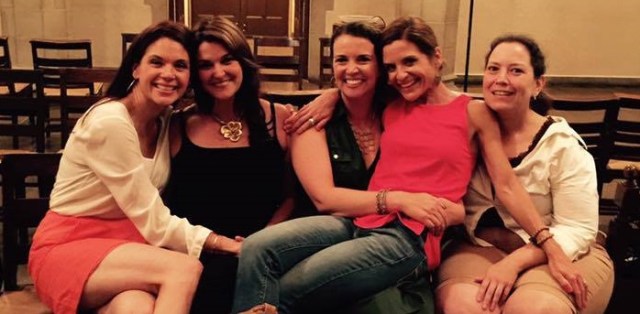
Amanda, Mary, Laura, Glennon, and me at Old South Church

Amanda, Mary, Laura, Glennon, and me at Old South Church

This is not an indictment. This is not a call to action. I don’t write to accuse, myself or others, or to condemn. I don’t want to use this space to discuss issues or strategies. I am not an activist, right now, or a critic. I am a writer, a Namer, and this is a Naming.

His name was Michael and he died two nights ago on the steps of Old South Church. His name was Michael, the name of the archangel, the name that is a question: “Who is like God?” His name was Michael and he was 57 years old, and he was the Beloved child of God.

Last June I walked up the steps of Old South Church, worn out and bedraggled after a ten hour nanny day, and hugged four dear friends for the first time. Laura, Mary, Glennon, and Amanda sanctified that space to me, inviting me to the front, to sit in reserved seating and to cut in line and join them at the meet-and-greet at the end. I’ve never felt so special and included in a way that somehow included everyone at the same time. My four friends have magical arms, open wide enough to wrap around hundreds at a time, leaving no one on the fringe, no one left out, no matter how tired or bedraggled. Everyone in that church was in the inner circle, everyone, and everyone outside, too. Glennon and Amanda, Laura and Mary are creating ever widening circles, arms wide, and teaching me to open my arms, wide, too.

Michael died on those church steps on Wednesday morning. I don’t know if he had family or friends, I don’t know who else will write a lament for him. I do know that Rev. John Edgerton remained with his body to keep vigil as the ambulance was called, throughout the time the police and medical examiner were present, and until the body was removed, and I know that Old South Church together with Ecclesia Ministries – Common Cathedral are working on an outdoor memorial service for him, so I know that he will be named and mourned there. But I wanted to tell all who will listen that his name was Michael and he died on sacred ground. His name was Michael and he is part of the inner circle. His name was Michael and there is place up front saved for him, and open arms, and I know this, I know, because there was a place saved for me.

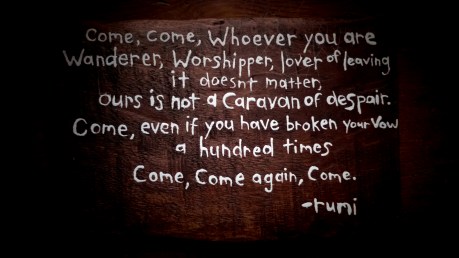
come-come2And you, reading this, what are you doing in the back, lingering in the shadows, when there is a place saved for you, as well? Come, come in, you are welcome here, too. Even if you have broken your vows a hundred times. There is a spot for you in the very first row, carefully marked with your name only, carefully saved for you. Come, come again, Beloved, child of God, come.

Rest in peace, Michael, Beloved, child of God. Rest in peace in the wide arms of God.

Love,
Jessica

*October, 21st, 2016 – I went to hear Eliel Cruz speak in Boston last night, and he extended the same wide-armed invitation to all the beautiful LGBTQ folks who may be not feel that they are being offered a place in their community. Beloved, child of God, come to the front where you belong.

Check out Together Rising, Say it Survivor, and Faithfully LGBT.

Save

How I finally learned to feed myself, part two

Mädchen mit Teller by Carl von Bergen

Mädchen mit Teller by Carl von Bergen

There are many different ways of wanting food, and many reasons for eating; there are many reasons for not eating, too. Last winter I gained seven or eight pounds because I couldn’t stop eating chocolate croissants — my daily rounds with the little girl I was nannying took us into cafes for bathroom breaks and for coffee, and there were the pastries, loaded with carbs and sugar, a perfect mid-morning treat, especially when paired with a second cup of coffee. Hunger for those croissants was primal, passed down from generation to generation over millions of years when not eating the food in front of you would have been madness, would have meant death. If any of those ancient people chose not to eat, they died, and their DNA was not passed down to me. Those who ate, survived. Our bodies developed complex, irresistible mechanisms to ensure that we ate — the hunger in our bellies is nothing compared to the synapses firing between our ears, the chemicals that light up our brain’s pleasure centers like a Christmas tree when salt or sugar hits our tongues. The frigid temperatures of last January and February, and the pounding of foot after foot of snow triggered every millennia-honed instinct to eat as much as possible, to put on extra fat to survive the winter. My genes didn’t care that I was wearing long underwear and sweaters, or that inside it was a cozy sixty-eight degrees. They had no concept that my body was already sufficiently padded with extra fat, that in fact losing rather than gaining seven pounds would have been healthier all around. They had been given one task, their prime directive: Make sure Jessica eats. And they did their job splendidly.

That summer, when I slowed down after a busy spring, I finally had time to look down at the scale (and to look at the pictures of myself at the Momastery event in June) and to realize that a little focus was needed to get back on track. I put myself back on probiotics which, beside their multiple heath benefits also had the helpful instruction, “Take three times daily on an empty stomach.” (The probiotics need to get to the intestines to do their work, which means they need to make it through the stomach without being digested. They basically sneak through while the stomach isn’t looking, i.e. while it’s not digesting any food.) This meant that I had to pay attention to what and when I was eating enough that my stomach was actually empty three times per day. I poked around online and made the guess that three hours would empty my stomach, plus another hour after I took the pill to let it pass through. Basically I stopped eating between meals, and in doing so, rediscovered the joy of eating when you’re really, truly hungry. I had big salads loaded with lentils and vegetables, an apple or two every day, toast and peanut butter in the morning, yogurt for a late night snack. Everything tasted so GOOD when I was well and truly hungry. I didn’t mess around with low-fat anything, I put olive oil and vinegar on my salads and ate cream-on-top yogurts, and I ate till I was full at meals. I began to feel at peace with the periods of not eating, enjoying the comfort of not having to think about food during that time. It just wasn’t time to eat yet, but it would be soon. No big deal. I could wait another hour.

I wasn’t starving myself, like I had in the past. The point of feeling hunger was so that I could eat well later. When I was starving myself, back in college, the point of hunger had been power, pure power over myself, my body, and my life. Nothing else mattered, and nothing felt as good. Then the pounds had melted off at 10lbs a month as I tried to eat around 500-1000 calories a day. Now, if I found myself at the end of the day having only eaten 1500 calories I’d have another apple, or a yogurt, or both. The goal wasn’t to starve myself. The goal was to feed myself. And I lost weight, but slowly, two or three pounds a month till I lost the seven I had gained and another seven after that. I wondered how I ever could have been so careless as to eat all those extra pastries. I laughed at last-winter Jessica. Then this winter came.

At first I didn’t notice much of a change. I breezed through December, eating a Christmas cookie or two here or there then calmly closing the box and putting it away. I stopped losing weight, but I didn’t gain any. Well, maybe I gained a pound. It was an exceptionally warm December, so that may have been part of it. Christmas Eve was 70 degrees. I made blithe plans to allow myself one chocolate croissant each winter month, since I liked them so much, patting myself gently on the head. Then January came and it got cold, and something switched in my brain again. I started eating two or three cookies at a time, instead of one or two, then following them up with chips. Instead of no snacks between meals I was having trouble eating only one or two snacks between meals. I tried getting back on schedule with the probiotics and letting my stomach empty before I took them, but a force greater than my will power had taken over. I laughed at last-summer Jessica. She obviously hadn’t remembered what it was like.

So here we are, one week away from February, and I have gained another pound, maybe two. My goal has changed from not gaining weight again over the winter to minimizing my weight gain. And, honestly, it’s not so much a goal as a hope. But I have come to accept this as natural. It’s okay. The winter will end eventually, and this year I will try to refocus earlier than June and get back to healthier eating. In the meantime, I’m not doing so bad. I make myself hearty soups with lots of beans and veggies, and some animal protein here and there. This afternoon I’m going to whip up some sausage, bean, and kale soup. And I allow myself a piece of sourdough bread with sweet butter on the side. Maybe in March I will give up the side of bread. But for now, I’d rather be at peace with my body than fighting against it. I’ve seen what happens when you pull the rubber band too taut: It snaps back with a vengeance. In college, after I lost sixty pounds in six months by starving myself, I gained all that back, plus forty five more. After months of not eating, the rubber band snapped and I couldn’t stop eating. Long after I was full, I’d keep putting food into my mouth: salty, sweet, savory, bland — anything to convince my body it wasn’t starving. Better to gain five pounds gently over the winter than to trigger my body into panic mode, into starvation mode.

Friends, be gentle with yourselves. Eat when you’re hungry. Do your best to stop eating when you’re full. When you don’t, forgive yourself. Nothing keeps the cycle of overeating going like shame. It’s okay. You’ll be all right. Brush and floss and go to bed. Wake up the next day, forgiven, and feed yourself again.

*****

How I finally learned to feed myself, part one

Follow me on Facebook and let’s hang out!

Three / ten thousand places

I

As kingfishers catch fire, dragonflies draw flame;
As tumbled over rim in roundy wells
Stones ring; like each tucked string tells, each hung bell’s
Bow swung finds tongue to fling out broad its name;

I saw a great horned owl at the Arboretum last weekend. I bundled up and set out for a walk on the last day before the temperatures were forecast to settle below freezing, where they are now. I walked briskly over Peter’s Hill and to my favorite section, Conifer Path, where the color palette changes to ocean blue and dark green with subtle reds here and there, and the noise of the nearby street and of your own footsteps is softened by the layers of pine needles. I wish I had a better camera but I will try to describe to you how lovely it is there, in all seasons, but especially whatever the current season is: now, winter, with patches of snow adding even more visual interest and softness. White is beautiful in itself, but it also highlights the beauty of the colors around it; it is a neutral color, a team player, clashing with nothing, strong enough to cover everything but delicate enough to surrender quickly to the yellow of dogs’ urine and the brown-ish red of the autumn leaves that are stirred from under the snow by the wind and my fellow hikers.

For some reason, when I first heard the owl calls I assumed it was a human making them. I think I wanted so much for them to be real that I forced myself to doubt them. I even grew annoyed, as the calls went on, wishing whoever was making them would stop trying to trick me and let me enjoy the woods in peace. I crossed over from Connifer Path to Oak Path, skirting Bussey Hill because I didn’t want to push myself too hard and get a migraine, but when I came to Chinese Path I couldn’t resist and hiked uphill past Explorer’s Garden, almost to the top of the hill, then followed the road back down and retraced my steps through the conifers. S30A07641

I was almost back to the main road when I was distracted by a stream, and started wandering along it, crunching the damp, half-frozen ground underfoot and taking pictures with my cheap camera phone. Here’s the only one that came out okay, a picture of my own reflection in the stream. I love how the moving water looks like an abstract painting, and how you can see the rocks at the bottom of the stream where my reflection blocks the sun. I love photography. One of these days I’m going to get a nice camera.

As I was wandering along the stream I heard the owls again, the iconic hoo followed by three shorter hoos. The first owl would do the call, then another would repeat, but in a lower pitch. Suddenly it occurred to me that there were real owls in the Arboretum, and a second later, that I might be able to see them. I set off slowly across the slope that led back to Conifer Path, pausing to adjust my direction every time the owls called out. I soon honed in on a group of some of the tallest trees in the area, Giant Sequoia, maybe, or Japanese Cryptomeria. They created a cathedral-like space, darker and quieter than the outside world, and I found I was one of four people tiptoeing into that church, looking up to try to catch a glimpse of the birds. The others were two women and a girl of about nine or ten. We glanced at each other and smiled a greeting, raising our eyebrows in wonder, wordlessly agreed to a vow of silence so as not to scare away our avian hosts.

Then, one of the owls soared from the top of one tree to another, and we saw it, for a moment. My heart rate quickened and I caught the eye of one of the other women and mouthed, “WOW.” We continued to look and listen, but the owls didn’t reappear. A few minutes later another woman tromped into the piney cathedral, speaking loudly, and calling to her dog, and the spell was broken. The owls wisely turned quiet as we humans talked, sharing what we knew about the owls. One woman said a male great-horned owl had been killed last year, and people wondered what the two or three females were going to do. We agreed that this pair sounded like a male and female, and I confirmed that later on the website All About Birds:

“Great Horned Owls advertise their territories with deep, soft hoots with a stuttering rhythm: hoo-h’HOO-hoo-hoo. The male and female of a breeding pair may perform a duet of alternating calls, with the female’s voice recognizably higher in pitch than the male’s.” The others said good bye and dispersed and I found a comfortable tree root and sat quietly for a few minutes, hoping to hear the owl’s conversation start up again. But after a while I grew too cold, and realized the sunset was coming, so I waved good bye and headed back down the path, over the stream, and back home.

II

Each mortal thing does one thing and the same:
Deals out that being indoors each one dwells;
Selves — goes itself; myself it speaks and spells,
Crying Whát I dó is me: for that I came.

On my way back from the Arboretum, there is one of those Tiny Free Libraries; an adorable little yellow one in the shape of a house. You are encouraged to take a book or leave a book, whichever you prefer. I noticed that the owner of the library was very hands-on in rotating the selection, so that almost every time I walk past there are new options to choose from.

The tiny free library

The tiny free library

I noticed this about the rotating selection, but for the first two years I walked by I failed to notice something else about this TFL, the most fun thing: It’s a model of the house behind it.

IMG_0444

The house

This makes me more happy than I can express. But the best part so far, I am so excited to tell you, was that last December, when a large Christmas tree appeared on the covered porch of the main house, a tiny Christmas tree also appeared on the covered porch of the library. I can’t help but feel that anyone with such imagination and dedication to this project must be enjoying life very much.

III

I say móre: the just man justices;
Keeps grace: thát keeps all his goings graces;
Acts in God’s eye what in God’s eye he is —
Chríst — for Christ plays in ten thousand places,
Lovely in limbs, and lovely in eyes not his
To the Father through the features of men’s faces.
~Gerard Manley Hopkins

I love children, and I love being outside, and possibly my favorite thing in the world is being outside with kids. It is the best part of April through November, and occasionally we still make it outside in the winter, too. One afternoon in December I stopped at Lars Anderson park on the way back from picking up the 9yr old and 5yr old from school, and wrote this note afterwards:

I was going to write about how I wished I had a better camera, how these pictures from my cheap phone couldn’t convey the exquisite joy of running up a sunset-streaked hill with two boys, the little one full of pride and purpose because I said to his big brother, “N’s in charge of the expedition!” finding a giant, spiky bush that had overgrown a glacier-dropped rock on the hillside, crawling inside and clambering around until we realized that the rock was the entrance to a troll’s lair and the troll was coming, running out and away to one of our favorite climbing trees, climbing for a while as the sun dipped closer to the horizon and the air became colder, and then making our way back down the hill to the car, I walking and the boys rolling down faster than I thought was possible for the human body to roll, then running back up and rolling down again.
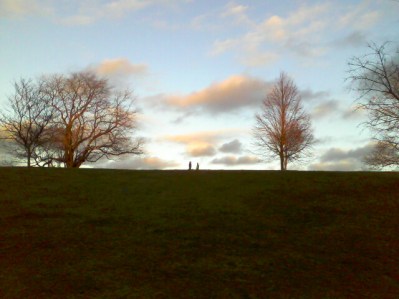
S30A07221I took a few pictures but I was planning on using them mainly to say “it was like this but a thousand times more gorgeous.” But then I saw this one, and I think it actually conveys the moment quite well. This is when the boys ran back up the hill to roll down for a second time, while I waited for them at the bottom. A bit blurry, but I love the composition with the boys silhouetted against the eastern sky almost exactly at the center of the photo. That’s our climbing tree to the left.

Such beauty all around. Sometimes even a cheap camera phone can’t help but capture it.

*****

More about the Hopkins poem, and why I named my blog after it can be found here: Ten Thousand Places

Are you following me on Facebook? Come hang out!
 

On loving someone in pain

Job Rebuked by His Friends, by William Blake

Job Rebuked by His Friends, by William Blake

A dear friend texted me today asking for advice on how to support her friends whose teenage son has been suffering from debilitating migraines for a year and a half. He is angry at God, she said, and can’t believe a good God would allow this kind of suffering. His parents are afraid he is going to renounce God, and she wants to know how to be there for them.

I wrote last year about my own experience with debilitating migraines and depression and struggling to find God in it all. When you are in pain and the life you know has been pulled out from under you, you naturally ask why. When you have prayed till your knees are bloody and cried out to God until your throat is hoarse, and still the pain continues, of course you wonder why a loving God is not answering you. Of course you do.

But when your friends and loved ones have prayed their own knees bloody and throats hoarse, and still you are not better, something else begins to happen. They may question God, too, but they may also — out loud or only in their heads — begin to question you. Are you sure you’re praying enough? Are you sure you have faith that God can heal you? Are you taking the right meds, have you tried acupuncture, are you eating right and getting enough sleep; have you tried everything you can? And the blame begins to shift, slightly, to the one in pain. It can be subtle or overt, but it echoes the person’s own questions and doubt. Are you sure you aren’t psychologically attached to the pain? Maybe you’re getting something out of it. Why did you stay up late last night when you know a regular sleep schedule is shown to help migraines? Maybe all of this is actually your fault?

In my earlier post, He suffers with us, I wrote that I didn’t find answers to my questions, but instead I found God’s presence with me in the pain:

Then, one day on a whim, I bought a little crucifix online. I was raised in the Protestant tradition and remember being told that Catholic theology was wrong because they kept Jesus on the cross, whereas Protestant crosses were empty, representing the resurrection. When the package came, and I took out the little plastic Jesus it seemed so strange — a little Jesus doll when what I wanted was the real man, present in my heart, mind, and spirit, as he used to be. But one day, when the pain was at its worst, I placed my fingers on the nails in his hands, studied his face and his body, and wept with understanding: Jesus was in pain, too. He was suffering, too. I might not understand why it was happening to me, or why he wouldn’t answer my prayers to take it away, but now I knew that He was in it with me. For the days and months to come I lay in bed, clutching the crucifix to me and crying.

That presence, that willingness to be with me, to suffer with me in the pain, was what I found in God — and it was what I most needed from my friends and family.

I don’t know how much you’ve read Job, but it has always been kind of a confusing book to me. I don’t understand why God would allow Job to lose his family and everything he owned. I don’t understand his friends’ advice really, or what God means when he shows up and silences them. And I don’t understand how everything is supposed to be okay when Job gets a new family and new riches. You can’t make the loss of children all better by having new children. But this quote by Buechner helped me to understand it a little more:

Words Without Knowledge

IT IS OUT OF the whirlwind that Job first hears God say “Who is this that darkens counsel by words without knowledge?” (Job 42:3). It is out of the absence of God that God makes himself present, and it is not just the whirlwind that stands for his absence, not just the storm and chaos of the world that knock into a cocked hat all man’s attempts to find God in the world, but God is absent also from all Job’s words about God, and from the words of his comforters, because they are words without knowledge that obscure the issue of God by trying to define him as present in ways and places where he is not present, to define him as moral order, as the best answer man can give to the problem of his life. God is not an answer man can give, God says. God himself does not give answers. He gives himself, and into the midst of the whirlwind of his absence gives himself.

There aren’t answers to our questions, at least there aren’t answers that we can understand now. Job’s friends try to explain God to him, to tell him he must not be praying enough, must not have enough faith, must have some un-confessed sin or pride. And Job listens and argues with them and suffers even more because of their arguments and advice.
(Another time we can talk about the bad rap Job’s wife has gotten, and the nasty look she’s giving the beatific Job in Blake’s painting above. She lost her children, too, you know. She was in pain, too. Her advice to Job to renounce God must have come out of that pain.)

But when God finally shows up, he does not give answers, he gives something better — himself. And that is what we need from each other, too: Not answers, but just presence, just understanding and listening and presence. I told my friend that even if her friends’ son does feel like renouncing God, or even if he renounces him, the best, most loving response his parents and friends can give is not arguments, but presence:

“It must hurt so much. I’m so sorry. I can completely understand that you would want to renounce God, and I don’t love you any less for it. If God is God, he will understand, too, and not love you any less for it, either. Go ahead and cry and swear and do whatever you need to do. We’re here.”

Love,
Jessica

***

Are you following Ten Thousand Places on Facebook? Come join the discussion!

A busman’s holiday: On volunteering and finding my purpose


photo by Christopher Jones

photo by Christopher Jones

For a few weeks now I’ve been volunteering at a homeless shelter, leading a play group for two hours so the parents can attend classes. I signed up for it last summer when the Planned Parenthood videos were breaking, not as a political statement but as an attempt to do something other than talking, writing, and debating. My Facebook feed was thick with posts that mostly demonized the other side, as well as calls for people to take a vocal position on the matter. I didn’t want to choose between the labels “pro-choice” or “pro-life.” If I had to be labeled, I wanted it to be, “person who works with kids at a homeless shelter.”

When I signed up last summer I had Wednesdays off, but by the time I did the training and received my placement I had started working Wednesday afternoons. So now I nanny Monday afternoon, then for ten hours on Tuesday, volunteer with kids Wednesday morning, pick up kids from school Wednesday afternoon, work another ten hour nanny day on Thursday, and then a six hour nanny day on Friday. It’s a lot of kid time, and I wonder if it might be too much. The wonderful woman who co-leads the play group with me called it “a Busman’s Holiday,” that wonderful old-fashioned expression that means that you do the same thing on vacation that you do for work. I love the kids — all of my kids — but I definitely find my blood pressure is a bit higher, the tension in my neck and shoulders a bit tighter both during and after my shift.

I struggle with it, because I’m good with kids, and it seems right to offer my best skills as a volunteer. But to be honest I’ve been wishing I could do some volunteering that involves lying in a dark room with my eyes closed and no one talking to me. Maybe medical testing? Donating a kidney?

Glennon Doyle Melton says that people often ask her how to find their life’s purpose, and she asks them, “What breaks your heart? That’s your purpose right there.” Whenever I ask myself what breaks my heart, the first thing I think of is old people. Except, I think they break my heart too much for me to be helpful to them. I think too deeply about how sad, lonely, and confused they must be, their bodies giving out on them, maybe their minds as well, not being able to go out and do things like they used to, being stuck at home or in a home. I feel it too much, and it doesn’t energize me, it makes me sad and depressed.

I can't figure out how to remove the "sample" stamp from this clip art, so I'm going to leave it as an ironic statement.

I can’t figure out how to buy this to remove the “sample” stamp, so I’m going to leave it as an ironic statement. This is a sample of a person trying to drive considerately: Actual drivers may vary.

But I have figured out one way to channel that particular heartbreak into good. When I’m driving in Boston, and people cut me off, swerve, make weird lane changes without signaling, or generally act as if they don’t understand how driving works — or how 2000 lb vehicles crashing into each would work — I try to imagine the drivers as little old ladies or men, nervous and confused, maybe having trouble seeing over the dashboards. And I tell myself that my job is to help the little old ladies across the street, providing as safe and encouraging an environment for them as I can. If someone cuts in front of me, I step on the brakes carefully and avoid the instinct to honk. Poor Gertrude, I think, she is just trying to get to the store to get half and half for her coffee. If we can see each other I give a smile and an encouraging wave. Here, dear — let me take your arm and help you across.

For now I’m going to keep going to the Wednesday morning play group for as long as I can. I’ve seen the dangers of pushing myself too hard, so I want to be aware of my energy level and my limits. But I’ve quit so many things in my life, and it would feel so good to see this through. So I drag myself out of bed Wednesday mornings, have my coffee with low fat milk and hop in the car for the half hour drive to the other side of the city. I can’t really do it, but I’m doing it anyway, for one more week at least. And while I’m driving to my Busman’s Holiday I step on the brakes whenever someone cuts me off, smiling and waving when I can (the coffee helps with this) and helping dear old Mathilda to get safely to her bridge game.

***

Are you following me on Facebook? Come, join the conversation!

A true tale of two Beatrices

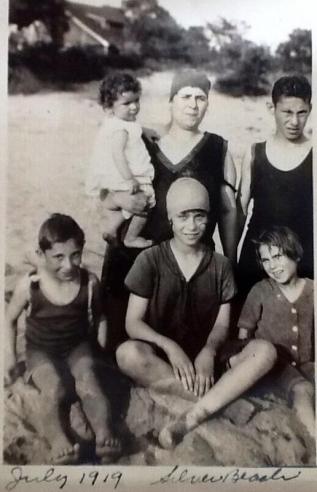
The Schines at Silver Beach. My grandmother Beatrice is at the bottom right.

The Schines at Silver Beach. My grandmother Beatrice is at the bottom right.

My grandmother Beatrice was born in 1913, and died in 2004, a few months after my 30th birthday. She was my last living grandparent. It has been hitting me again lately, that I have lived for more than eleven years now without grandparents. I saw my beautiful great-aunt Anne over Christmas, my grandmother Helen’s sister, and I felt the fifteen-years loss of my grandmother again. I’ve written in this space of my grandfather, John, Helen’s husband who has been gone now for almost twenty years, and of his brother Rajmund, who continued to work on the farm where he and John grew up until his death two years ago. My other grandfather, Beatrice’s husband Ralph, died when I was just a baby.

“Why are all grandparents rich?” nine year old Z asked me the other day.

“Do you think they are?” I answered, ever Socratic in my nannying.

“Well they’re always sending me money,” Z replied, and I smiled, thinking of all the birthday cards throughout the years, checks tucked carefully inside.

“I don’t know that they’re all rich,” I answered, “But they’re generous, and they love you.” On my mother’s side the checks and cards were always in my grandmother Helen’s handwriting, but once when I visited them on my own, from college, my grandfather John pulled me aside right before I left. “Don’t tell your grandmother,” he said, and pressed a carefully folded hundred dollar bill into my hand. It is one of my most precious memories of him. I know what a hundred dollars meant to him.

When I was twenty-two I wanted to do something generous myself, so I dialed the phone number for ChildFund International and asked to sponsor a child. They assigned me a boy from Uganda, and I sent him a small check every month, plus others on his birthday and holidays. After a while I set up my bank account for automatic withdrawals. I was never good at writing letters, and the small amount of money leaving my account every month never pinched. It really felt like the least I could do, literally the least, and sometimes it bothered me that it was so little. But when I was sick and had quit my ministry job and a nanny job, lying in bed feeling broken and useless, I would remember the little bank withdrawals, and read the thank you letters, and feel so grateful. My debt was piling up at the time, my last check from my grandparents cashed and spent, but I never considered giving up my sponsorship. I couldn’t do much, but I could keep sending that little bit. Plus, in 2005, a miracle had happened.

About a year after Grandma Beatrice died, my little boy from Uganda aged out of the program, and I signed up to sponsor another child. They asked me what country I preferred, and I chose to stick with Uganda. Girl or boy? they asked, and I said, it doesn’t matter. A few days later I got my packet in the mail.

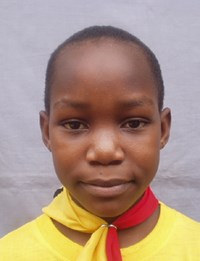
My first picture of Beatrice N.

My first picture of Beatrice N.

It was a little girl named Beatrice.

For the first thirty years of my life, my grandmother sent me cards with checks tucked into them, and I sent her thank-you notes. For the past ten years, I have sent money to another Beatrice, and eagerly read her letters. Beatrice to Jessica, Jessica to Beatrice. Do you think the mailmen have noticed?

I don’t have children of my own, so I probably won’t ever be a grandparent. But what a blessing to have had two children in Uganda that I can give to in some small way, children that grew up writing thank you cards just like I did. I hope they know that I am not rich, but that I love them, and that a very little bit of generosity on my part has been more than repaid, in fact, has been prepaid through my grandparents’ love for me.

Beatrice N. recently graduated from college and will turn 22 this month. Congratulations, dear one, and happy birthday. I’ve sent my little gift. Imagine it tucked discretely into a card, signed not just by me but by Helen and John, too, and Ralph, and another Beatrice, with all our love.

Love,
Jessica

***

Are you following me on Facebook? Come join the conversation!

To find out more about sponsoring a child through Child Fund International, go to https://www.childfund.org/.