
Laundry list

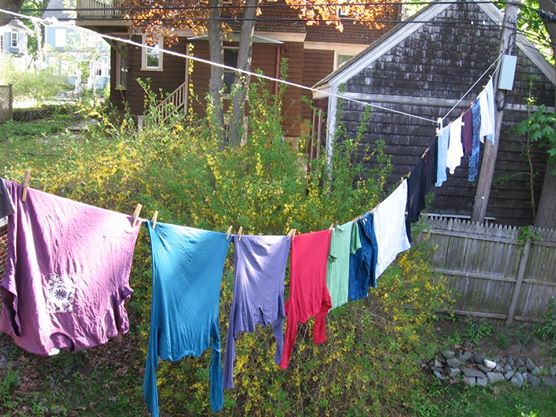
Alternative to the dryer (if you do that sort of thing -- no judgement).

Laundry is obnoxious because it tricks you into thinking it’s just one chore, when it’s actually more like fourteen or fifteen. Here’s what you’re really doing when you “do the laundry.”


Chore #1) Find all the dirty clothes and towels — in the closet, under the bed, *in* the bed, in the bathroom, in the kitch
en (this alone takes forever).
Chore #2) Separate them (if you do that kind of thing — no judgement).
Chore #3) Put the first load in and start it.
Chore #4) Completely forget that you are doing laundry for several hours.
Chore #5) Remember and go switch the first load to the dryer and start the second.
Chore #6) Repeat step 4.
Chore #7) Take dry clothes out of the dryer and put the wet clothes in. Start to feel like you have been doing laundry ALL DAY because you basically have at this point.
Chore #8) Clean out the lint trap (if you do that sort of thing — no judgement, only your house might burn down [my mom said]).
Chore #9) Fold the first load (if you do that sort of thing — no judgement, only all your clothes will be wrinkly).
Chore #10) Repeat step 4. It may now be the next day or even later.
Chore #11) Remember again and take second load out.
Chore #12) Clean out the stupid lint trap again.
Chore #13) Fold the second load.
Chore #14) Put the clothes away (If you do that sort of thing — no judgement, and, really, no serious consequences).
Chore #15+) If you have a spouse and or kids, repeat all the things for a third, fourth, etc. load.

Things I’ve been wrong about for most of my life, part one.

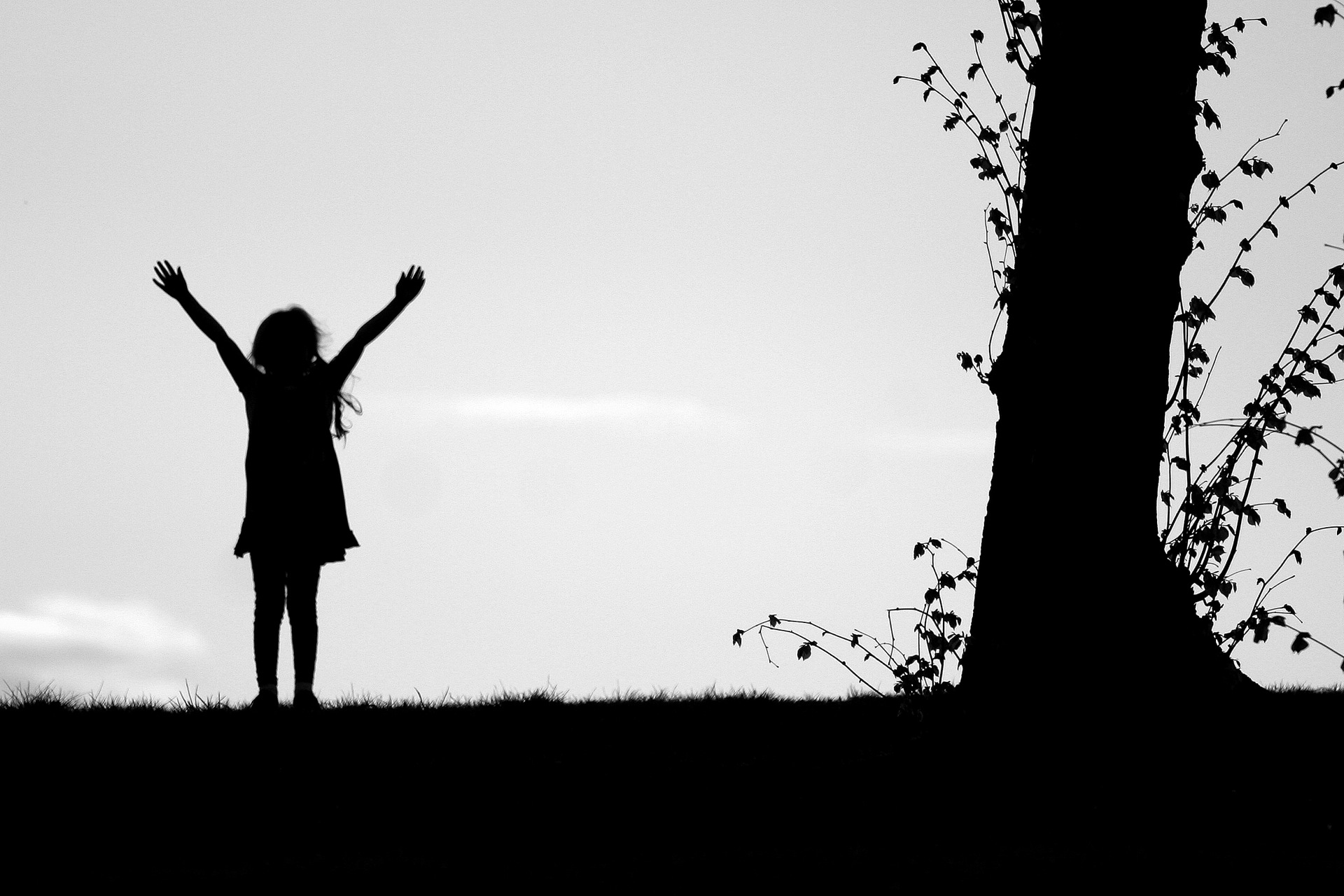
stronggirlI spent most of my life believing that if I said and did exactly the right thing no one would get mad at me, no one would misunderstand me and everything would work out. Every time anyone was mad at me, I took it as a personal failure, and tried to figure out what I’d done wrong and what I could do differently the next time. I mean, EVERY TIME. It was, and is, exhausting. Constantly replaying and rehashing each interaction, no matter how small, as if my brain were perpetually tuned to sports radio after a big game, analyzing the plays and the players, the coach’s decisions, the referee’s calls, the weather, the history, the fans.

I can’t remember exactly when it first occurred to me that there might not be the perfect thing to say, and that other people’s flaws and imperfections might be contributing to misunderstandings, too. It might have been college. At various points over the years that thought came back, and I’d have a few moments of peace. But then I’d go back to living as if I could figure out how to do the right thing and make every relationship and every interaction go smoothly.

Yet all the time there was something strong and confident within me that knew that I was trying my best, knew that I was examining my heart and my motives and being as honest with myself as I could, and wanted me to stand up for myself. She was a child in many ways, strong and stubborn, tearful yet not backing down. I often tried to push her down and tell her she was too childish, too proud. I told her what the adults had told me, that she was too stubborn and defensive, that she had to be humble and willing to see her faults and weaknesses, that she couldn’t always be right. I pushed her away and pushed her down. But she never left. She stayed there, at my center, refusing to be broken.

So this was my constant struggle, my self analysis and self denial, always going on internally but sometimes bursting out of me in frustration when I couldn’t make things right, no matter how hard I tried. And then, in 2009, a woman moved into my community. She was angry with me almost from the beginning. She misunderstood almost everything I said. And my self analysis kicked into high gear. I prayed constantly that I would be able to be a better friend and community member to her. I apologized for things she said hurt her, even when my meaning was completely different than what she took from my words. I tried to speak better, to follow the rules that she laid down, to say the right thing so as not to make her mad or hurt her. But the more I prayed and repented and tried to change, the more she said I was hurting her and the more anger I felt from her. A lot of things were going on in my life that needed my attention and energy, but I was putting 99% of it into trying to figure out how to speak and act and BE in order to make things right with this one person. And we lived together so there was no escape from the situation. I couldn’t speak, even to someone else while she was there, without being told I was wrong. After a while I stopped speaking almost entirely. I stopped coming out of my room. I felt like I couldn’t breathe.

Then, one day, when she had been upset with me about something she thought I’d implied, and I’d tried to explain what I’d really meant, she wrote to me in an email: “You are the most defensive person I’ve ever known.”

Oh.

That stopped me in my tracks.

I thought, is that really possible? Am I really the most defensive person in the world, despite my best efforts?

Then I thought of the hours of prayer, of tears, of analysis, of effort I’d put into the relationship, and I thought, surely there are people who don’t put this much effort into figuring out what their flaws and faults are. I can’t be THE most defensive person she’s ever met. I feel like the least. I feel like I have no defense at all against this situation. I am not letting myself defend myself — I’m even going so far as to join in the attack.

And then I thought of that little girl. And I suddenly loved her so much. I suddenly thought, she’s right! She’s just a little girl but she’s trying to stand up for us. She’s trying to let us BE, let us LIVE without this constant struggle. She is doing what I won’t allow myself to do. She knows who she is. She knows who I am. And suddenly the words, “You are the most defensive person in the world,” took on another meaning to me. I thought of that little girl and I thought, GOOD! I WANT her to be defensive. I WANT her to protect herself and care for herself. STUBBORN and DEFENSIVE are good things! My community-mate might have thought she was saying something negative about me, but I realized — it was compliment! The little girl can defend herself! She can take care of herself. I can take care of myself.

And then I realized that I’d found what I’d been looking for all along: The thing that I was doing wrong, my fault, my flaw.
My fatal flaw turned out to be believing that I had a fatal flaw in the first place.

And so I stopped. I stood up for myself, in that relationship and in my head. I took Maya Angelou’s words as my truth: “You did what you knew how to do, and when you knew better you did better.” I stepped out of the striving and the analyzing and the “maturity” of self examination and I stepped into the skin of the strong little girl, who was stubborn and defensive and glad. I stopped repenting except when I was truly convicted of having done something wrong. And when that happened I said I was sorry and then forgave myself, regardless of whether the other person did or not.

It didn’t make that relationship better. If anything it made it worse. But it gave me back my life and my self. It gave me the energy to focus on the things I needed to do in my own life: My own healing and strengthening, my career, my other relationships, my faith. And eventually it gave me the strength to leave the community.

And now, of course, I forget that lesson. I forget all the time. Especially in Boston traffic. For some reason it’s so hard for me when people honk at me. I go back and watch the replay, listen to the commentators in my head, try to figure out how I could have driven better so as not to have gotten honked at. I have to remember, yet again, that it might not be my fault. Other people might have been driving poorly, or the driver might have been having a bad day, or she might have been honking just because people in Boston honk at each other. Or it may actually have been my fault. But that’s okay. As Ralph Waldo Emerson told himself,

“Finish each day and be done with it. You have done what you could. Some blunders and absurdities no doubt crept in; forget them as soon as you can. Tomorrow is a new day. You shall begin it serenely and with too high a spirit to be encumbered with your old nonsense.”

Blunders and absurdities! That does sound like me. But I do try my best, and I will try my best again tomorrow. I will tuck the little girl into bed with praise and a glass of water. And I will let myself rest, as well.
How not to write a good book

OutOfAfricaAn excerpt from Out of Africa.

One night as I looked up I met [Kamante’s] profound attentive eyes and after a moment he spoke. “Msabu,” he said, “do you believe yourself that you can write a book?”

I answered that I did not know.

To figure to oneself a conversation with Kamante one must imagine a long, pregnant, as if deeply responsible, pause before each phrase. All Natives are masters in the art of a pause and thereby give perspective to a discussion.

Kamante now made such a long pause, and then said, “I do not believe it.”

I had nobody else to discuss my book with; I laid down my paper and asked him why not. I now found that he had been thinking the conversation over before, and had prepared himself for it; he stood with the Odyssey itself behind his back, and here he laid it on the table.

“Look, Msabu,” he said, “This is a good book. It hangs together from one end to the other. Even if you hold it up and shake it strongly it does not come to pieces. The man who has written it is very clever. But what you write,” he went on, both with scorn and with a kind of friendly compassion, “is some here and some there. When the people forget to close the door it blows about, even down on the floor, and you are angry. It will not be a good book.”

On Bra Shopping and Evangelism

wise men“Why do you have a Jesus bumper sticker on your car?” I had just pulled up into the visitor’s parking of my parents’ apartment complex and was exhausted. I was just at the mall for two and a half hours, and for those who go shopping for fun this might be hard to understand but I hate it. I shop online when it’s at all possible. I know what sizes I take in a handful of brands and I just reorder those whenever my clothes wear out. But recently all the styles I know had been discontinued, and I’d been wearing the same two pairs of pants, one with a hole in them, for months, alternating days. All my socks had holes in them. I was down to one bra whose underwire was beginning to slip out. It was time. It had to be done.

I was on my way to my parents’ house in New Hampshire, so I stopped at the mall there to take advantage of the lack of sales tax. Macy’s, three stops: bras, pants, and socks. The first two took about an hour each and by the time I headed toward the socks section I was dehydrated, overheated, emotionally spent at having to make so many decisions all at once (do other INFPs have that problem? It’s the P, wanting to make sure we have all the information and time to consider before we come to a conclusion), mildly traumatized by spending more money in one sitting than I had in years, and my eyes and head hurt from the lights. Did you know migraineurs’ brains register the flickering of flourescent lights while others’ brains don’t? It’s like the other people are in a normal store but we’re trying to shop in a disco ball.

I finally paid for all the things, limped out to my car and drove the fifteen minutes to my parents’ house. I was shaking, having trouble focusing on the road, and all I could think about was getting a glass of ice water and lying down on the couch. I’m really not exagerating. I had pulled into the parking lot, opened my door, and started to gather my things, when I heard the question from two young people behind me, a man and a woman. College students, probably – the apartment complex is just down the road from Saint Anselm College.

“Why do you have a Jesus bumper sticker on your car?” Man, was I tired. I laughed to myself as I remembered the verse in 1 Peter, “Always be prepared to give an answer to everyone who asks you to give the reason for the hope that you have.” I’m sure that when he wrote “always” the first century apostle hadn’t imagined getting out of your car after an exhausting trip to Macy’s. Getting out of your boat after a night’s fishing trip, though – he knew about that. Being told to throw his net over the side of the boat one more time, even though he had been throwing it all night to no avail.

It had been a long time since anyone asked me about my faith. It used to be my job to talk about it. I used to hate that the organization I worked for encouraged me to talk about it to people who hadn’t asked. I could (and might) write a book about my thoughts on evangelism, what my school taught and my own experiences, what I used to believe and what I do now. But regardless, I still believed in Jesus, and if someone was asking me a direct question I wanted to give a direct answer, even if I was tired.

The short answer, actually, was that the car used to be my parents and my dad had put that sticker on, as well as another, and I felt somehow disloyal to him and to God for wanting to take them off. I don’t like bumper stickers that much in general, but especially religious or political ones. I don’t think they’re going to change anyone’s mind – at best, they let other Chirstians, or Democrats, or environmentalists know that you are one of them; at worst, which I think probably happens more often, they just offend people. You drive by in your sealed off car, toss some words at them, and never even look them in the eye. But, as I said, I do believe, still. So I compromised by removing one and leaving the other. I left the one with the pun — Wise men, get it?

As to the longer answer, the reason I still believe enough to keep one of the stickers on, and what it is I that I believe… Well Jesus, certainly, I believed in Him, and even if I didn’t I felt like I’d made my decision to trust in Him anyway; made that decision over and over again as a child, young adult, seminary student, and that decision somehow held me even through doubt. And I did believe, still, that He loved me, that I was the Beloved and that these two people were, too, just as much as me. God’s beloved creation, whose life had meaning and hope and importance and who might not even know that. Maybe I could tell them? Since they were asking?

So as I swung my tired legs out of the car and turned to face my questioners I tried to gather my thoughts to express all of these things, the questions and the answers, the doubt and the certainty, my dad’s faith and my own.

“Well,” I began, “The short answer is that my parents gave me this car…”

“Oh my gosh, I’m so sorry.” said the man, as I stood up and turned around, “We thought you were one of our friends. You have the same car and you looked like her from the back.”

And the two of them walked away, laughing nervously at themselves.

Well.

So.

It’s possible I over think things.

Renovare — a true story

She was as tired as she had ever been in her life; body, mind, and spirit. She hadn’t known that even bones could ache with weariness, deeper than muscle fatigue, deeper than the bruising of her skin. She lay herself down on the cold stone, not caring that a gentle rain was falling. It was the first time in days or maybe years she had stopped moving. She had no thoughts other than a word repeated over and over in her mind, a word in a language she did not speak but that she nonetheless understood: “Zenethre. Zenethre.” It meant something like, “enough,” something like, “stop,” or “rest,” or “it is finished,” and it was coming from deep inside of her and, also, somehow, from the trees and rain around her. Her eyes closed but she could still hear the rain falling on the few weather-beaten evergreens that grew here, at the very top of the mountain. The moisture settled on her clothes and hair, so light that it didn’t soak in right away but just left a soft dew on the surface. “Zenethre.” She didn’t sleep, unless she was already asleep, unless it had all been a dream, but as she lay there she began to feel the weariness flow out of her body and into the earth below, into the rocks and tree roots, a healing balm as deep as the mountain was tall. If it had been a smaller mountain it couldn’t have absorbed such a great weariness, and if the climb had been less she wouldn’t have needed it to. Yet as the aches left her body she realized that just as she had never been so tired, so had she never experienced real rest. She opened her eyes and saw that the wispy layers of clouds were thinning, luminous with the as yet unseen sun.

November would have been enough

October leaves

October leaves

I wrote last month about how October was so beautiful it was almost too much. The flaming red and orange maples against the blue sky roused in me a joy that was so intense it was almost overwhelming. The colors were so vivid and everywhere — from the trees to the ivy to the little shrubs. It seemed like so much beauty, such reckless extravagance, when a quarter of it would have been beautiful enough.

That phrase, “It would have been enough,” reminded me of an old Passover song, Dayenu. Dayenu in Hebrew is literally “enough (day) to us (enu)” but it means “it would have been sufficient for us” or, “it would have been enough.” Each verse mentions a gift that God gave the Jews and says that if that gift were the only thing that God had given them it would have been enough.

“Had he given us the Sabbath, only given us the Sabbath, had he given us the Sabbath, dayenu.”

“Had he given us the Torah, only given us the Torah, had he given us the Torah, dayenu.”

“Had he led us out of Egypt, only led us out of Egypt, had he led us out of Egypt, dayenu.”

I love the fun, rolicking tune, the repetition of dayenu in the chorus, and the shift of the emphasis to the last syllable with the melodic resolution, “day dayenu, daYEnu dayeNU.”  And I love the idea, that God’s gifts are complete in themselves, that we can think about any one thing that God has done and be content with that, but that He wasn’t content, that He continued to multiply blessings, one on top of the other. Reckless extravagance.

Had he given us the vivid blue sky, only given us the vivid blue sky, had he given us the blue sky, dayenu.

Had he given us the orange maple, only given us the maple, had he given us the maple, dayenu.

Had he given us the red ivy, only given us the red ivy, had he given us the ivy, dayenu.


Jamaica Pond in November -- forgive the poor phone-camera quality

Jamaica Pond in November — forgive the poor phone-camera quality

And then the end of October came, and November blew in with a rain and snow storm. The wind blew many of the early leaves off the trees and the ones that were left were not quite as bright: browns and burnt oranges, the later maples and the oaks. The ghost-like grey of the naked trees.  The days grew shorter and colder and there were more grey skies. And it is beautiful. It’s a quieter kind of beauty, but I almost love it more. I feel like I can look around and take everything in. In October I almost didn’t know where to look, there was just so much color everywhere. October was amazing, and I thank God for it. But we could have gone right from August to November and we still would have been blessed with abundant beauty. November would have been enough. Dayenu.