Some details of my life, in pictures.

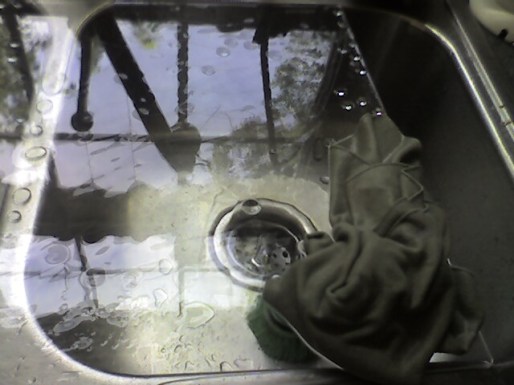
kitchen sinkWashing the shelf from the refrigerator: The water was pooling in the most perfectly round droplets.

dandelionsDandelion leaves: Laid out to dry by my 8 yr old housemate, Elias.

maple leavesThe maple leaves were also laid out to dry by Elias. He lay them randomly, not noticing the pattern that they made.

zipcarIf you don’t stop to think about it, you can be at the White Mountains in two hours. photo_091207_012.jpgphoto_091207_013.jpgMaine takes a bit longer, but is worth the trip.photo_091207_015.jpg

photo_091207_014.jpg photo_091207_005.jpgDetails of the top of Mt. Batty: Fir tree, blueberry bush, the first colors of autumn.

A Study of Hospitality to Strangers

As soon as I am up to 70% of my fundraising, I will be working as a minister to international students at Boston University.  This is a study that I did of the Biblical support for hospitality to internationals.


Holladay defines the Hebrew word ger as “A man who, either alone or with his family, leaves his village & tribe, because of war, famine, pestilence, blood guilt, &c. & seeks shelter & sojourn elsewhere, where his right to own land, to marry, & to participate in the administration of justice, in the cult, & in war is curtailed.”  The NIV translates ger as “alien” or sometimes “stranger,” and the word is most often associated with God’s chosen people.


            In Genesis 15:13 God prepares Abraham for this reality: “Know for certain that your descendants will be strangers in a country not their own…”  A few chapters later, in Gen. 23:4 Abraham tells the Hittites, “I am an alien and a stranger among you.”  The author of Hebrews also speaks of Abraham’s call: “By faith Abraham, when called to go to a place he would later receive as his inheritance, obeyed and went, even though he did not know where he was going.  By faith he made his home in the promised land like a stranger in a foreign country; he lived in tents, as did Isaac and Jacob, who were heirs with him in the same promise.  For he was looking forward to the city with foundations, whose architect and builder is God.”


            When Abraham’s descendents were slaves in Egypt, and for the forty years of wandering the desert before they entered the promised land, this became a part of their national identity.  “When they were but few in number, few indeed, and strangers in it, they wandered from nation to nation, from one kingdom to another.”  (I Chron. 16:19 (and Ps. 105:12)).  Moses, when he had fled to Midian, named his first son Gershom, which means “an alien there,” because, “I have become an alien in a foreign land”  (Ex. 2:22).  Many years later, when God exiled the Israelites for their sins, Zechariah used the familiar language to speak of it: “I scattered them among all the nations, where they were strangers.”  (Zech 7:14).


            David uses this language to describe the results of his devotion to God: “I am a stranger to my brothers, an alien to my own mother’s sons;” (Ps. 69:8) and, “I am a stranger on earth.” (Ps. 119:19).  He even uses it to describe his relationship to God, “For I dwell with you as an alien, a stranger, as all my fathers were.”  (Ps. 39:12).


Jeremiah 14:8  “O Hope of Israel, its Savior in times of distress, why are you like a stranger in the land like a traveler who stays only a night?”


            When God gives his law at Sinai, this engraved national identity becomes the reason to treat other aliens well.


            “Do not mistreat an alien or oppress him, for you were aliens in Egypt.”  Ex. 22:21


                        “When an alien lives with you in your land, do not mistreat him.  The alien living with you must be treated as one of your native born.  Love him as yourself, for you were aliens in Egypt.  I am the LORD your God.” Lev. 19:33-34.


            “You are to have the same law for the alien and the native born.  I am the LORD your God.”  Lev. 24:22


            “If one of your countrymen becomes poor and is unable to support himself among you, help him as you would an alien or a temporary resident, so he can continue to live among you.” Lev. 25:35.


            “Do not deprive the alien or the fatherless of justice, or take the cloak of the widow as a pledge.  Remember that you were slaves in Egypt, and the LORD your God redeemed you from there.” Deut. 24:17.


            See also Psalm. 146:9, Jer 7:6, Jer. 22:3, Ez. 22:7 & 29, Zech. 7:10, Mal. 3:5.


            “When you reap the harvest of your land, do not reap to the very edges of your field.  Do not go over your vineyard a second time or pick up the grapes that have fallen.  Leave them for the poor and the alien.”  Lev. !9:9-10.  See also Lev. 23:22; Deut. 24:19-22.


            It is this last command that Boaz obeys when he watches over Ruth the Moabitess  she gleans in his field.


            The author of Hebrews develops this theme even more.


            “By faith Abraham, when called to go to a place he would later receive as his inheritance, obeyed and went, even though he did not know where he was going.  By faith he made his home in the promised land like a stranger in a foreign country; he lived in tents, as did Isaac and Jacob, who were heirs with him in the same promise. For he was looking forward to the city with foundations, whose architect and builder is God.” Heb. 11:8-10


            Jesus spoke in strong terms of showing hospitality to strangers in Matt. 25:35-44.  A similar sentiment is expressed in Hebrews 13:2, “Do not forget to entertain strangers, for by so doing some people have entertained angels without knowing it.”


            The same terminology that is applied to the Israelites in the Old Testament is given to the Christians in the New:


            “To God’s elect, strangers in the world…” I Pet. 1:1

            “Live your lives as strangers here in reverent fear.” I Pet. 1:17

            “I urge you, as aliens and strangers in the world…” I Pet. 2:11


            Hospitality is also enjoined in the  New Testament, though it seems to be directed towards other Christians:


            “Share with God’s people who are in need.  Practice hospitality.”  Ro 12:13

            “Offer hospitality to one another without grumbling.” I Peter 4:9

            See also Acts 28:7, Ro 16:23, I Tim 3:2 &5:10, Tit 1:8, III John 1:8.


            In Acts 18:26 Priscilla and Aquilla show hospitality to Apollos in order to correct and complete his theological training.


            We need only add the Great Commission to complete the thought.  Though the Bible does not address the specific situation of Internationals from an “unreached” country visiting a “Christian” country, its theology towards both foreigners and unreached peoples is more than clear.  It is the responsibility of those called to spread the gospel of Christ to show hospitality to the aliens and strangers among us.  Not only is this clearly commanded in the Bible, it is one of the most strategic ways of fulfilling the commission to “make disciples of all ethne.”
Redecoration

She had been saving for years. It was her dream vacation and her excitement at being in Scotland was only slightly exceeded by all the anticipation. She went alone, but told herself she preferred it that way – more freedom to come and go as she pleased. She didn’t meet anyone – the other guests at the hostels were much younger than she, and mostly trying to drink as much as possible and have sex with each other – but she spent the two weeks revising her fantasy of the rough-edged but gentle Scot who would fall in love with her and carry her away to his ancestral castle.

Two days before she was due to return, she felt an unexpected sinking in her heart. On the plane ride home the feeling spread as a kind of numbness to her chest and arms. At Kennedy, as she jostled with the crowds watching their luggage come out of the wall and grabbing it off of the conveyor belt, she found herself crying. She tried to tell herself she was just tired, jet-lagged, but she knew better. It was a wonderful trip, she insisted firmly, but the wall of damp heat outside the sliding doors of the airport hit her like someone slapping a hysterical woman. Not wonderful enough, said the sticky cab seat. The disconcerting mix of good and bad smells from the city streets added: Not wonderful enough to change you.

The cab pulled up to the door of her apartment building, and the driver announced the fare. For a moment she sat there, unable to lift herself and her luggage out of the back seat. Finally, prompted by annoyed glances from the driver, she dragged herself out, and to the lobby, to the elevator, found her key on the ride up and pushed open the door to her apartment.

There was music playing. Loud, Spanish music that made her start to sway despite her confusion. She looked down and instead of her heather-blue runner saw a brightly colored throw rug, and unfamiliar shoes. She took a step backwards. She must have gotten the wrong apartment. For a full minute she stared at the number on the door. 314. This was her number. Could she have the wrong building? But her key had worked.

She stood perfectly still for several more minutes, while one fast, joyful song finished and another just like it started up. Then, leaving her luggage in the hall, she stepped again into her apartment, through the front hall and into the room that served as her kitchen and living room.

Everything had changed. Her furniture, her decorations were all gone, and in their place were other, brighter and more modern things. The walls, off-white before, had been painted deep reds, blues and greens, a different color for each wall. The kitchen counters were piled with food, much more food than she ever kept in her kitchen and everything, even the bowl of fruit, seemed chosen for its color. She heard voices in her bedroom, but she was not afraid. The energy flowing through her, like the music playing, was quick, ready, powerful. She walked into the bedroom, pushing open the half closed door.

Two dark, laughing people turned towards her in surprise, smiles still frozen on their faces. They were both half dressed, and the man seemed to be in the act of spinning the woman around in a dance. The man yelled something in Spanish, and she turned, not afraid but full of life, joy, purpose. She walked out of the apartment, past her luggage in the hall, and rode the elevator down to the street, to the corner where there was a pay phone. She dialed 911, pushing the buttons almost fondly, and tried to keep her broad smile out of her voice when someone answered.

“Someone has broken into my apartment,” she said confidentially, as if sharing a secret love with a friend, “Actually, they’re still there.”

Several hours later she stood again in her apartment, this time with a detective. They had tracked down her landlord, who verified her identity, and the two dancing people were at the police station being questioned. She was showing the detective photos of her apartment, taken a few months ago to send to her mother in Maine.

You say you’ve been gone two weeks?” he was saying, looking at the pictures and then the apartment over and over. “They must have moved in right away. God knows how they got a key – the lock’s not broken. Maybe you forgot to lock it, or maybe they know a locksmith who could have made one. They seem to be crazy: So far we haven’t gotten a straight story out of them, but it doesn’t seem like they’re homeless. They must have spent thousands of dollars to redecorate. Your old stuff is probably long gone. You can sue them for damages, but who knows if they have money to pay you or not. Or you could sell this stuff, it isn’t junk, it’s probably worth a lot. Are you okay? This has to be unsettling.”

She shook her head, meaning neither yes nor no, meaning that, actually, she was fine, everything was fine for the first time in a long time. Her apartment, her life, had been baptized with music, color, sex. As the detective went on talking she ran her fingers over a thick oil painting on the wall. She would not redecorate.

Jamaica Pond

IMG_0076

Snow melting on the Pond in 2015

Almost every day I take the little boy I watch for a walk around Jamaica Pond. Some days he is in a Bjorn (a kind of baby backpack, but worn in the front), some days a stroller. People are friendlier on the Pond. Often they’ll even talk to me, which happens much less on the city streets, just yards away. Of course babies are always an acceptable topic of conversation. And the albino squirrel that hangs out near the boat house often stirs comments. I was watching it once (it almost looks like a mink rather than a squirrel) and a man jogged by and said, “Look!” pointing at the squirrel. I smiled and nodded and he panted, “Very rare!” in a didactic tone, and kept running. Another time I walked by a sweet little old man in red glasses who was watching the squirrel, and he looked up at me with the biggest grin on his face. I grinned back at him, and we shared a moment of complete understanding and joy, though neither of us said a word.

Today on the Pond another old man surprised me as we passed by asking, “Are you going to look at me and say ‘hi’?”

“Hi!” I said, stopping, and we both looked at the baby. Babies are always an acceptable topic of conversation.

“He’s sleeping,” I pointed out unnecessarily.

“Is his face warm enough?” the man asked, concerned.

In fact, Baby was so bundled up in leggings, sweaters, fleece pants, hat, mittens and snow suit that he couldn’t move, and had promptly gone to sleep in protest.

“Oh, he’s fine,” I assured the old man. We contemplated Baby for another minute, then wished each other a good day and moved on.

2013-08-16 09.48.49

A breezy spring day on the Pond in 2013

I love that old man for asking the question. It reminded me of a story from Acts, when a beggar at the temple asks Peter and John for money. Before the conversation continues there is a crisp sentence that changes the whole tone of the narrative: “Peter looked straight at him, as did John.” Someone once said that if you had any one verse of the Bible, you could grasp the whole gospel message. What message would one intuit from that verse? What would your life be like if you lived it based on the gospel of looking straight at everyone you saw? Of noticing and acknowledging everyone around you?

“Are you going to look at me and say hi?” I wonder the same thing every time I pass someone, but I would never be bold enough to ask. I just glance up, shyly, making brief eye contact, smiling slightly, noncommittally. You pass so many people in the city it would really be impractical to greet everyone. But I love the brief moments of connection when people do take the time to say hi. It happens more often on Jamaica Pond. You can let go of your defenses a little there, and entrust yourself to the breeze coming off the water, the rustling trees, the scurrying grey and white squirrels, and the sweet sight of a sleeping baby.

IMG_0170

A warm summer day on the Pond in 2008

Save

Save

On Whose Love I Depend

I used to love you with a reckless, trusting love.

Until you said that thing that made the steel containment doors of my heart come crashing down.

Now I am on the INSIDE and you are on the OUTSIDE.

“Try to pry them open with a crowbar!”

I hear your muffled voice.

You think I have a crowbar in my heart?

In a similar but opposite way

The birds outside my skylight wake me every morning with their song.

They are OUTSIDE and I am INSIDE.

But they know nothing of metal fear and conditional love.

They are not waiting for me to lose ten pounds or start dressing stylishly.

They neither sow nor reap.

But the things they can pry open with their tiny beaks would astound you.

I get up and go outside almost every day.