The book I could not find

IMG_0912

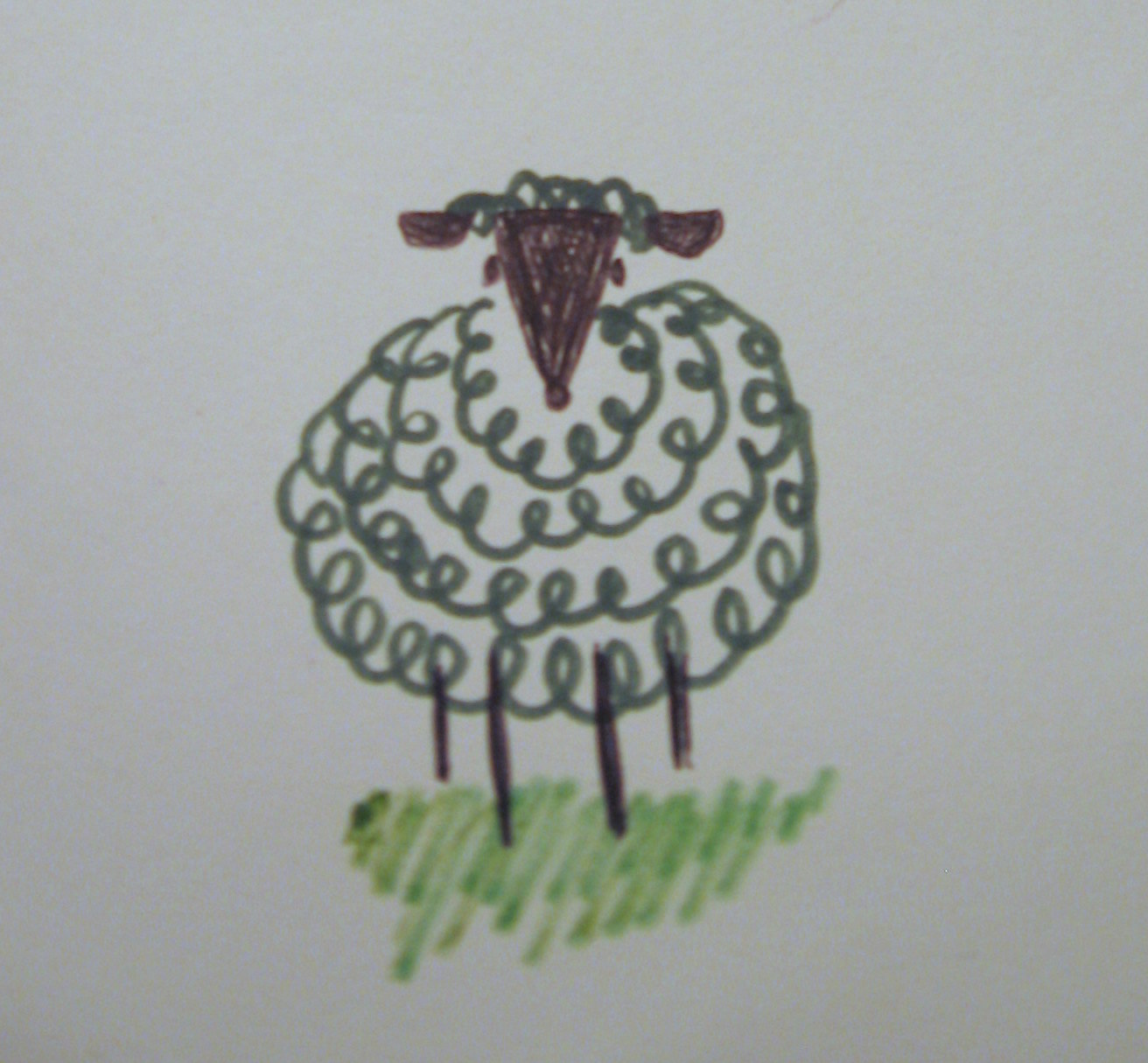
I was quite taken by the forward facing sheep.

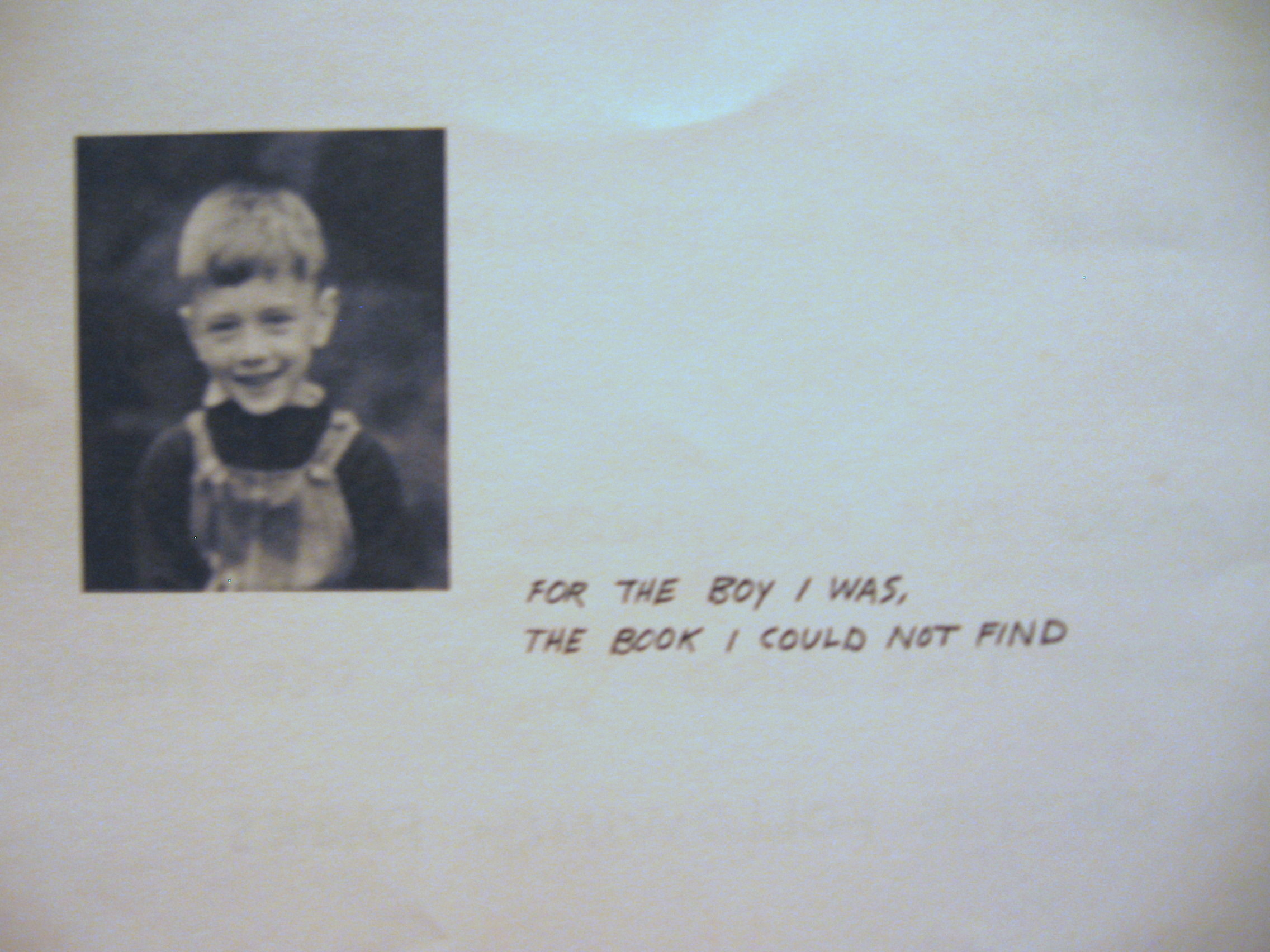
Yesterday I picked up one of my favorite books from childhood, Ed Emberly’s Drawing Book of Animals. It’s a simple, step by step guide to drawing various animals, starting with an ant — which is a dot — and proceeding through more and more complicated animals.

Emberly dedicated the book to himself as a child, a gift to himself of “the book I could not find.” IMG_0915

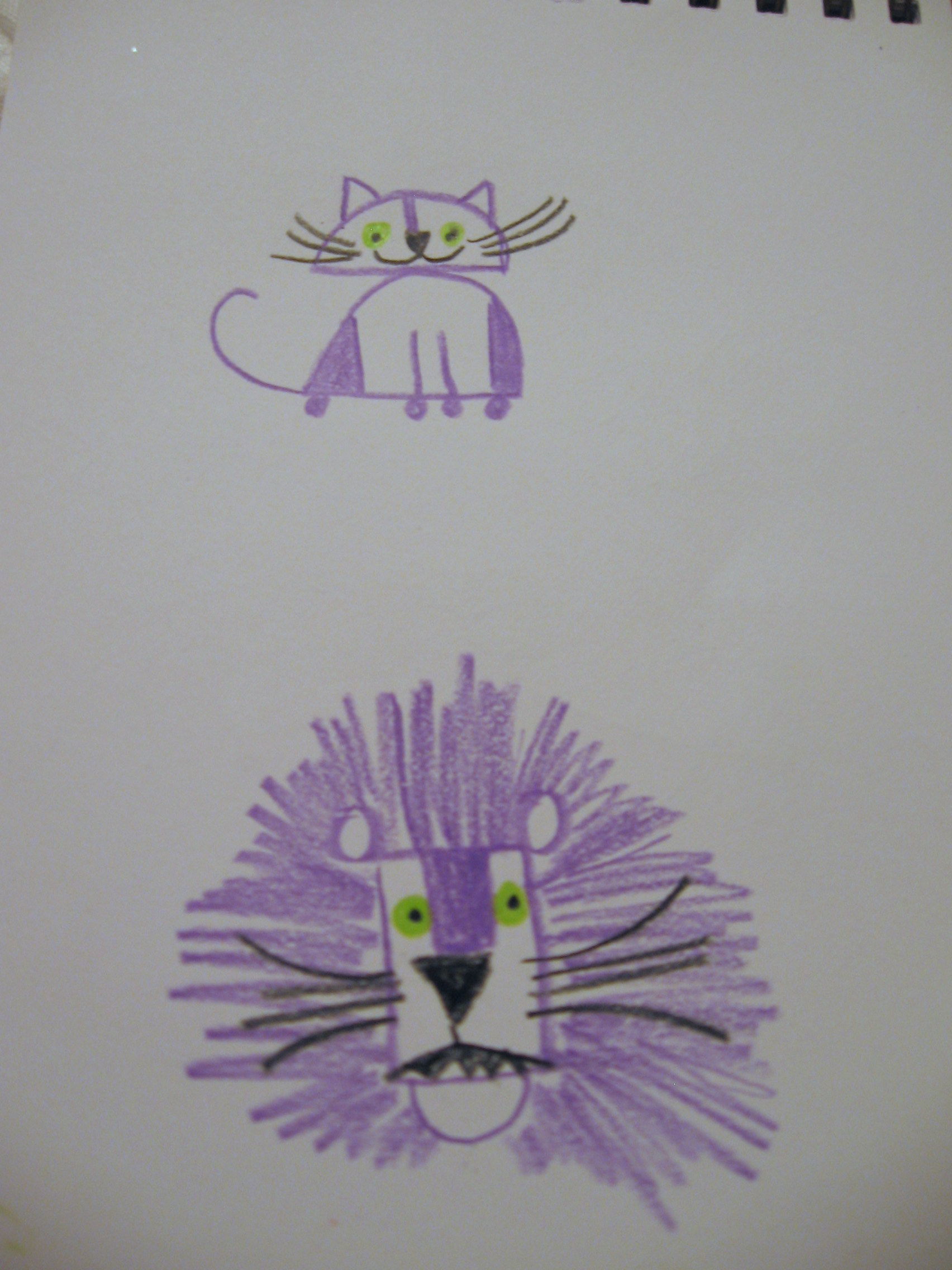
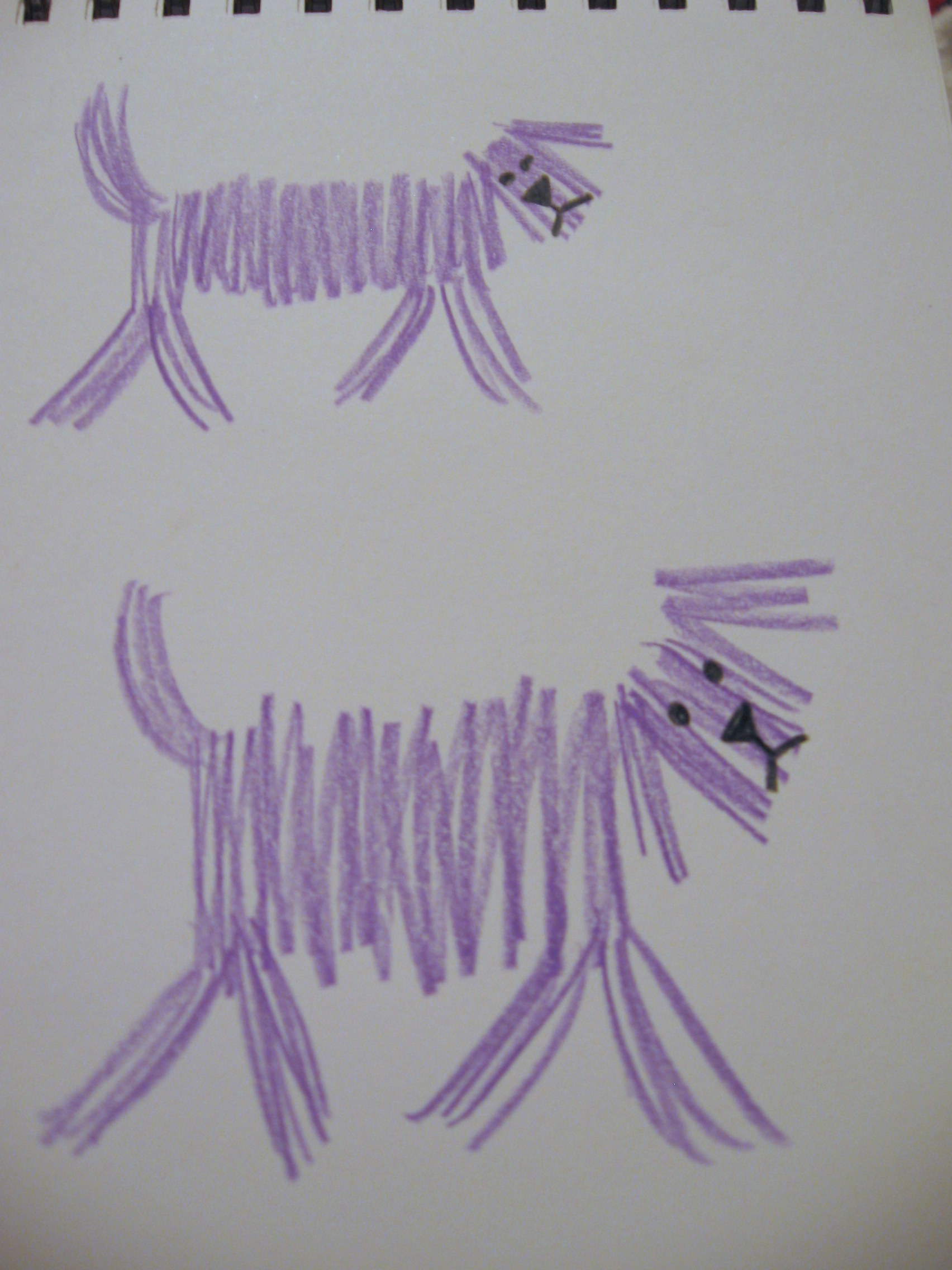
How perfect! What better reason to write a children’s book than to send it back in time to the young and hopeful you. And to young and hopeful Jessica, who drew –or tried to draw — almost every animal in the book. I can remember being afraid of attempting the dragon on the last page, and asking my mom to do it for me. She said no, that I should try to do it myself. But I don’t remember how it ended. Did I draw the dragon? Anyway, I shall, perhaps tomorrow, forty not being too old at all to draw one’s first dragon. Tonight, though, I was too tired to slay a dragon, so I drew several animals from the middle of the book instead. And I drew them all in purple, because I wanted to.

IMG_0911 IMG_0910

IMG_0909

This is Eddy. He is an assistant editor. I drew him for Mark to help him with his work. The best thing is, he works for peanuts.


Update: Here is the dragon, as promised! Only 34 years in the making.
Athenesius (2)

Option Three

makeupI saw a Revlon nail polish commercial yesterday, and the tag line was, “Don’t be envious; be envied.” No. No thank you. I can’t think of a worse way to deal with my own envy.

What a horrible, insipid idea, that the solution to our own feelings of inadequacy is to make others feel inadequate.

No, Revlon. I don’t want to be envious *or* envied. I choose option three: To appreciate the beauty of my sisters *and* celebrate my own. To build women up instead of trying to one-up. To release my own jealousy and replace it — not with vanity or disdain but with love. To care for and value my own body and marvel at the wonderful diversity of female bodies. To use my face to communicate compassion not superiority. To use my hands to touch and serve, not to repel.

I never want another woman to feel bad about herself because of me.

Who’s with me?

Snoopy’s novel

darkandstormyI’m working on a story or two for a “flash fiction” contest — 100 words or less. What a fun challenge! Today while googling Snoopy quotes (as one does) I stumbled upon the full text of his novel — written over the course of many comic strips. It’s kind of brilliant! But of course most of what came out of Charles Shultz’ head was brilliant. It’s meant to be a demonstration of Snoopy’s hyperbolic over-writing, of using old tropes like “It was a dark and stormy night” instead of writing something original and subtle. But I think it really works! It certainly holds your attention. And even though at first it’s hard to see the connection between the pirate, the king, the intern, and the little girl with the tattered shawl, he quickly ties everything together — in one sentence in fact. No need for more details — the mood, the action, the plot, and the resolution are all there, in 220 words.

It’s inspirational.


Snoopy’s Novel:

Part I
It was a dark and stormy night. Suddenly, a shot rang out! A door slammed. The maid screamed.
Suddenly, a pirate ship appeared on the horizon!
While millions of people were starving, the king lived in luxury. Meanwhile, on a small farm in Kansas, a boy was growing up.

Part II
A light snow was falling, and the little girl with the tattered shawl had not sold a violet all day.
At that very moment, a young intern at City Hospital was making an important discovery. The mysterious patient in Room 213 had finally awakened. She moaned softly.
Could it be that she was the sister of the boy in Kansas who loved the girl with the tattered shawl who was the daughter of the maid who had escaped from the pirates?
The intern frowned.
“Stampede!” the foreman shouted, and forty thousand head of cattle thundered down on the tiny camp. The two men rolled on the ground grappling beneath the murderous hooves. A left and a right. A left. Another left and right. An uppercut to the jaw. The fight was over. And so the ranch was saved.
The young intern sat by himself in one corner of the coffee shop. He had learned about medicine, but more importantly, he had learned something about life.

THE END

Two writers on writing, for Arwen and Laura

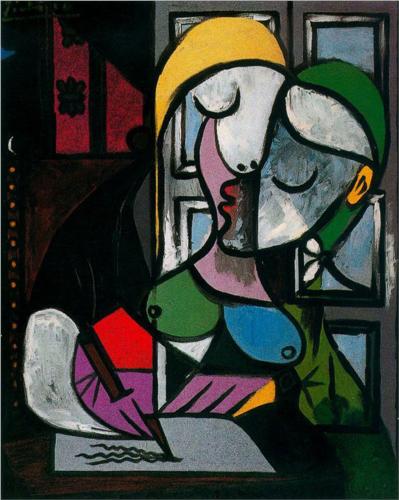
Woman Writing, by Pablo Picasso

Woman Writing, by Pablo Picasso

“It is Red Smith who is reported to have said that it’s really very easy to be a writer — all you have to do is sit down at the type-writer and open a vein. Typewriters are few and far between these days, and vein-openers have never grown on trees. Good writers, serious writers — by which I mean the writers we remember, the ones who have opened our eyes, maybe even our hearts, to things we might never have known without them — all put much of themselves into their books the way Charles Dickens put his horror at the Poor Law of 1834 into Oliver Twist, for instance, or Virginia Woolf her complex feelings about her parents into To the Lighthouse, or, less overtly, Flannery O’Connor her religious faith into virtually everything she ever wrote. But opening a vein, I think, points to something beyond that.

“Vein opening writers are putting not just themselves into their books, but themselves at their nakedest and most vulnerable. They are putting their pain and their passion into their books the way Jonathan Swift did in Gulliver’s Travels and Dostoyevsky in The Brothers Karamazov, the way Arthur Miller did in Death of a Salesman, and William Maxwell in They Came Like Swallows. Not all writers do it all the time — even the blood bank recognizes we have only so much blood to give — and many good writers never do it at all either because for one reason or another they don’t chose to or they don’t quite know how to; it takes a certain kind of unguardedness, for one thing, a willingness to run risks, including the risk of making a fool of yourself.”

~Frederick Buechner, from the introduction to “Speak What We Feel (Not What We Ought to Say)

“You ask whether your verses are good. You ask me. You have asked others before. You send them to magazines. You compare them with other poems, and you are disturbed when certain editors reject your efforts. Now (since you have allowed me to advise you) I beg you to give up all that. You are looking outward, and that above all you should not do now. Nobody can counsel and help you, nobody. There is only one single way. Go into yourself. Search for the reason that bids you write; find out whether it is spreading out its roots in the deepest places of you heart, acknowledge to yourself whether you would have to die if it were denied you to write. This above all — ask yourself in the stillest hour of your night: must I write? Delve into yourself for a deep answer. And if this should be affirmative, if you may meet this earnest question with a strong and simple “I must,” then build your life according to this necessity; your life even into its most indifferent and slightest hour must be a sign of this urge and a testimony to it.”

~Rainer Marie Rilke, Letters to a Young Poet
{this moment}

Keith & Chrissie's guest bedroom in Canaan, NY

Keith & Chrissie’s guest bedroom in Canaan, NY

A single photo – no words – capturing a moment from the week. A simple, special, extraordinary moment. A moment I want to pause, savor and remember. Inspired by Daniela and SouleMama. If you’re inspired to do the same, leave a link to your ‘moment’ in the comments for all to find and see.

{this moment}

IMG_0884[1]


A single photo – no words – capturing a moment from the week. A simple, special, extraordinary moment. A moment I want to pause, savor and remember. Inspired by Daniela and SouleMama. If you’re inspired to do the same, leave a link to your ‘moment’ in the comments for all to find and see.