The single life, a poem

IMG_0268

The Single Life
by Jessica Kantrowitz

“Where is that glass of water
I just poured myself?” I ask
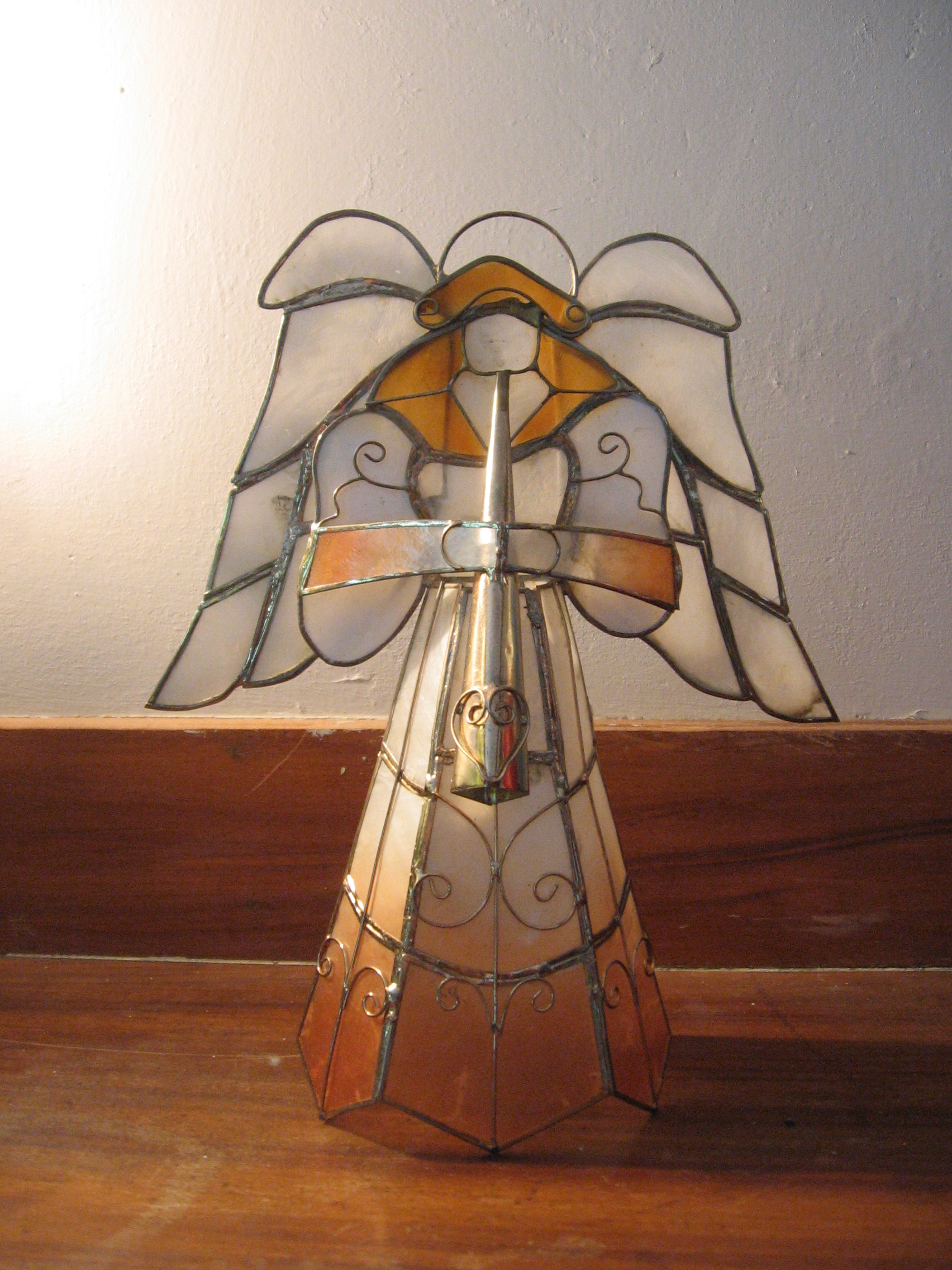
The Christmas angel on my
Mantel. I couldn’t bear to put her
Away with the other decorations.

Because she is made of
Metal and glass, she is
Very polite, and only
Looks down at her trumpet,
Not wanting to embarrass me.

A real angel would be bolder.
Not sarcastic, exactly, but
A little bit condescending.
“Where were you when you last
Had it, silly girl?” she would say,

Shaking her head but with just
A hint of a smile, so I would know
She really liked me.

On trains and churches

MBta mapThis is really just a funny little story for Gina, Steve, and Sarah. But since I have a blog I thought I’d post it here. You can listen in if you want.

I haven’t been to church in a long time. It’s a long story, which I’ve written about elsewhere. Briefly: For twenty years I threw myself into church, Christian community, and Christian ministry, had some great experiences but also lots of bad and hard ones, and didn’t quit until I was completely burnt out, ill, and, according to one counselor, suffering from PTSD.

I haven’t been to church in years, but it has been less than two years since I moved out of the intentional Christian community where I lived for seven years. It’s been 21 months, to be precise. I’ve been amazed at how quickly I’ve healed from individual wounds and relationships. Much of that healing has come through writing about it. But I’ve needed to be alone. I’ve needed this beautiful house, this sunny porch, my two mostly quiet housemates in this quiet neighborhood. I’ve desperately needed no weekly meetings, no communal prayer times, no vision casting or conflict resolution, no expectations.

I can’t believe how quickly and deeply the healing came when I finally stepped away.

I don’t hear God’s voice much these days, at least in the way I used to, but three or four years ago, struggling to re-find my daily Bible reading and prayer time, struggling to return to church and feeling traumatized and exhausted every time I stepped through any church’s doors, I heard God say, “Why are you looking for me in the places where I’m not?” I don’t think he meant he wasn’t present in those places. He meant that, for me, he was waiting to commune with me in new places, in new ways, but I was refusing to meet him there because I thought I shouldn’t leave the old places.

When I finally let go of the “shoulds” I followed God to the new places, and he met me there. Not in the same way he used to meet me, but in a deeper, quieter way. Some of the new places were: Centering, meditative prayer instead of conversational prayer; Quiet evenings and weekends alone instead of swallowing Advil for the migraines and rushing off to lead a Bible study; Reading the blogs and Facebook posts of my friends, and writing my own; Walking, biking, and yoga.

But I still believe in church, at least in theory. As the author of Hebrews says, “[do not give] up meeting together, as some are in the habit of doing…” I still believe we need each other, as Christians. And not just the hand-picked friends who are like us and support us, but the whole body of Christ, broken and difficult, those who speak different languages than we do, literally and figuratively, those who are in different places than we are, those who we can learn from and those who we have something to teach. I still hold the “should” of church, but I guess I hold it loosely.

That’s where I am.

So here’s the story:

I used to believe that God spoke to me through small coincidences: Two friends mentioning the same thing, reading random Bible verses that seemed to point me in an unexpected direction. Maybe God was in those things, I don’t know. But these days I tend to hear God differently, in deeper ways, through careful listening, and through years of knowing myself and who he created me to be.

But over the past couple of months things have been happening that, before, I would have seen as those God-coincidences. My best friend, Gina, had been telling me for years that I would like the Greater Boston Vineyard church. Then the pastor of that church, Steve Watson, who I know through mutual good friends, started reading some of my blog posts and commenting on them. And he emailed me to say that he thought I would fit in well at his church. I told him I really appreciated that, but wasn’t quite ready, and he was very gracious and respectful. Then Gina and Steve got together to talk about other things, and Gina told me my name came up, and they both mentioned they thought I’d like the Vineyard.

Next, my friend Sarah shared on Facebook her excitement about the direction in which the church was going, and it was something very close to my heart: Creating safe space for the LGBT community and for people with various views on those issues. This was my dream – and the reason I love The Gay Christian Network and keep talking about them – to not choose sides, to love and respect everyone and allow the Spirit to guide us, individually and as a church. “And if on some point you think differently, that too God will make clear to you.”

Then, in response to an ad I placed on the church’s webboard – my housemate and I had a room available in our house – a couple from the church wrote to say they live two houses down from me, and we should get together some time!

That night I went to bed laughing, thinking that if I still believed coincidences like that were God speaking, then I would be pretty sure he wanted me to go to the Vineyard.

And then I had a dream.

In my dream I walked through the streets and subway stations of Boston, and a man stopped me and invited me to his church. I agreed to come along, and we took the train there. (What do trains represent in dreams? I dream about them all the time in mine.) When we got there we went in and the service hadn’t started yet. I sat down near some people who were having a conversation, and a prim middle-aged woman in a rose-colored pants suit said sharply,

“You can’t sit there! That seat’s too small for you, you’re going to break it!”

Shamed, I stood up and tried to regroup, but I felt the familiar panic and claustrophobia closing in, and I needed to get out. I turned and walked quickly to the door, but I heard the voice of the man who invited me saying,

“Jessica! Jessica, stop, where are you going?” He came up behind me.

“I’m sorry, I can’t be here right now,” I said over my shoulder as I rushed to the door. “I need to leave.”

“No, don’t go. Don’t go,” he said, and tried to grab my shoulder, but I kept walking. As I left, I felt his fingers scraping at my skin. It was like some kind of Flannery O’Connor story, fleeing the church while a demon/Christ-figure scrabbled at my shoulder. I woke up, as I had gone to sleep, laughing. The dream had told me – in an amusingly dramatic way – that I wasn’t ready, not quite yet.

I realized that I still have some work to do. And I still need to spend some time where God is now for me: In my solitude, and in my writing, and in my friendships. But I’m encouraged. I feel like there is a place for me, for when I’m ready to return. It might be the Greater Boston Vineyard, or it might be another church like it. Before I was feeling like I didn’t know where I belonged: Too liberal to go back to an Evangelical church, but still too Evangelical to feel quite comfortable in a mainline church. Now I feel that there are others like me, and places where I would fit in. Well, maybe not fit in, entirely. But at least be able to be myself.

Save a space for me, friends. Not just now, but maybe in a little while.
On strength and beauty

Great blue heron

Discovering the Water’s Edge by Mark Slawson

I went kayaking today on the Charles river out in Newton. I love kayaking on a river — it’s different than sea kayaking. With no waves it’s more peaceful, and you feel more in control. The kayak becomes an extension of your torso; the paddle an extension of your arms. You just sit on top of the water and your arms move you in whatever direction you want to go. It’s so easy and seamless, as if you finally have all of your limbs and are remembering what to do with them. Your arms pump in a figure eight, dipping one end of the paddle down through the water while the other arcs up and forward, then bends to dip again.

I slid out of the dock and quickly passed the hapless summer campers in their canoes. A canoe full of girls headed towards me and their eyes widened in panic: “Sorry!” they shouted, “Sorry, we don’t know how to turn!” “You’re okay, don’t worry,” I smiled and moved effortlessly aside, wise, gentle, and accomplished in a way that I rarely am on land. Then I left the groups behind, headed up the river past the fields of lily pads which were possessed by one great blue heron each. Swallows zipped back and forth, close to the water, catching the little water bugs. A hawk soared overhead in a circle, and I wondered if he was looking for fish.

My shoulders had stiffened after a few minutes, but they actually loosened as I paddled on. I peered over the blue puff of my life jacket at my bare arms, and watched the muscles move in them as they turned the paddle, the skin beginning to freckle from the sun. They looked so strong and purposeful, and felt so natural, taking a rare turn at all the action while my legs rested, crossed, in the kayak. This! I thought: This is what arms are for! To be strong, to carry you across the water, to pull and push, hold and carry, reach and touch. How often have I judged my poor arms for being too fat, having loose skin and stretch marks, thought them inadequate and imperfect. But look what they can do! Look how confident and beautiful they are, moving over the green-grey water.

Later in the day I babysat for a two year old girl, fed her dinner, bathed her, and read her stories before laying her down in her bed for sleep. In the bath I marveled at her dark skin and hair, her lean arms and legs and round belly. As we toweled her off she rubbed her belly and cried joyfully, “Belly! Belly!” “Yes!” I said, “I love your belly! It takes in your food and makes you strong and healthy. And it gives you big belly laughs!” We brushed her hair and she said, “Hair!” “Yes!” I said, “I love your hair! It keeps your head warm in the winter, and protects you from the sun and from bugs.” She is truly one of the loveliest creatures I have ever known, and I want her to know that she’s beautiful. But I also want her to know that her body is strong and capable and there for a purpose. Her body was not given to her to be cute, to keep slim and perfect so it will attract admiration. It was given to her to use, to run and jump, to laugh and touch and hold and carry. And, some day soon, to sit cross-legged in a kayak and slip smoothly through a river filled with flowering lily pads.

*This was originally posted last summer as Kayaking.

We choose you

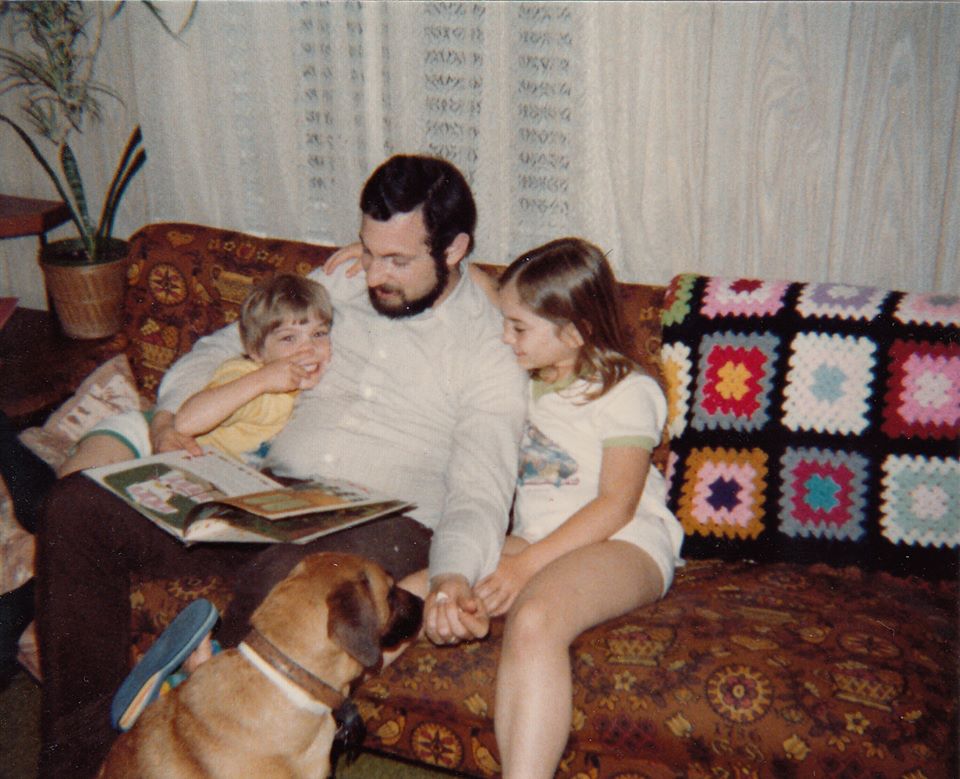
Me with my dad, little brother David, and our dog, Hector.

Me with my dad, little brother David, and our dog, Hector.

When I was about eight or nine years old we read at church the story of Abraham preparing to sacrifice his son, Isaac because God called him to. Later, at home, I asked my dad, “Dad, what would you do if God told you to sacrifice me?” I don’t know if he realized what an important question it was for me. I loved God, and our church, and the stories we read in the Bible. When I was three I had prayed for Jesus to come into my heart. But this story scared me. I knew God had provided Abraham with a ram so he didn’t have to sacrifice his son. I don’t remember if I understood at the time that it was an analogy to Jesus, to God the Father providing us with His only son as a sacrifice so we didn’t have to die. I do remember knowing it was supposed to be a good story, with a happy ending. But the meantime part, when Abraham tied his son to the pyre, fully expecting and intending to kill him out of obedience to his God — that part scared me. Looking back, it was very brave of me to ask my dad the question. If he had said yes, it would have devastated me, and probably destroyed my young faith.

“Dad, what would you do if God told you to sacrifice me?” With tears welling up in his eyes, my father said, “I wouldn’t do it, Jessica. I would say no.” And my young heart understood that my dad LOVED me, and did not love God one whit less. He was not choosing his daughter over God. He made a choice that showed us both God’s deeper broader love. My heart chose God at that moment because my dad chose me.

Yesterday, when Glennon Doyle Melton shared part of a letter she’d written to a young transgender person who had been kicked out of church, it reminded me of that moment. She wrote:

You need to remember that being rejected by church is not the same as being rejected by God. God did not kick you out of church, honey. The church kicked God out of church. Listen—I love the church, J. I spend every extra minute I have in mine. But I am here to tell you that the church is not God. You are more God than the church is, J—because you are made in God’s image: while the church is an institution. God loves you more than any institution He/She made for you, J. When folks decide they love any institution more than the individual souls inside them—they’re missing the mark. I love the church, J—but I love you more. If I’m forced to choose, I choose you and your heart every day and twice on Sundays. Just as God made you. Just as God made you.
(You can read the rest of her post here.)

Let me first say that this is the best use of the expression, “and twice on Sundays” that I have ever seen. G, if I had a Best Turn of Phrase award to give out, you would get it this week.

When I read Glennon’s post, this post came to me, almost full-fledged. That happens sometimes. I suddenly feel the push against my belly and realize there is something in there that needs to be born, and I rush to the computer and type it up, fingers stumbling over each other in my haste. I typed it as a Facebook status. And then, I have a confession: I paused. I thought, Do I really want to go there? Just 29 days ago I hit publish on a post about Jesus and gay weddings, and things got crazy. Good things happened, and are still happening, but it was big and scary and overwhelming. I got my first negative comment in over seven years of blogging, and I got my next five hundred negative comments the same week. Friends wrote praising me, and friends wrote rebuking me. My beloved little blog became something different than it was before. In good ways but in some hard ways, too.

So I looked at what I had written on Facebook, the story about my dad, the paragraph-long quote from Glennon’s blog, and the link to her blog, and I thought, Do I really want to bring up transgender people? Shouldn’t I take some time to let the LGB part settle in? Take some time myself to come to grips with the new Ten Thousand Places, my new readers, my new critics? And take some time to let the Christians I was writing to get used to the thought of baking for gay weddings, before I started in with, “And another thing…” The little girl I nanny was sleeping and would wake any minute, and I hesitated, the cursor hovering over the post button, my finger hovering over the track pad.

And then I thought about my eight year old self again. I thought about how scared I was, how much I loved God and my father and wanted to understand. I thought about my twelve year old self, feeling lost and rejected by my peers, and how boys were just starting to be on my mind, but I already felt there was something wrong with me that would keep me from having a normal life and normal relationship. I was a straight cis girl who would grow into a straight cis woman — all of society was in my corner, and still it was so hard to grow up, to understand myself, my family, my faith, my gender identity, my sexuality. “Sex is difficult,” Rainer Marie Rilke wrote to his young poet friend, “yes. But they are difficult things with which we have been charged; almost everything serious is difficult and everything is serious.”

I thought, as I had many times before, about how integral my gender and my sexuality are to who I am, and how that has very little to do with the sex act itself. I have been celibate most of my life by choice, first because I was waiting to be married, and now because I don’t think I necessarily will get married — and I’m content with that. But the lack of sexual activity in my life has not made me any less of a woman or any less straight — I am a woman oriented towards the opposite sex. I was born that way. I grew up that way. It is as a straight woman that I understand and interact with the world. It is as a straight woman that I worship God.

If it was hard for me to grow up, to accept myself, to understand God’s love for me, I can’t imagine how hard it is for young people whose gender identity or sexual orientation isn’t as widely accepted by society, by their family, by their church. What if my dad had not chosen me? What if my parents had told me that they chose the church over me, that they chose society’s norms over me?

So I took a deep breath, and lowered my finger, and clicked “post.”

And I’m going to click “publish” here in a few minutes, if the little girl naps long enough for me to finish writing. Because I have a one more thing to say:

Maybe your parents, or your church, or society in general were not able to speak those words that you needed to hear. Maybe they chose their interpretation of the Bible or their view of the world over you, overtly or in subtle ways that hurt just as much. Maybe it was because of your sexuality or the gender you identified with. Maybe it was because you struggled with mental illness or addiction, and they didn’t know how to handle it. Maybe you were abused and they chose your abuser or the family or church’s reputation over you. Maybe there was nothing in particular but you just were never sure where you stood. Maybe you worked day and night to dot every i and cross every t so that you would never have to find out whether they would choose you.

If this is you: Listen. You are not alone, and you are not unchosen.

I choose you.

My dad chooses you.

Glennon chooses you.

John chooses you.

Rachel chooses you.

Laura chooses you.

Nadia chooses you.

Sarah chooses you.

We love the Bible, and we love God, and we love church, even though we sometimes have a rocky relationship with it. But if we had to choose, we would make the same choice that Jesus made, when he carried his cross, forgave his killers, and died for me and for you.

Jesus chose you. And so do we.

We choose you. Every day, and twice on Sundays.

Love,

Jessica

*****
Please check out Faithfully LGBT and their wonderful photo series of LGBT people of faith.

Come follow me on Facebook, Twitter, and Instagram and join in the conversation! (I’ll tell you a secret: I’m feistiest on Twitter!)

Some related posts:
How I came to support LGBT full inclusion in the church
Why we need to stop saying “Love the sinner but hate the sin”
Bake for them two


Save

The long, slow work of love

grassfire“People generally suppose that they don’t understand one another very well, and that is true; they don’t. But some things they communicate easily and fully. Anger and contempt and hatred leap from one heart to another like fire in dry grass. The revelations of love are never complete or clear, not in this world. Love is slow and accumulating, and no matter how large or high it grows, it falls short. Love comprehends the world, though we don’t comprehend it. But hate comes off in slices, clear and whole — self-explanitory, you might say. You can hate people completely and kill them in an instant.”

~Wendell Berry, in Jayber Crow

I love the book Jayber Crow by Wendell Berry. When I first read it several years ago I wrote this paragraph in my journal in awe. At first the sentence, “Love is slow and accumulating and no matter how large or high it grows, it falls short” gave me pause. What did he mean, that love “falls short?” Isn’t it supposed to be the strongest force in the universe? But as I thought about it more I realized how true this is of our love for each other. It is so hard to show love and receive it. For every loving, selfless action or word that builds love and trust, we stumble and show our fear, bitterness, jealousy, and even anger, even to those we love the most. As Doctor Phil always used to say, “It takes ten ‘atta boys’ to make up for one ‘you jerk.'”

Love is slow and accumulating, it takes a lifetime to build trust, to feel safe, known, seen, and loved for who we are, and to know, see, and love others.  But anger, contempt, fear, judgement, scorn, and hatred leap from one heart to another like fire in dry grass. You can hate people completely and kill them in an instant.

This is why expressions like “love the sinner, but hate the sin” come across as hate, even from well-meaning people. Love is slow and accumulating, and cannot be communicated in the same sentence as the word hate. But the hate leaps from one heart to another like fire in dry grass, leaps from the phrase, “love the sinner, but hate the sin” to the heart of the one being called a sinner. And the hate, coming in the same package as promised love, becomes even more powerful.

I had a boyfriend in college who said to me, “I love you but I hate that you’re fat.” Did this make me stop overeating? Yes, but it didn’t make me healthy. It made me starve myself instead, eating as few as 500 calories a day for months, ruining my metabolism, forcing my body into starvation mode, and setting myself up for many more years of unhealthy eating. The hatred leapt to my heart like fire, and has taken the better part of two decades to extinguish.

When I posted my “Bake for them two” essay three weeks ago, hundreds of people commented saying I was wrong and homosexuality was wrong, and some of them said it as kindly as they knew how, and others didn’t bother with kindness. But all the comments merged together like sparks into a single fire and I felt the flames against my skin. And I understood more than ever why LGBT people were leaving church and fleeing from these flames, and, worse, why they were catching fire and hating themselves and harming themselves and dying.

I had a friend, Andrew, who came out to me in high school and made his first suicide attempt a few months later. His parents and his church told him that he had to change to be loved and accepted by them and by God. And he tried, but he couldn’t change. And he feared the fires of hell but he feared the sparks of hatred in this life even more. He was found that time, running his car in the closed garage. I went to college and he moved to the West Coast and we lost touch for fifteen years. Then, in 2007, I reconnected with our mutual friend Tammy, Andrew’s best friend. “Andrew will be so excited that we’re back in touch with you!” she said. Five days later Andrew made his fourth or fifth suicide attempt, and this one was successful. For five days he had still been alive. I think I had his email address from Tammy but I hadn’t gotten in touch yet.

Love is slow and accumulating. But you can hate people completely and kill them in an instant.

So many people wrote to me after Bake for them two saying that they had not heard a message of love from a Christian in years. Many others were mad at me for screening the comments and posting more from people who agreed with me than from those who disagreed. Hundreds of people wanted me to post their Biblical arguments against homosexuality, their version of “love the sinner but hate the sin.” But love is slow and accumulating and I want Ten Thousand Places to be a place where love can be heard over the arguments.

My father, Matt Kantrowitz, and some of his friends shared my post on Facebook, where one woman commented that she was not a hater, that she was just calling sin sin. This was my father’s reply:

In 30 years of ministry with those society considers the “worst” sinners: prison ministry, I have learned one thing: We can’t scold people into the kingdom. Our rebuke: “Calling sin sin” comes across as disapproval, judgementalism, scorn, and rejection. We take their sin (and our own ) seriously. But we realize they will find salvation and forgiveness for their sin, healing and transformation to live a new life: they will find all this a lot faster if we incarnate God’s LOVE to them than if we sin against them by lecturing them when God is calling us to love them.

Love is slow and accumulating. The revelations of love are never complete or clear in this world. But we can do our best to communicate them by showing up in the prisons, in our workplace, in our homes, and in our churches, alongside those who are hurt and struggling. We can sit and listen to people’s stories and share our own. As theologian Paul Tillich said, “The first duty of love is to listen.” But we can’t communicate love in the same sentence as hate. Love can’t be heard in the sentence, “I love you, but…”

Christians, let’s dig deeper and begin to do the long, slow work of love.

*****

For those looking for more ways to listen and love, please check out my post Bake for them two follow-up and resources. And if you’d like to read more about my dad’s prison ministry, check out his blog, Visiting Jesus in Prison.

How I finally learned to feed myself

JessicaLarsAnderson

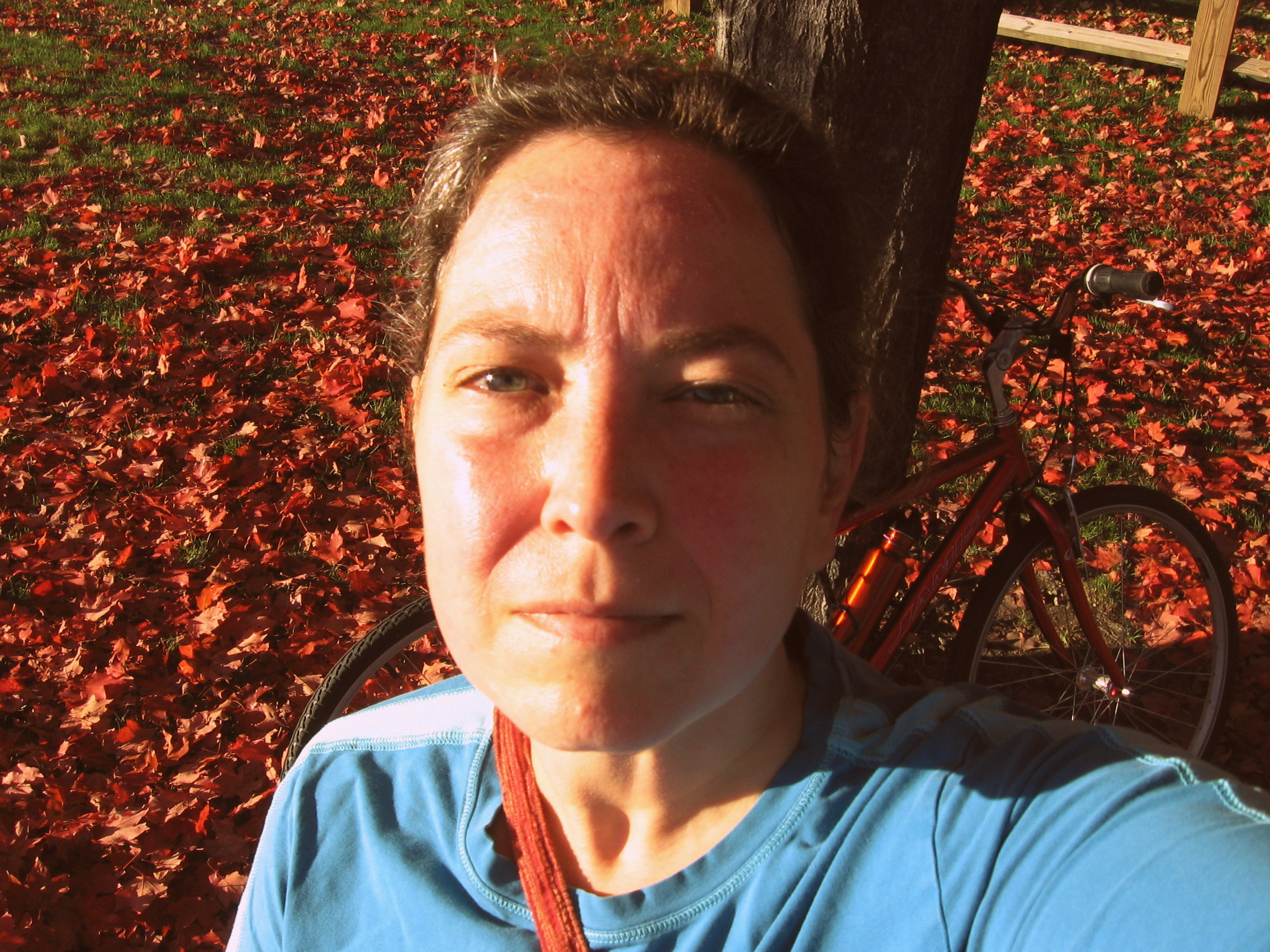
Me on a bike ride last autumn.

“As psychoanalyst Erik Erikson once noted, there are only two choices: Integration and acceptance of our whole life-story, or despair.” ~From Ruthless Trust by Brennan Manning

I’ve been doing a new exercise lately, when difficult memories surface. I take a deep breath, and the in-breath represents full acceptance of myself and everyone in my past, my life story and theirs. Then I breathe out, and that represents letting go of the pain and trauma that I experienced, forgiving myself and others. Breathe in — acknowledge and accept; breathe out — let go.

In the spirit of accepting myself and acknowledging my whole life story, yesterday when I was posting some pictures from ten years ago I included a somewhat unflattering picture of myself — worthwhile because of my two adorable cousins.

Poland, 2004 -- Me with Hannah and Alex

Poland, 2004 — Me with Hannah and Alex

I wanted to avoid the temptation to edit out parts of my life that I don’t like — like the fact that I was significantly overweight for most of my late twenties and early thirties. That was a part of me, and I can’t breathe out and forgive myself unless I breathe in and acknowledge it. I did so many fun things during that time, and it’s impossible to post pictures of them without showing that aspect of myself as well.

Eleven years later, I’m forty years old — about to turn forty-one. And I’m almost sixty pound lighter, and have been for several years. Significantly, I didn’t lose the weight by finding the perfect diet or exercise regime. I lost it by letting go of self-recrimination and shame. I lost it by forgiving myself each time I overate. I lost it by letting go of my identity as someone who was fatally flawed. After thirty-plus years of dieting, binge eating, and starving myself, I told myself that I wouldn’t diet anymore, that I would only have three rules for myself from now on:

1. Eat when you’re hungry.

2. Stop eating when you’re full.

3. Forgive yourself when you don’t.

For years I was stuck in a cycle of overeating, feeling shame because of it, trying to diet and exercise because I hated who I was, and then overeating again from that place of shame and hunger. I tried breaking the cycle over and over again, but I always tried to break it in the eating stage or the stopping stage. I finally realized after years and years that I needed to break the cycle in the shame stage. “Forgive yourself when you don’t.” That’s #3 on the list, but it’s the most important part.

I started out pretty well with “eat when you’re hungry” — not a simple thing when you have felt your most beautiful and affirmed when you were dieting or flat-out starving yourself. I bought healthy food and prepared it and tried to feed myself with as much love as I would feed a child, and with as much purpose as I put gas in my car. But the “stop when you’re full” part took a lot longer. The overeating had grown compulsive — sometimes the food just tasted so good, and I was getting such an endorphin rush from it that I couldn’t stop; but other times I was sick of eating, my jaw hurt from chewing, and the food tasted like sand, but something in me kept saying eat, eat, and I couldn’t stop.

That’s when I started pulling out my new rule, #3: “Forgive yourself when you don’t.” Instead of wallowing in shame and self-hatred, I got myself a drink of water, patted myself gently on the arm, and said, “That’s okay. You’re doing the best you can, and that’s a lot! Get a good night’s rest — tomorrow’s another day.”

It didn’t work overnight. In fact, without the shame and constant inner struggle I did gain weight at first. But gradually, slowly, I found myself eating and thinking, “Hm, I think I’m full,” and putting the food away. Without the shame the compulsion began to diminish. Eating became a thing to enjoy and be proud of — I was giving my body what it needed to live! Exercise flowed out of that joy. Instead of beating my bad flesh into line, I was enjoying the strength in my legs as I ran, and biked, and in my arms as I kayaked or did yoga. Shame got me short-term success and deeper longer-term problems. Forgiveness is healing me.

It was a long process, and I have far from mastered it. I still overeat occasionally. And I still am tempted to feel ashamed of myself. But then I remember how far I have come, and I pat myself gently and say:

You have done the very best you can, every step of the way. You have made mistakes, but you are forgiven. Accept yourself and your past, forgive yourself, and let it go. When you have learned to forgive yourself, it will be possible to forgive others for the times they have hurt you. Breathe in — it’s okay. Everything that has happened to you is part of your story — there’s nothing you need to deny or forget. It has all led here, and here is where you are supposed to be right now. Breathe out — Let it go. You are not defined by your pain or your mistakes, or the way others have hurt you. You can let go of all of it and live fully in the moment, and accept fully what this day and this moment have to offer you.

Friends, is it time to forgive yourself? Is it time to break the cycle and let go of your shame? Is it time to learn to feed yourself? Can you start tonight? — Pat yourself gently on the arm and say, “It’s okay! You did the best you could today, and that’s a lot!” Start tomorrow fresh, not needing to skip lunch to make up for today’s dessert, or to start a new diet because you had seconds at dinner. Wake up, not bad, not fatally flawed, just human. Wake up, forgiven and new, and feed yourself.

***

Come follow me on Facebook, Twitter, and Instagram and join in the conversation! (I’ll tell you a secret: I’m feistiest on Twitter!)

*Parts of this essay were originally posted last year as part of Momastery’s Messy Beautiful project.*

Save

Save