Dear shooter: I will not learn your name

Candle

Dear shooter,

I will not learn your name.
I will not read about your vision or your passion
or your manifesto; the views, the hatred
that led you to this act.

I will not share your image on social media
Or comment on the news reports that do.
I will do my best to not even think of you, to unmake your
memory, to forget that such a person ever lived.

You did not win either my admiration or my horror.

But if you had come to me before and said,
“I am angry,” “I am terrified,” “I am alone,”
“I am filled with hatred, for you, for everyone.”
I would have looked you in the eyes as best I could.

I would have spoken your name out loud.
I would have told you the truth, as I know it,
That you are beloved, that you are not alone.
That Love has not passed you over — even you.

And the way I know this is that Love loves me, too —
Even me. I would have looked on you with compassion
And said a prayer for you. I would have called heaven to your aid.
But I will not give you notice now.

I will not learn your name.

Rosh Hashanah and the magic crossword puzzle: A true story

IMG_0933All of this really happened, I swear:

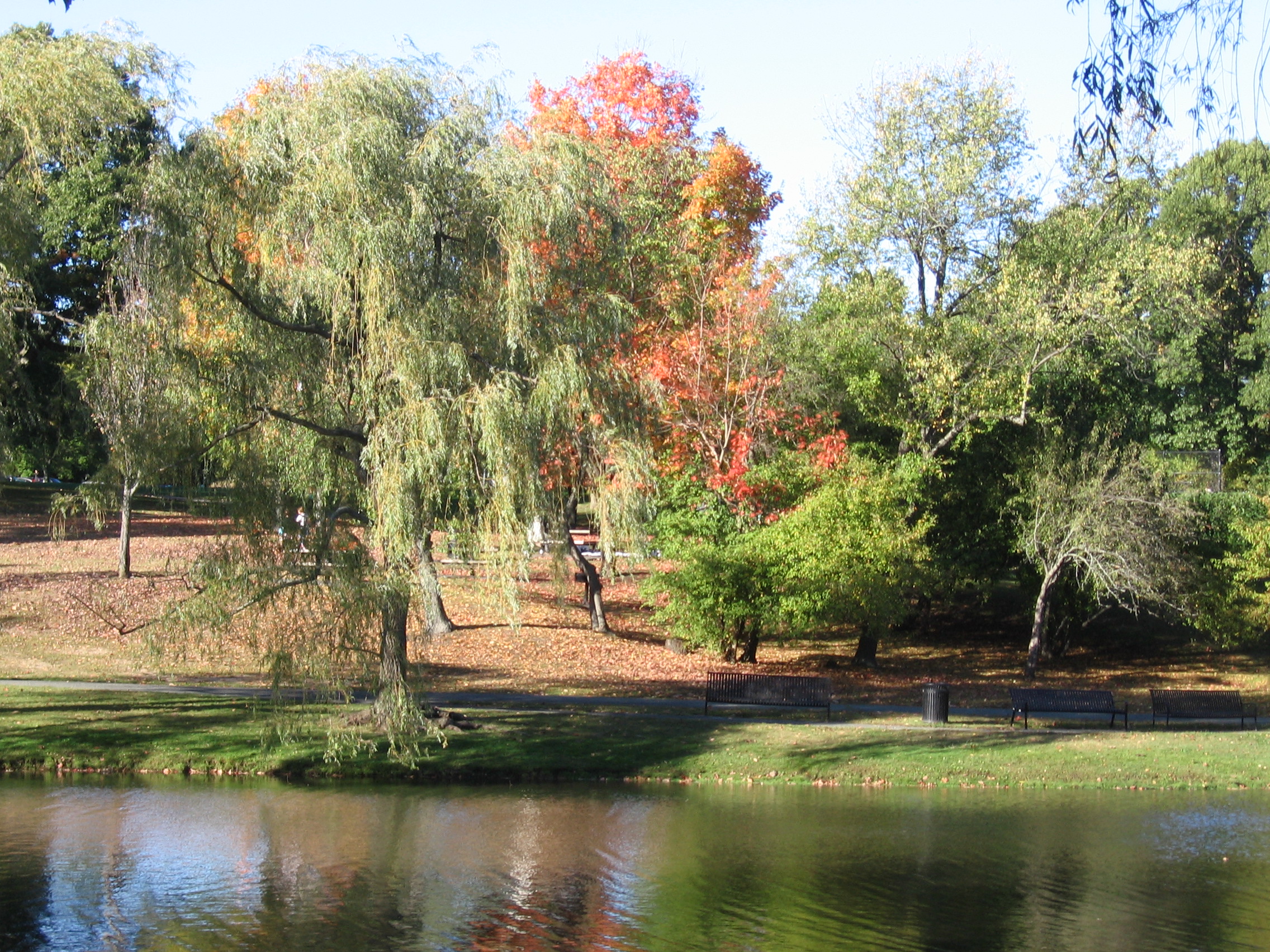
On Monday the 9 and 5 year olds I usually pick up from school had the day off for Rosh Hashanah, so I spent the day with them. We packed a lunch, bikes, soccer balls, and books and headed to Larz Anderson Park, one of my favorite places in Boston.

After a while we ended up under a magnificent tree whose branches hung down to create a shaded club house. The boys found sticks and sharpened them into spears — cave men from the nearby tribe were attacking and they needed to be ready. I sat down on the picnic blanket and took out my book of crossword puzzles.

I’m pretty bad at crosswords. This book is supposed to be “fun and easy” puzzles, but they still take me forever. I fill in about half of the clues pretty quickly, but then get stuck on the rest. Still, I enjoy it. So, as the cave men battle preparations went on behind me, I went painstakingly through the clues, filling in a new one here and there, hoping for a breakthrough. But there were a handful that I just couldn’t get.

Then, from across the water, I heard a woman singing a haunting melody. I looked up from my book and saw a procession of men and women descending toward the pond, singing and dancing. The leader wore a striped shawl, and the men wore yarmulkas. They came to the edge of the water, gathered stones, and formed a circle.

There was something strangely familiar about the sight. I looked down at the puzzle. There it was, 19 down: “Jewish circle dances” __R_S. I looked up again at the circle of Jews across the pond. And suddenly I realized: They were acting out the clue for me! This was a magic crossword puzzle, and a magic park! What fun!

But then I started to look at the other clues I was stuck on, and wonder what they would look like acted out. 29 down: “Sacred choral work” _OT_T. Well that would be lovely.  17 across: “Regis Philbin and others” ABCD___I_E_O_TS. Hm, doesn’t quite go with the peaceful setting, but it could be entertaining. 53 down: “Zeus’ wife” _E_A. Well. I wasn’t quite sure I wanted the gods to start showing up. If I remember my mythology, things tended to get dicey with them, especially when wives were involved.

And then I saw 37 down: “Reason for an R rating” __R_.*

“Kids,” I said, “Get your things. We have to get out of here.”

***

*For those who are wondering, the answers were HORAS, MOTET, ABCDAYTIMEHOSTS, HERA, and GORE. I finished the puzzle later in the safety of my own home.

Tiny little trees, or, I can’t do it, but I’m doing it anyway.

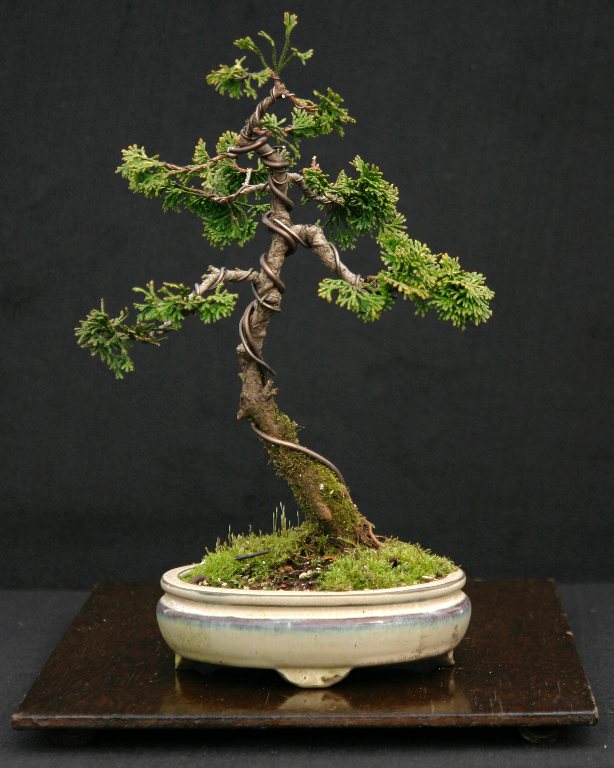
hinoki2006

Hinoki Cypress

The other day I took the three kids I nanny to the Arnold Arboretum. The two “big” kids, four and two years old, took their bike and scooter, while I pushed the baby in the stroller with the diaper bag, lunch boxes, water bottles, sun screen, and all the rest of the paraphernalia that comes with three small children.

I work ten hour days at this new job. I took it because it gives me Wednesdays off, which I theoretically use for writing and editing. But ten hours is a long day, and three kids is more than I’m used to, and so it has been an adjustment. I miss the leisurely days with my last charge, a sweet little girl whose personality was similar to mine — we used to go and people watch, and wander dreamily around, having little adventures. Fun and learning opportunities were everywhere, and it never really felt like work.

I love these new children, too, but when there are three things get more practical. The focus tends to be more on keeping everyone safe, diapered and toileted, fed, getting along, and napping when they’re supposed to or need to. I try to do things that they’ll enjoy, of course, but I can’t enjoy those things as much, and the special times of bonding one-on-one do come, but they are moments here and there rather than the entire day.

So we were at the arboretum, finally, after having made and packed four lunches, covered all exposed skin with sun screen, and buckled helmets onto the heads of the biker and scooterer. And I thought longingly of the bonsai trees, through the woods and up the hill, and how much fun it would be to bring the kids there. But the path was gravel and long, and I knew the kids would have a hard time with their vehicles, and I couldn’t carry a bike and scooter in addition to all the other stuff. Just pushing the stroller up the hill would be hard, and it was a hot day, and only ten o’clock in the morning — eight hours to go. Probably I should pace myself.

Then, suddenly, I decided joy was more important than ease, and I turned to the kids:

“Do you guys know there is a garden here with tiny little trees? They’re so beautiful, it’s almost like magic, like a little fairy kingdom. Do you want to go see them?”

“Yes, let’s go!” they answered.

“I just have to tell you that we’re going to have to go down a long path and up a big hill. It might be hard to bike that long way.” I looked at the four year old and widened my eyes in awe: “So it’s a good thing you’re SO strong and brave, Evan! Let me see your muscles.”

“Yeah, I’m SO strong!” he piped up, excited, and pulled up his sleeves to flex his biceps at me. “I can do it!”

I knew if he were motivated his little sister would follow along. So, having given my little speech to the troops, I led the way. The gravel path did, indeed, prove a challenge, but they handled it like pros, with me proactively cheering them on every few minutes, before it could occur to them to complain:

“You’re doing so great! This path is hard, but you guys are so strong! Great job!” Meanwhile I leaned into my work with the stroller and tried to look around and take in the beauty of the woods. I am not a big talker, and my dual job as a stroller-pusher and cheer leader was tiring, but I pushed on. We made it through the woods and into the lovely shrub and vine garden — the last leg of our journey that comprised an uphill path that zig-zagged back and forth to the bonsai house on top. This part was in the open sun, and the job got hotter and harder. The four year old continued his brave push (his bike was much heavier than the two year old’s scooter), but his little sister started to cry, “I can’t do it! I can’t do it!”

As I looked back to assess the situation, I realized that, even though she was crying, she was still pushing the scooter; slowly, but steadily, a little bit behind her brother.

“You can do it, Callie!” I called out to her, wiping the sweat from my own face: “You’re doing it!”

“You’re doing it, Callie!” her brother echoed me: “Look, you’re doing it!”

For the last ten minutes of our climb, Callie didn’t stop crying, “I can’t do it!” and she didn’t stop moving slowly forward. Really, I could have carried the scooter for those last few yards, but I was kind of in awe of what was happening, the strength and bravery that our little adventure was bringing out in myself and the children. I had come out of my utilitarian focus and was excited about the kids, about the day, and about showing them the bonsai trees; Evan was reveling in his own strength and ability and working so hard, and Callie was succeeding despite herself.

Just when Callie’s cries were becoming more insistent I called out, “We’re here! You can leave your bikes and walk the rest of the way.” And they ran to catch up with me.

***

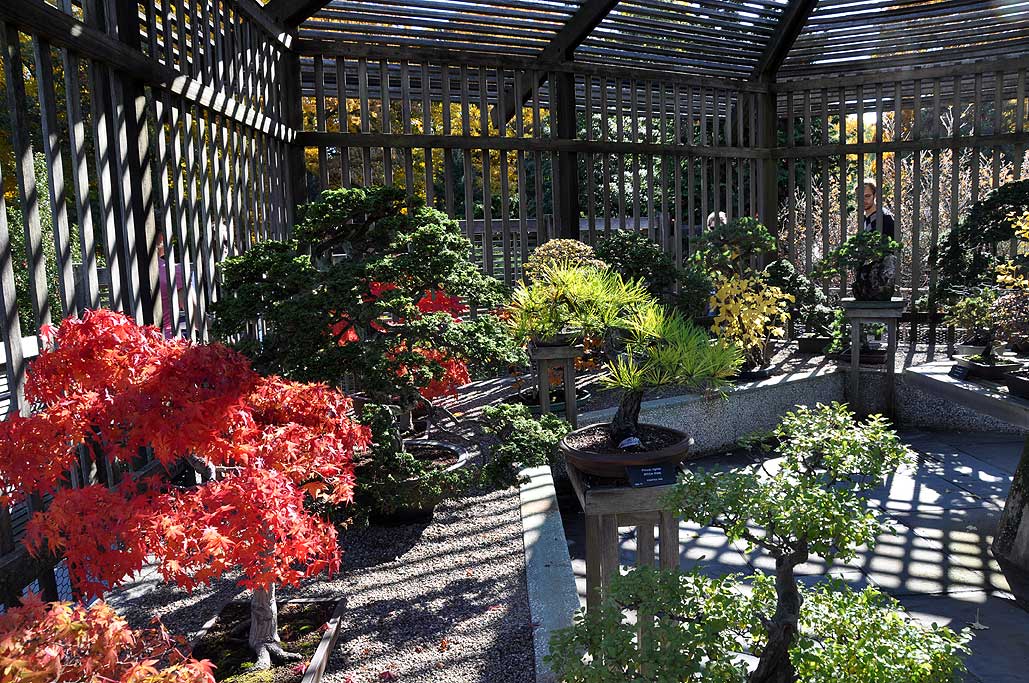
If you ever have the chance to see the bonsai collection at the Arnold Arboretum, you really should. They have an amazing history, and they really are like a little fairy kingdom.

bonsaiarboretum1

This is the view from the inside of their little house, but visitors must stay on the outside to protect these precious little trees.

hinoki cypress golden express

hinoki cypress chabo-hiba 1787

This Hinoki Cypress was started in 1787!

Savasana — on finding the uncluttered space

The first time I went to a yoga class I struggled through, watching the clock the whole time. I knew the class was an hour and fifteen minutes, so it was with a sense of incredulous blessing that I realized, with twenty minutes still to go, that we were winding down. The poses became slower and easier, and then the teacher told us to lie on our backs and make ourselves comfortable. She suggested putting our socks back on and pulling blankets over ourselves — I didn’t because I was still sweating, but I came to realize the wisdom of this advice later. The teacher dimmed the lights, put on soft, meditative music, and I suddenly realized that it was nap time! Just like in kindergarten, we all lay together on our mats and rested. It felt funny lying in such an intimate, vulnerable pose in a roomful of people, eyes closed as the teacher led us through a relaxation exercise. But I soon forgot about the others and reveled in the peace and quiet as my sore muscles came to rest and my mind settled, my body becoming chilly as the sweat cooled.

Savasana is the word both for the pose — on your back with your arms out at a slight angle — and the process of lying in that pose and going through the relaxation exercise. It happens at the end of every yoga class, and is a way of allowing the poses you have just done to settle into your mind and muscles. It is also a body meditation, similar to centering prayer and bio-feedback, two things I stumbled upon a few years ago in my quest for spiritual and physical health. Like centering prayer and bio-feedback, you are encouraged to take a passive attitude to your thoughts, to allow them without trying to change them, but without latching on to them, or identifying with them.

One analogy used in centering prayer is to see your thoughts as clouds going overhead: You notice them but they don’t affect you down where you are, and they blow past with the wind. For someone who has struggled with anxiety, this is incredibly powerful: I don’t have to try to STOP thinking the anxious thoughts, or to change them or replace them with positive thoughts — exercises which left me exhausted and twice as stressed out — but I don’t have to define myself by them, either. I can nod at them, even greet them with friendly acknowledgement, but then not concern myself with them. I sometimes picture them as clouds, and sometimes as an object beside me: there, but not a part of me. Observe your thoughts, my teacher Esther says, acknowledge them without trying to change them. So I notice: I am angry at my housemate for something stupid, I am worried about money, my back hurts. It’s okay. I don’t have to try to stop being angry right now, or stop worrying, or get my back to stop hurting. That’s just how I feel. It’s not me. My true self is deeper than those thoughts and feelings, is at peace.

I think that growing up and coming of age as a Christian, there were a lot of things I thought were sins that were just feelings, just me struggling to figure myself out, and figure others out, and find my place in the world. Repenting and trying to change those thoughts and feelings was a difficult, and unproductive process. I believe in sin, and in repentance, the Hebrew word shuv that means turning away from bad choices and back towards good, turning away from the wrong path and back to the right one, turning back to God. But I wish that I had known about savasana, too. I wish I could have given myself that space and gentleness, to not immediately identify my feelings as sins, and identify myself with them. Repenting of anger never helped me let go of that anger so much as gently acknowledging it, setting it next to me, and quieting my body and my mind. I can let it go. It isn’t me. I think if I had known how to do that it would have helped me to understand what the real sins were, what things were really pointing me away from God, which direction I needed to turn to go back towards God.

This evening, after a long day at work, I came home and made my way circuitously to my yoga mat. Full disclosure: while eating a healthy and nutrient-packed salad with spinach and lentils, I lay in bed and watched a reality TV show. I won’t even tell you which one; you might not respect me anymore. But, listen: I turned the TV off after that, lit a candle, and spread out my mat. It looked like heaven. It looked like this:

livingroomyogamatI did a yoga class called hiplicious, which was a lot better than it sounds. It was actually quite wonderful. As I lay down for the savasana, I closed my eyes, but after a while I opened them again. You’re supposed to keep them shut, but I’ve found that I have to concentrate to keep my eyes shut, and that makes the muscles between my eyebrows tense, and that hurts a little bit and so kind of defeats the purpose of the savasana. So I take breaks and open my eyes to rest my forehead.

And today I noticed something I never had before. Above, the white textured ceiling was bordered by dark wood paneling that matched the wood on the walls, and it created a framed rectangle the exact size of my living room. My living room is the place I spend more time than any other room (if you don’t count time asleep); it’s where I sit and work on my computer, sit and play on my computer, sit and read, entertain guests, and do yoga. I sit on the front porch sometimes, and hang out in my bed at night, but the living room is the space most full of me, my activities and my presence. And tonight I noticed that there is a space the exact same size and shape above it, with soft, white, textured paint and a dark wood border. It is my living room, but it is emptied of furniture, rugs, house plants, computers, tissues, candles — all the things that clutter the floor below. It is a framed, empty canvas, in the shape of my life, my living, my room. I realized that it perfectly represents the place I go to when I do centering prayer, or bio-feedback, or savasana. In this case the clutter is down below, and that beautiful, white, uncluttered space is above — exactly the shape of me, but empty of all of the thoughts and anxieties, habits and coping mechanisms, that make up my daily life. It is a blank canvas, where I can meet God and we can create something together. God is the paint, and I am the brush, or I am the paint and the brush and God is the artist, or I am the canvas only and God is all the rest: the blended colors of the full spectrum and the rocky pigment sparkling in the paint, the sharp edge of the palette knife and the rough horse-hair of the brush, the Artist waiting for his materials to settle down, to move all that clutter off of the canvas so he can finally begin.

A divine inconvenience

Mark the computer whisperer

Mark the computer whisperer

My computer is on the fritz (the Computer-Whisperer is working on it) and so I’ve had to spend hours and hours over the last few days not online, not checking Facebook or reading through my Twitter feed, not clicking on links and reading blog posts, not watching Star Trek the Next Generation reruns, not playing flash games. I have to say, I feel like a kid again. I’ve been reading, and drawing, and just sitting and thinking. It’s so strange to have real empty space in my life again, without the thing that easily and mindlessly fills it.

It’s been kind of profound for me as a writer, too, to not have the ability to write or post what I’ve written. I’ve been able to just think my thoughts without writing them, to just be instead of talking about my existence. Of course it’s been frustrating, too — I have a few things I’ve been working on, and ideas, and descriptions that I’d love to get down on the page before they fade. But mostly I think I’ve needed this Sabbath time, even from the things that I love.

I’m typing this on Mark’s very old Mac, that needs to be plugged in to the internet and electricity because the wifi and battery aren’t working. It’s like 2003 over here, or whenever it was before wifi and longer-lasting batteries were invented. I’m stuck in the spot in the living room where the wires can reach their respective plugs. And I’m about to go away for the weekend, and I can’t take the Mac with me. And I don’t have a smart phone, btw, for those who are thinking, “Let her eat cake.” Even my Nook died, so I can’t play Sudoko and solitaire in bed in the evenings. It’s like a conspiracy. It is driving me crazy, and yet I kind of love it.

Shabbot shalom to all of you out there, reading this on your functioning lap tops and tablets and iphones. I pray for each of you a divine inconvenience, a holy conspiracy to take you out of your routines, out of your easy spaces, and maybe even back into your true self.

Love,

Jessica

Shooting stars

Photo by David Kingham

Photo by David Kingham

Last night my mom and I went out to see if there were any stragglers from the Perseid meteor shower. We had missed the peak days because of work, and illness, and all the other daily reasons why you miss beautiful, special things like meteor showers, but we decided that, by golly, we would go out when we could, and see what we could see, even if, like the bear in the song, all that we could see was the other side of the mountain.

The sky was cooperating more or less — a bit hazy, with some scattered clouds, but already through the car window I could see more stars than I was used to seeing in Boston. We drove around New Hampshire back streets for a while, but there were too many trees. We drove through the campus of Saint Anselm college which was so well-lit it made me think something must have happened to incite the college to plant more and more lamp posts along the paths, lighting up every inch of the grounds until women were safe-ish. I noticed my thoughts, then, and the increase of my heartbeat, and took a deep breath. You don’t have to think about things like that right now. I told myself. It’s okay. Breathe deeply and think about what is actually happening. I looked at my mom’s arm next to me, bare and warm in a tank top, and used it to ground my thoughts in the moment. How easily I move out of time, into thoughts and feelings, both pleasant and unpleasant. You are here, now. Be here.

We drove for maybe a half an hour and then my mom remembered that there was a new section to the cemetery being prepared, a field dug out and planted with grass seed, waiting for new residents. You’re here now. You’re alive. We pulled over and took the blanket out of the emergency pack my brother had made for us for Christmas one year. In the dark the green camouflage pattern looked like greys and blacks, the swoops and swirls mimicking the shadows on the grass and pavement as we made our way carefully around the fence and into the empty field, a single cricket greeting us by the gate.

“I see an animal,” I said, grabbing my mother’s arm. “I think it’s a skunk.” I could clearly see the glint of its eyes, the black and white pattern, and the wobbly movement of its walk as it came toward us. “Where?” my mom asked, and I took the flashlight from her and pointed it towards…a small piece of white wood. No eyes, no movement. Just white next to the black of the night. “Okay,” I said, “I have an overactive imagination.”

We picked our way carefully down the road and onto the field, then spread out the blanket and lay down, waiting for our eyes to adjust to the light. “It doesn’t look black to me yet,” my mom said, “Where it should be black it looks greyish.”

“That’s because of the Bible,” I said, “The psalm says, ‘Even the darkness will not be dark to you.”*

“Very funny,” said my mom.

We lay quietly for awhile, watching the sky. I tried not to think of cars going by, of people, of whether it was entirely safe for us to be out here alone at ten thirty at night. We didn’t know which direction to look in, so we gazed upward and tried to be aware of the periphery of our vision as well. After a few minutes we started to chat, catching up on our lives, talking about God and church and our struggles with finding our place.

Then: “There’s one!” my mom cried, pointing.

“Aw, I didn’t see it.”

And a few minutes later, in unison, “Look, I saw one!” Then a few more, all short and not very bright. We realized they were all towards the north, near the big and little dipper, so we got up and turned our blanket towards Canada. Pine trees rimmed the horizon, and the edge star of the big dipper began to sink below them. I imagined the bowl of the dipper filling up with pine sap.

“None of these are very impressive,” I said to my mom.

“No,” she said.

“Come on, sky!” I exclaimed, “Give us some nice big ones!”

Then I laughed and said, cajolingly,

“Come on, little meteors! Come hang out with us here. The atmosphere is fun, I promise. Nice and warm — it won’t burn you up, really.” We laughed.

“The dew’s out,” I said, a little while later. “The blanket’s damp. And I’m starting to get a little cold and tired.”

“Okay, sky,” my mom said, “We want to see three big ones, and then we’ll go home.”

We chatted a little more, but we didn’t talk much about the hard stuff. Dad just got a walker, but for now he’s still able to go to the jails and do the ministry he loves. Mom’s job is hard, but she needs it for the health insurance. We’re not really sure what will happen next, when they’ll need to move to a place without stairs, how much longer mom can do this job before it gets too hard. There would be time to talk about that tomorrow. For now we talked about poetry and prayer, about our friends, about the constellations and the falling stars.

“Okay, God,” my mom said, “I’m going to count to ten, and if there’s not a really big one we’re going home. One…two…three…” She slowed down as she approached ten, allowing extra time for God’s recalcitrance.

“Ten,” she said, and her voice was so calm and certain that I was a little surprised when nothing happened. We waited for a few more minutes, anyway, and then helped each other up, picking up the damp blanket and walking easily back to the car, now that our eyes had adjusted to the night.

***

*Psalm 139