November would have been enough

October leaves

October leaves

I wrote last month about how October was so beautiful it was almost too much. The flaming red and orange maples against the blue sky roused in me a joy that was so intense it was almost overwhelming. The colors were so vivid and everywhere — from the trees to the ivy to the little shrubs. It seemed like so much beauty, such reckless extravagance, when a quarter of it would have been beautiful enough.

That phrase, “It would have been enough,” reminded me of an old Passover song, Dayenu. Dayenu in Hebrew is literally “enough (day) to us (enu)” but it means “it would have been sufficient for us” or, “it would have been enough.” Each verse mentions a gift that God gave the Jews and says that if that gift were the only thing that God had given them it would have been enough.

“Had he given us the Sabbath, only given us the Sabbath, had he given us the Sabbath, dayenu.”

“Had he given us the Torah, only given us the Torah, had he given us the Torah, dayenu.”

“Had he led us out of Egypt, only led us out of Egypt, had he led us out of Egypt, dayenu.”

I love the fun, rolicking tune, the repetition of dayenu in the chorus, and the shift of the emphasis to the last syllable with the melodic resolution, “day dayenu, daYEnu dayeNU.”  And I love the idea, that God’s gifts are complete in themselves, that we can think about any one thing that God has done and be content with that, but that He wasn’t content, that He continued to multiply blessings, one on top of the other. Reckless extravagance.

Had he given us the vivid blue sky, only given us the vivid blue sky, had he given us the blue sky, dayenu.

Had he given us the orange maple, only given us the maple, had he given us the maple, dayenu.

Had he given us the red ivy, only given us the red ivy, had he given us the ivy, dayenu.


Jamaica Pond in November -- forgive the poor phone-camera quality

Jamaica Pond in November — forgive the poor phone-camera quality

And then the end of October came, and November blew in with a rain and snow storm. The wind blew many of the early leaves off the trees and the ones that were left were not quite as bright: browns and burnt oranges, the later maples and the oaks. The ghost-like grey of the naked trees.  The days grew shorter and colder and there were more grey skies. And it is beautiful. It’s a quieter kind of beauty, but I almost love it more. I feel like I can look around and take everything in. In October I almost didn’t know where to look, there was just so much color everywhere. October was amazing, and I thank God for it. But we could have gone right from August to November and we still would have been blessed with abundant beauty. November would have been enough. Dayenu.


Beware the Agapanthus

Agapanthus in their natural habitat

Agapanthus in their natural habitat

“One of our best family friends grew agapanthus is a corner of the unfenced garden in front of her house, and she got so tired of boys’ taking shortcuts through her garden and tromping on her flowers that she had a housepainter make a sign that she stuck into the ground. It read: ‘Beware the Agapanthus.'”
~Anne Lamott

I love this story. And going by words alone, I think an “Agapanthus” sounds a lot more terrifying than a “dog.” Like some kind of mythical creature with teeth sticking out at all angles.

All my drafts of essays and stories are stalled in the first or second paragraph, but I will try to get something up soon.

Golçuk

One of the most intense, scary and moving experiences of my life happened when I was twenty-five years old, in graduate school studying theology. Seven students from my school and others spent two months in Turkey learning about the language, people, culture, and history of the land. When I joined the tour I little suspected that I would barely miss one of the worst natural disasters in history, that I would have to decide whether to travel back through Turkey days after a devastating earthquake, or that I would be given the opportunity to help save a woman’s life.

While I was there I made a friend in Istanbul, a woman a couple of years younger than me named Neşe. At the end of July I traveled to Croatia for a month, but made plans to spend five days with Neşe and her family when I came back through Istanbul on August 20th. On August 17th an earthquake measuring 6.7 on the Richter scale struck north-western Turkey, its epicenter about fifty miles south east of Istanbul. Estimates vary widely, but at least 17,000 people died in that earthquake, and tens of thousands more were injured. Istanbul wasn’t struck as hard as cities and towns closer to the epicenter, but there was still significant damage and casualties.

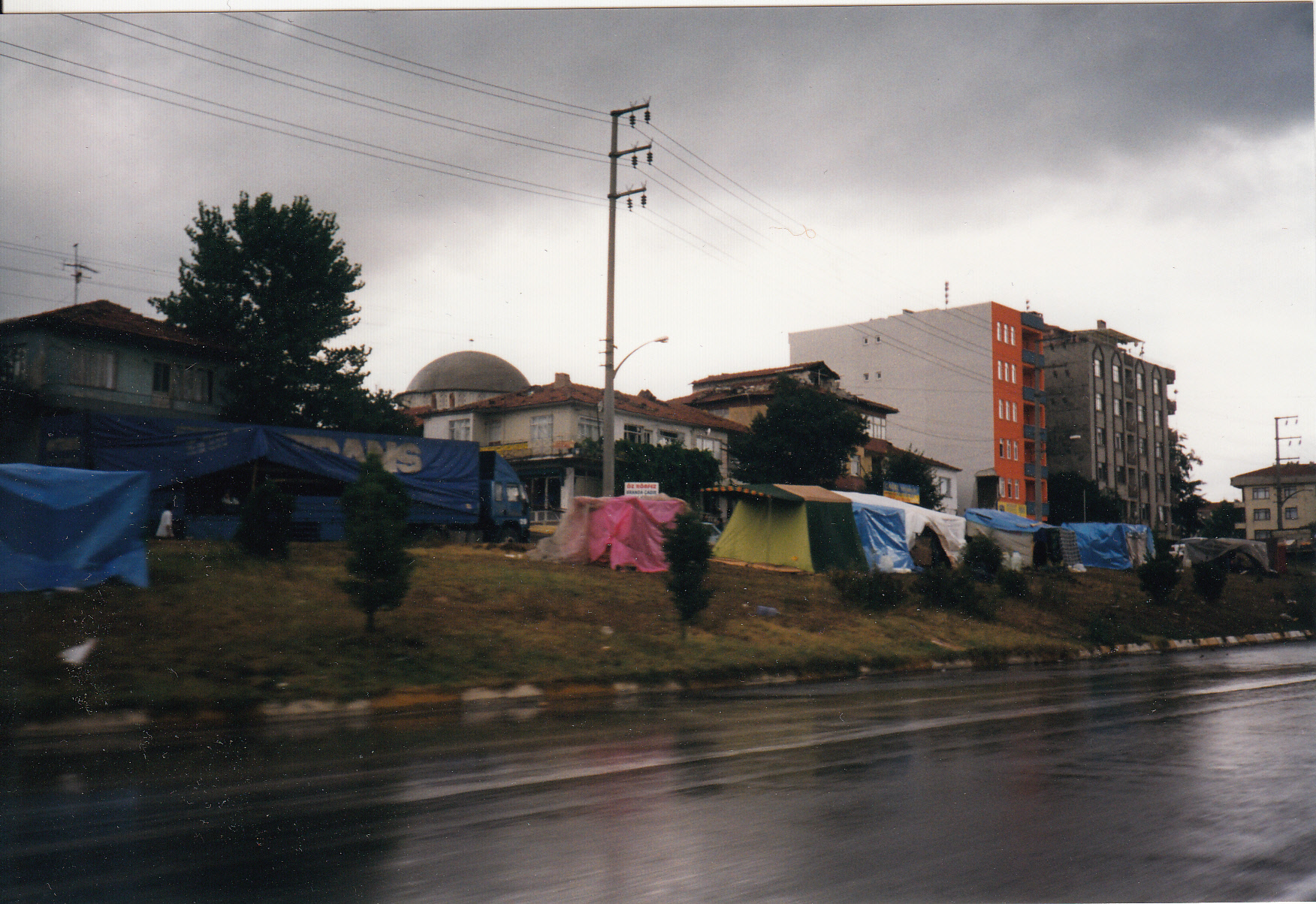
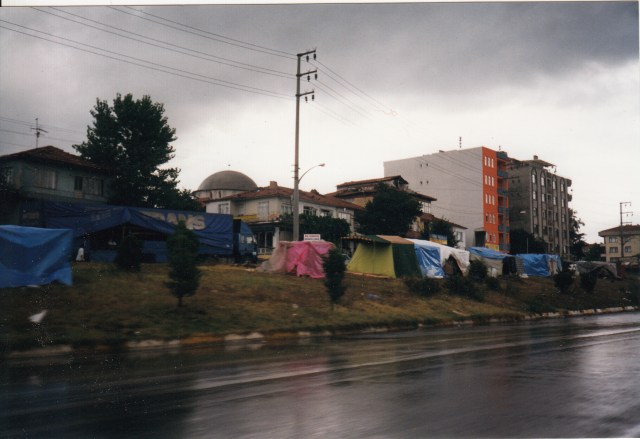
I watched the news from the little seminary in Osijek where I was working and wondered if I should change my plans to return. I decided to place my chips on a phone call to Neşe: If the call went through and she and her family still wanted me to come, I would. Miraculously she answered, and a couple of days later I found myself on a taxi from the Istanbul airport, driving past the makeshift tents along the side of the road that were the first sign of the tragedy.
IMG_0005

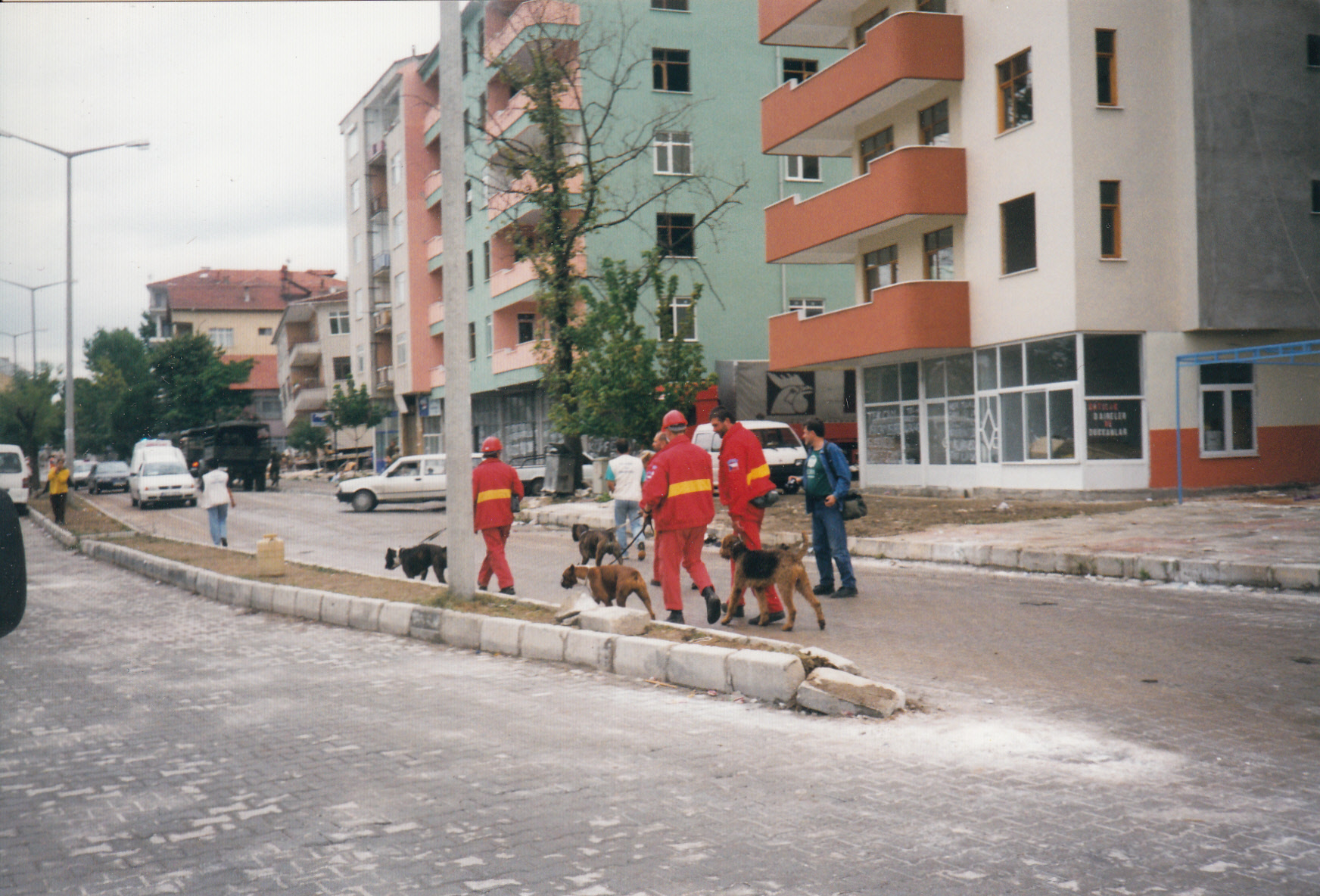
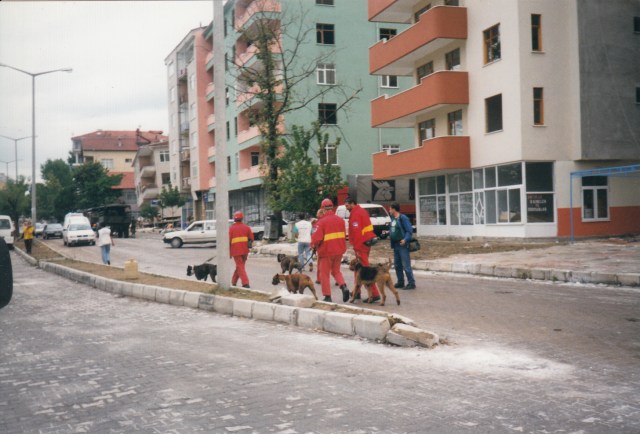
Neşe and I wanted very much to help, and the first couple of days I was there we went to spots in Istanbul where there were injured people, or where they were still digging people out of the wreckage, both alive and dead. I’ll never forget the smell of dust and dead bodies. We talked to several people whose friends and family members were still missing.
IMG_0008

But there were already plenty of people to help in Istanbul, and I felt like we were just in the way. Then Neşe, though she was Muslim, heard of a church group that was going down to Golçuk, near the epicenter, to help with relief work. She and I signed up, got our shots, and the next day piled into cars with friendly Turks, and headed down to the scene of even greater tragedy.
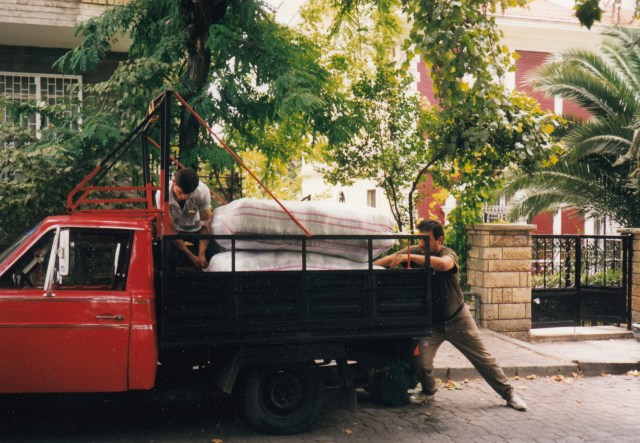
At the church loading a truck with supplies.

At the church loading a truck with supplies.

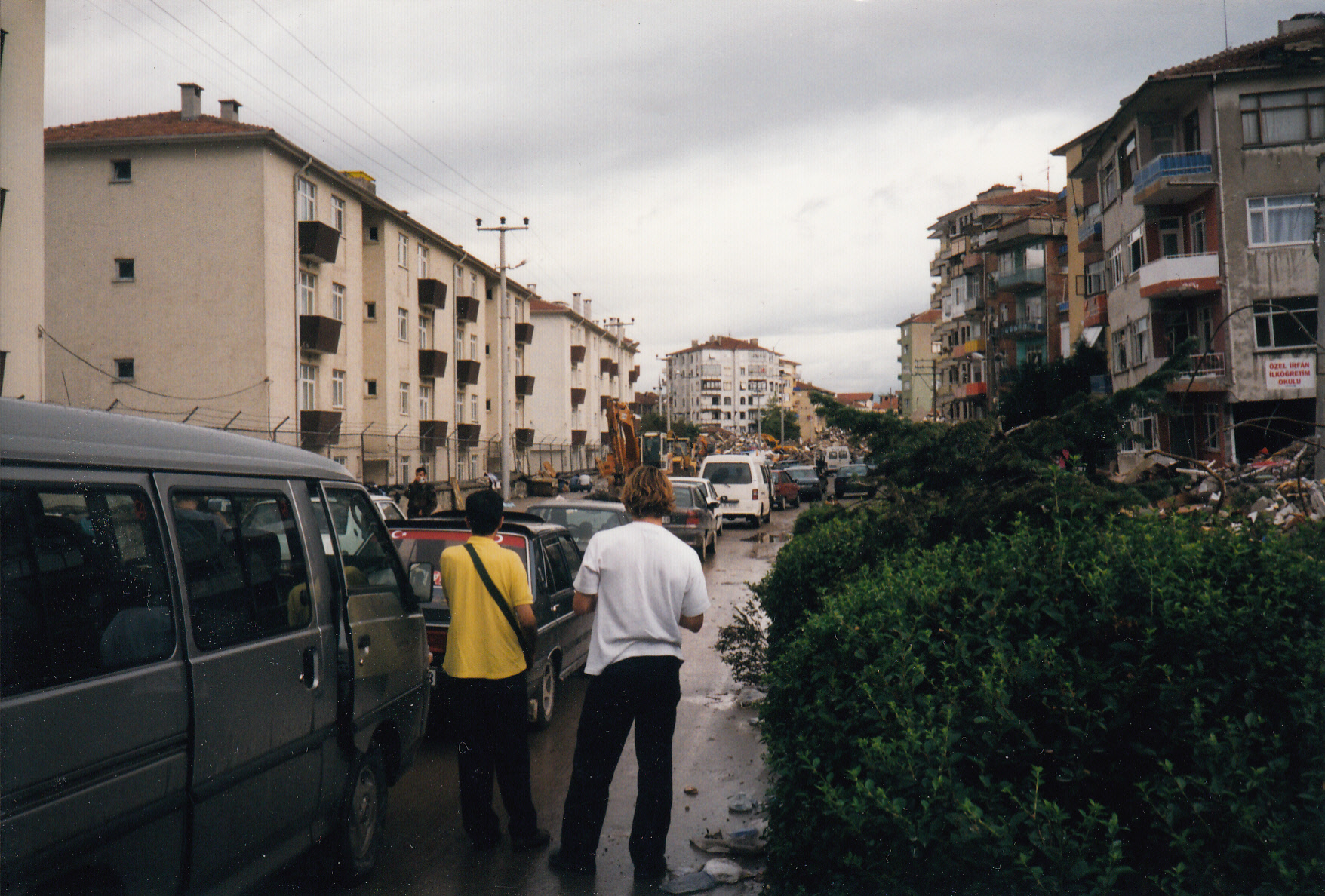
It was on the drive to Golçuk that we witnessed a man being saved from the rubble. Police stopped all traffic and told us to turn off the ignition so that they could hear his voice, which was weak after five days of lying under the wreckage of his apartment building. We all jumped out of the car to watch as rescuers carefully raised the last cement block and lifted the man onto a stretcher. The crowd let out a cheer, and I snapped a picture of the row of cars stopped in the street, and the passersby-turned-observers celebrating the triumph of this one life.
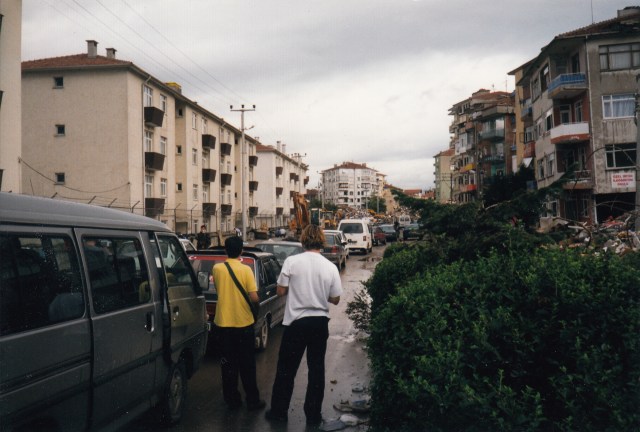
Cars stopped while searchers listen for the trapped person

Cars stopped while searchers listen for the trapped man.

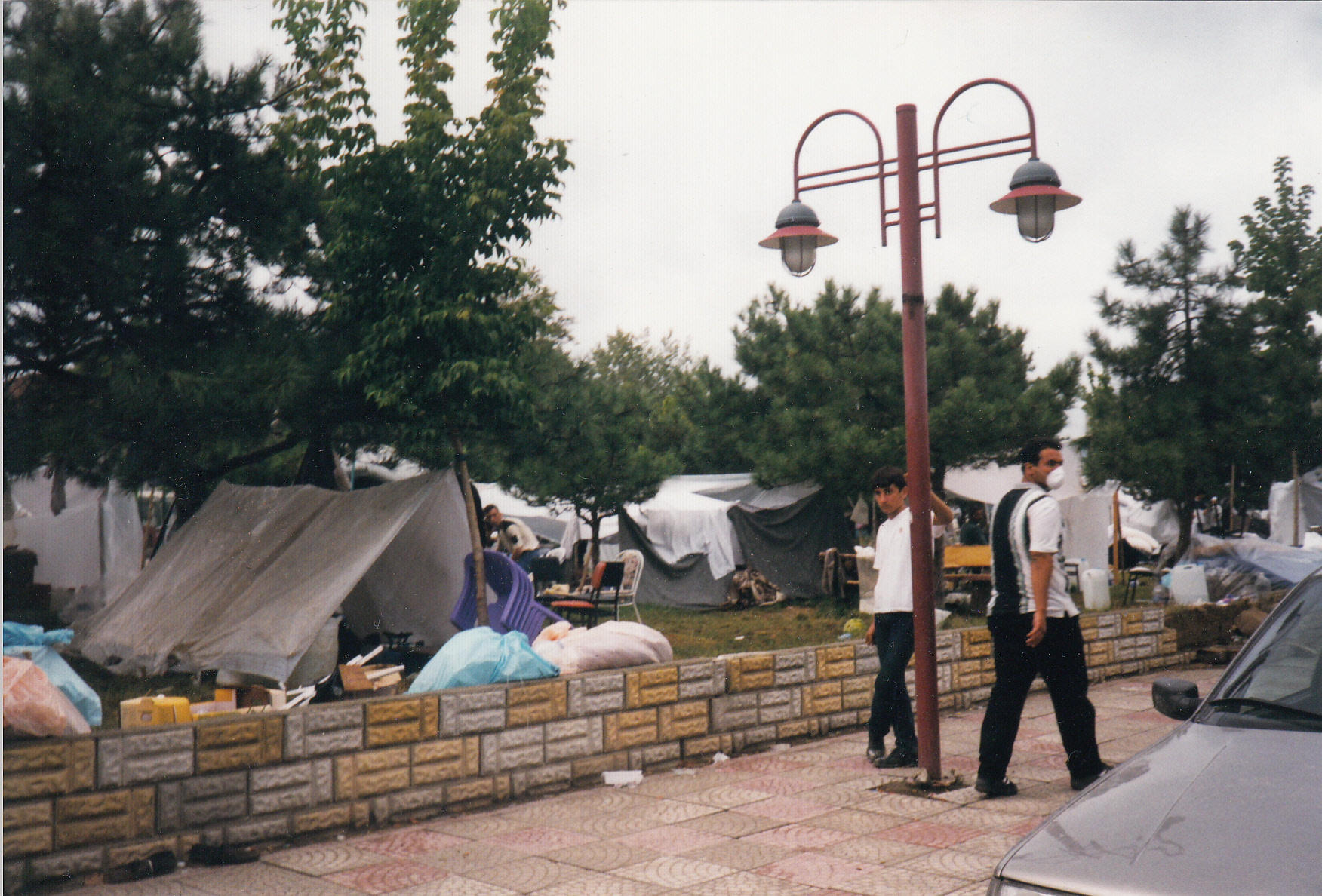
When we arrived at Golçuk we went to the camps where tents had been set up for people whose homes had been destroyed by the earthquake. It was raining and had been for several days, and in each tent were people who had lost not only their homes but members of their families. Shock, grief and blood met us again and again, and we did our best to not only give out the food and supplies we had picked up from the relief organizations, but to listen to people’s stories and pray for them.


IMG_0002

Those in our group who had medical skills did what they could for the injured, and I wished again and again that I had medical training so that I could do more for the people. Neşe was amazing — at twenty-one years old with no medical training she jumped right in and did what needed to be done, binding up wounds and even setting a broken leg. I was in awe of her energy and passion. She was studying jewelry design at the time, but would later go to nursing school.

In the evening Neşe called me over to a tent where an elderly lady was lying on a makeshift bed. Neşe discovered that the woman’s entire family had died in the earthquake, and she was unable to eat the food that the relief workers delivered to her. In her intense grief she hardly cared, and had not eaten in five days. Her bed was soaked with rain and urine. Neşe and I found the leak in her tent and pulled a tarp over it, changed her clothes and made her a new, dry bed, and found some softer food for her.

The woman perked up at our attention, and was especially excited to see an American there. There was a rumor going around that Turkey had turned down America’s offer for help, despite the fact that Turkey’s own resources were not sufficient for the rescue and relief work. I was never able to find out if there was any truth to that, but I was embarrassed again and again at being greeted as a hero simply because I was American. The Turks were working day and night to help each other, and I felt that my small contribution didn’t deserve the attention it was getting.

This woman was adamant in praising me, however, and a funny scene played out as Neşe and I helped her to eat. Neşe sat behind her, helping her to sit up and giving her bites of food, and I sat in front, facing her. The woman chattered away to me in Turkish despite Neşe’s explanation to her that I couldn’t understand Turkish. I nodded and smiled. Suddenly I saw Nese shaking her head at me and making a sad face, so I quickly made a sad face. Then Neşe smiled and nodded, and I smiled and nodded. We continued like that for quite a while, the woman talking, me following Neşe’s cues in responding and Neşe popping food into the woman’s mouth. Later we found medical help for her, and the next day they took her to the hospital. Neşe went to visit her in the hospital after I had returned to America, and emailed me that the doctor said we had certainly saved her life.
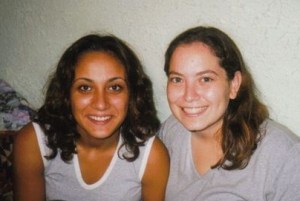
Nese and me

Nese and me

It was an overwhelming experience for me, but two things struck me in particular. The first was how my circumstances gave me not only privileges but responsibilities. As an American I was given recognition I did not deserve, and it made me aware of the opportunities I did have: education, world travel and options about how to spend my life. It also struck me how easy it was to accept the compliments and advantages, as if I deserved them, simply because of my nationality and — *shudder* — the color of my skin. I’ve experienced this many places that I’ve traveled, and it has made me more aware of the sometimes more subtle white privilege back home in the States. It takes humility and perseverance to notice that I’m being treated differently, and to not simply accept that as my due.

The second was how healing compassion and attention could be. The people in those tents needed practical help and resources, but they also needed to tell their stories and express their grief, and they needed to know that they weren’t just faces in the crowd. It was our attention as much as the food and dry clothes that brought the woman out of her grief and enabled her to live. I didn’t have the skills to help with physical injuries, but I was blessed to feel that I could make a difference just by being there and listening.

Let fall no burning leaf

JessicaLarsAndersonLast year winter was unusually cold and snowy in Boston, and predictions are that this year it will be again. I’ve been kind of dreading it. I generally get just a bit of seasonal affective disorder, but last year felt a little harder to cope with. The upside to this polar vortex effect that has been making the winters colder is that this summer was remarkably, beautifully mild. I think I got the deepest tan I’ve ever had this year (which is still not saying much) simply because there were so many more days that I could actually go outside without getting heat stroke. But in September it got really chilly for a week or two and I sort of sank into a vague hopelessness that winter was going to be long and dark and hard.

But then — October came, the weather warmed a little, and the early maples burst gloriously into red flame, and I realized I’d been forgetting my favorite season and New England’s greatest consolation. Not only do we get spring as a reward for making it through a harsh New England winter, we also get autumn to ease us into the cold and darkness with such overwhelming beauty that it’s hardly bearable. As Edna St. Vincent Millay, a Mainer, put it:

“Lord, I do fear
Thou’st made the world too beautiful this year;
My soul is all but out of me,—let fall
No burning leaf; prithee, let no bird call.”

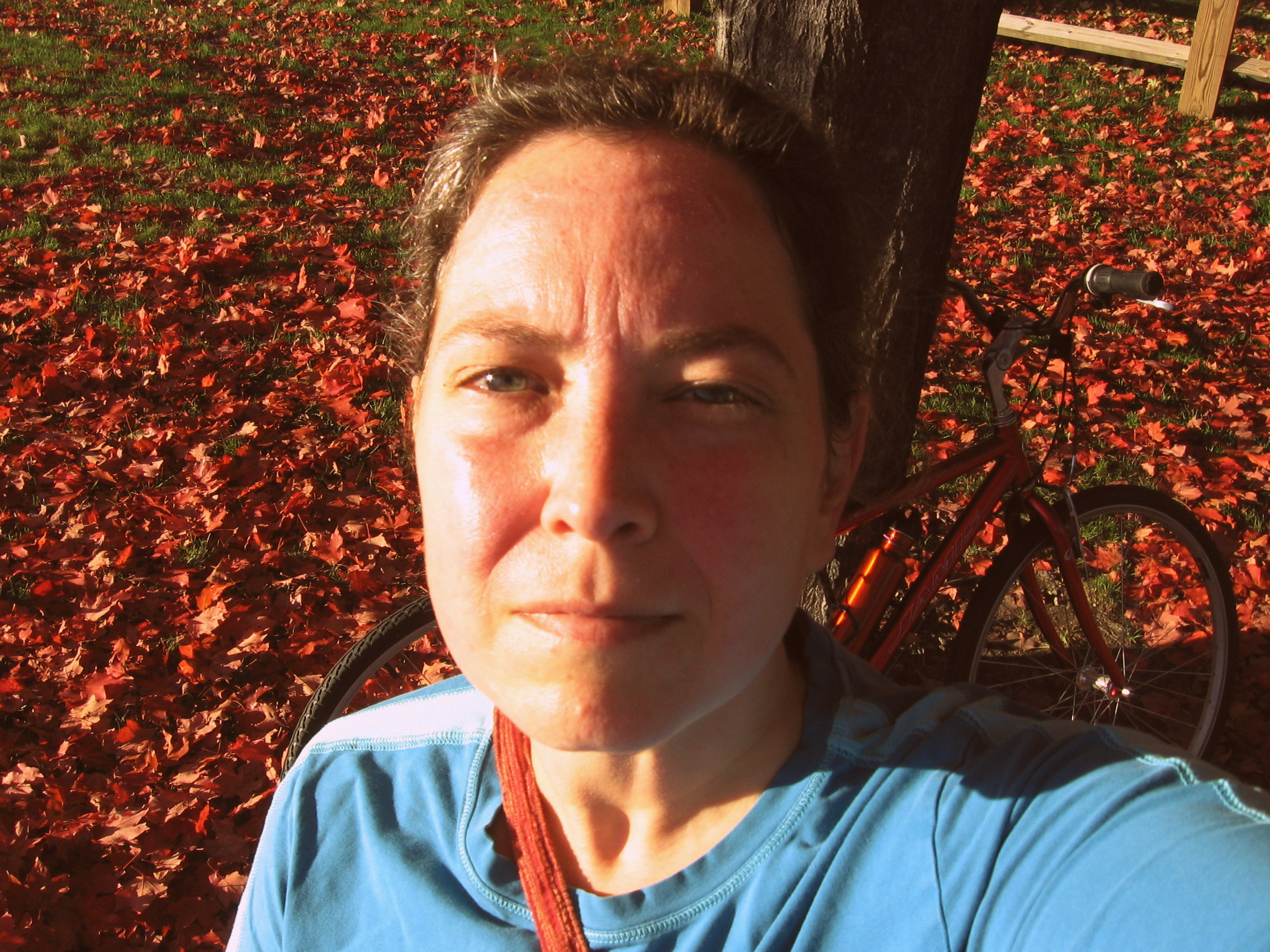
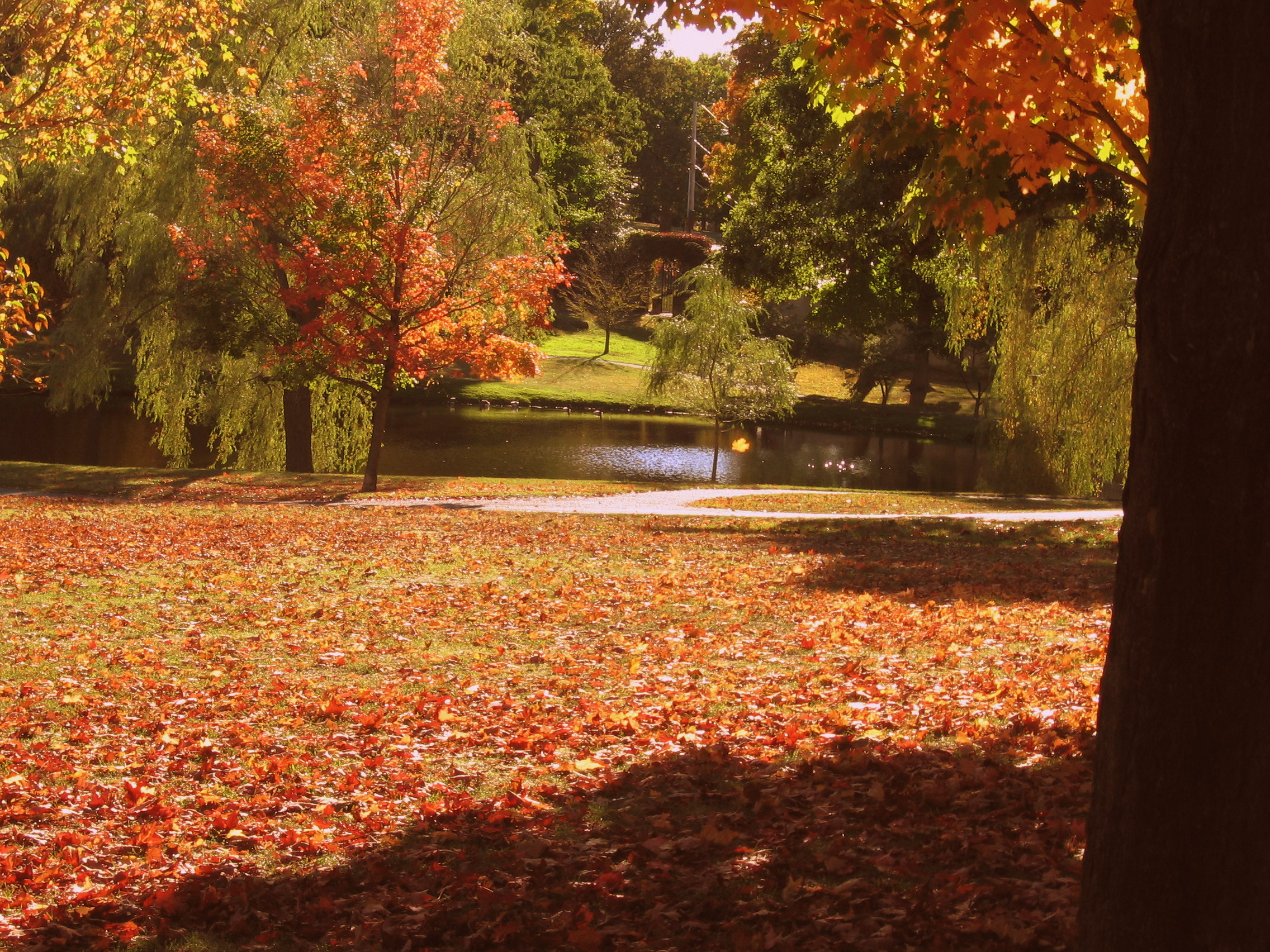
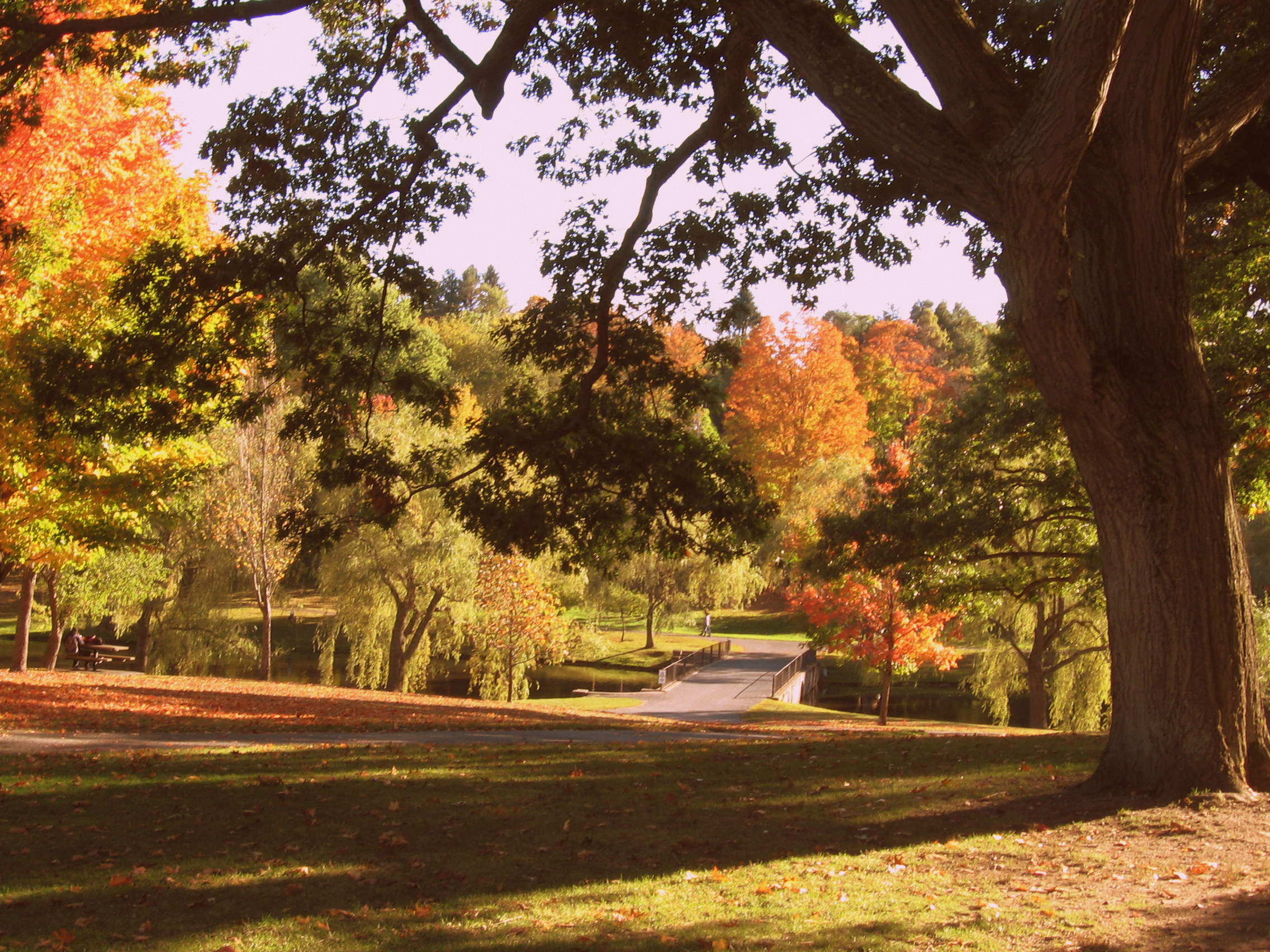
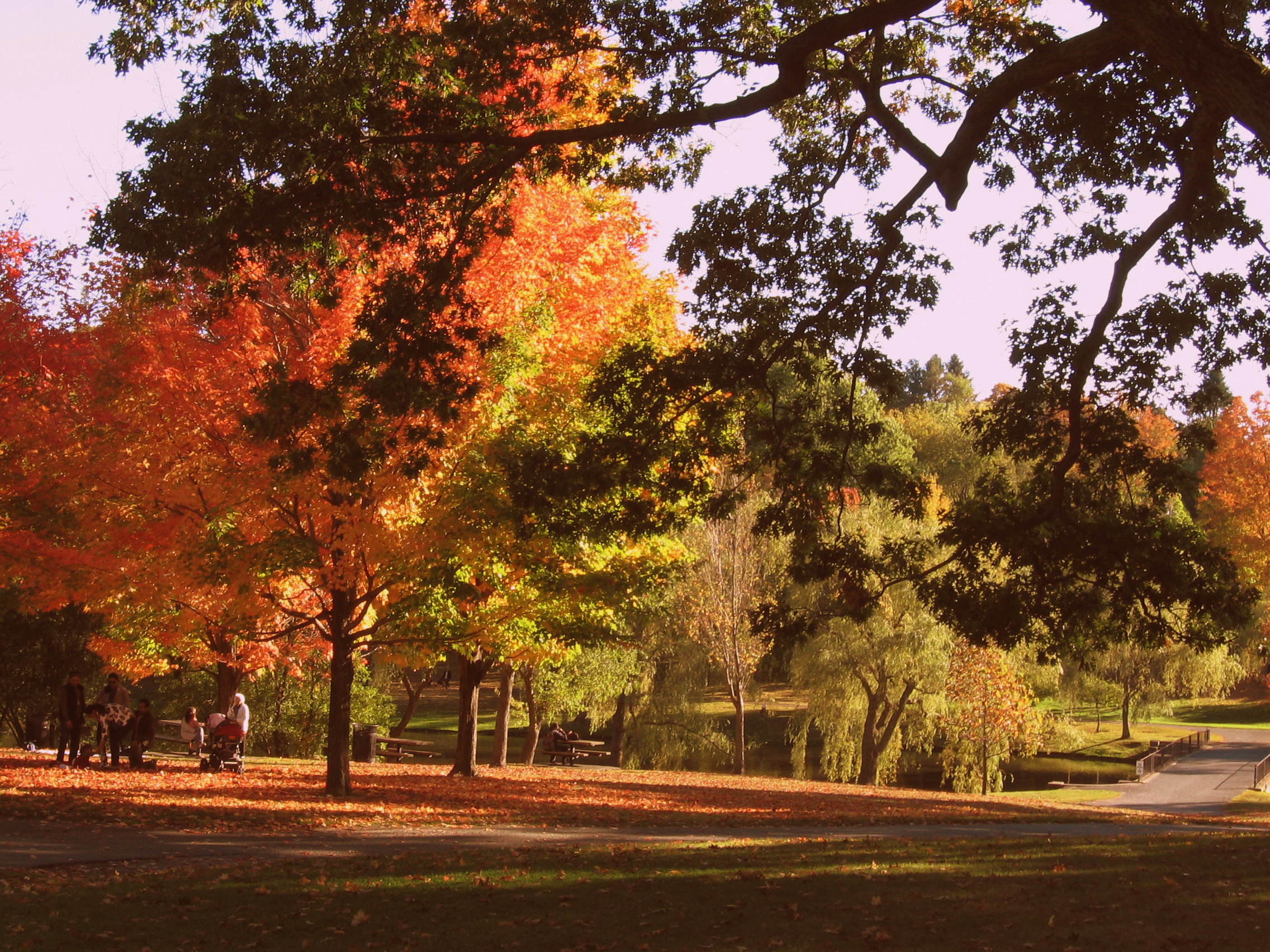
So I rallied my courage and my energy, strapped on my bike helmet and my camera bag and headed out to Lars Anderson Park to soak in the colors. Here are some of the pictures I took.

maplebranches steps larsanderson4 larsanderson3 larsanderson2 larsanderson1 Jessicabike bikemaple

Raise your Hand

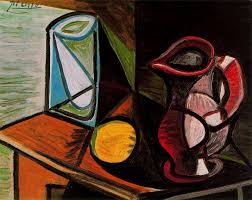
picasso stillThis is so true and so important. And, Laura, what persistence, creativity, and courage it took to write this post and share it with us!

In Others' Words's avatarIn Others' Words...

 “Unused creativity is not benign. It metastasizes. It turns into grief, rage, judgment, sorrow, shame.

We are creative beings. We are by nature creative.

It gets lost along the way. It gets shamed out of us.” 

Brene Brown

A couple of years ago I was entertaining the thought of opening an art school. We-ell, that doesn’t quite cover it. I was passionately PLANNING to open an art school, before life and reality brought me to my financial knees. I’d planned to offer classes during the day to children who are homeschooled, special ed classes, afterschool art lessons, camps, etc.

While in the planning stages, I read everything I could get my hands on about arts education. What there still IS of it. I devoured strategies, theories, philosophies. I am not professionally trained, I’d only taught as a volunteer, and I was feeling a little audacious even thinking about undertaking such…

View original post 1,258 more words

How to write a to-do list

IMG_0917[1]One of the strange contradictions about my personality is that while I absolutely love unstructured, unscheduled time — and need it to rest and recharge — I can easily get lost and depressed with too much of it. I figured out a few years back that if I make a to-do list for myself for weekends or other stretches of free time it helps keep me focused, without taking away the sense of independence and freedom that I love.

So here are my own general guidelines to list making. Your mileage may vary.

1) Make little boxes next to the items. Making check marks is even more fun when you have little boxes to make them in.

2) Include one or two items of house cleaning on the list. I  realized that doing a little cleaning every day is really good for my peace of mind. My environment is important to me, and I can sit down and pray or write or draw much more happily if the room I’m sitting in is neat and clean. I also took up yoga this year, and there’s nothing like lying on a mat on your living room floor to bring the multiple dust bunnies to your attention.

3) Include the creative things you want to do. My free-spirited, artistic brain wants hours to have deep thoughts, write, draw, get lost in books, dance outdoors in swirly skirts, etc. But left to its own devices it will most often end up scrolling through Facebook and watching Ugly Betty reruns for those hours, then go to bed unhappy. But if I put “write something” or “draw something” or “read for awhile” on my to do list, I am more likely to spend time actually doing those things.

4) Break things down into little parts so you can make lots of check marks. On the list above, instead of just writing “sweep and vacuum” I broke it down into rooms and tasks. Look at all the checks I got to make when I was done!

5) Include the small things. As previously mentioned, the more check marks the more accomplished you feel. And, to be honest, showering sometimes does feel like quite the task — I deserve a check mark for getting it done!

6) Absolutely write down the things you have already done! Sometimes I don’t get around to writing the list for a while, so I have already done quite a few things. Check, check, and check!

And now that I’ve written this post, I can check off “write in journal or somewhere” on my list, and enjoy some of the iced tea I made yesterday. Cheers!