On the murders in Charleston

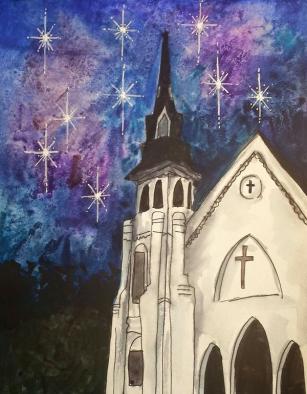
Painting for Mother Emmanuel by Ty Poe

Painting for Mother Emmanuel by Ty Poe

Ever since Wednesday night I’ve been reading post after post by black women and men sharing about what Charleston means to them, and the deep pain and injustice that is still inflicted, every day, on people of color in this country. One theme that has been emerging is the request for white people to do something — to first say they’re sorry for what has happened and listen to the pain and the stories of black men and women, and to then find ways to work to combat the systemic racism in America. Some writers offered suggestions. But many emphasized that it is up to white people to find ways to do it. As Karen Walrund wrote:

“Finally, remember that while racism is an issue that black and brown people have to deal with, it is not our issue to fix. Racism is a systemic problem created by those in power — white power — and therefore it is an issue that only those in power can fix. So please keep this in mind before asking any of your black friends or acquaintances what it is you can do to fight racism: while the question comes from an instinct that is certainly understandable, as an ally, what we really need is for you to be creative and come up with ways that you can put an end to racism yourself. To be even more blunt: being creative for you is not our job.”

I don’t have many ideas yet. But I’m still listening, and I’m trying to be creative. I definitely appreciate that Karen’s call is to be creative, rather than to be organized or to be efficient — creative is more up my alley.

I did have two ideas, neither of which made a lot of sense, but which I did anyway. One was to write a poem, which I’ll share in a minute. And the other was to go to church. If you know me or have been following this blog for a while, you know that it has been a while, and that I’ve had a long and complicated relationship with Christian community. It was just two weeks ago that I wrote about a nightmare I had about going to a church service.

But I just kept thinking about those nine people, faithfully showing up for a Wednesday night prayer meeting, and I knew I had to be brave and go, to honor them. It was a good Sunday to be there, for other reasons that I’ll probably write about soon. It wasn’t particularly profound in terms of the reason I’d come, to bear witness to the men and women killed in Charleston, grieve with the body of Christ, and vow to work towards racial justice in this country.  The pastor spoke briefly about Charleston and said a prayer, naming all nine of the people murdered. The rest of the service was dedicated to something big happening at that specific church which needed to be discussed, and that was fine. But I felt whatever purpose I’d had in going had been fulfilled. We prayed, we bore witness. And the things the church is working through will help it to continue to work for justice and reconciliation.

But there is more to be done. It’s a busy week, so I don’t have time to write much more. But I’ll share my poem. It was inspired by Yolanda Pierce, Osheta Moore, Karen Walrund, Deidre Riggs, Austin Channing Brown, and many others. It was inspired by black women, but it was written to white people, and to myself in particular. What will our response to Charleston be? What work are we being called to do?

On the murders in Charleston

If you only have something nice to say,
Be quiet.

Now is not the time for niceties,
For crying, “Peace, peace”
When there is no peace.

If you have a voice
HOWL

If you have a soul
LAMENT

If you have a prayer, fine.
Say it softly to yourself.

But if you want God to hear you
SHOUT

If you want to pray for peace
WAIL

Rend your garments
Fall to the ground

And stay there until God answers you.
And then get up and do the work.

On Charleston and listening

Emanuel African Methodist Episcopal Church

Emanuel African Methodist Episcopal Church

I don’t know what to do right now, but I know one thing I can always do, besides pray, is listen: Listen to the voices of those whose experience is different than mine, listen to those who are struggling and suffering, listen to those for whom current events represent more than an isolated day of horror. Two women who I am listening to right now are Austin Channing Brown and Dr. Yolanda Pierce. If you want to listen, too, they are on Twitter, talking about Charleston and what it means to them. https://twitter.com/austinchanning, and https://twitter.com/YNPierce

*Evening update: Osheta Moore wrote this beautiful treatise on what she needs from her white brothers and sisters. Osheta, I’m sorry, and I’m listening. What I need you to say in response to the shooting in Charleston

On trains and churches

MBta mapThis is really just a funny little story for Gina, Steve, and Sarah. But since I have a blog I thought I’d post it here. You can listen in if you want.

I haven’t been to church in a long time. It’s a long story, which I’ve written about elsewhere. Briefly: For twenty years I threw myself into church, Christian community, and Christian ministry, had some great experiences but also lots of bad and hard ones, and didn’t quit until I was completely burnt out, ill, and, according to one counselor, suffering from PTSD.

I haven’t been to church in years, but it has been less than two years since I moved out of the intentional Christian community where I lived for seven years. It’s been 21 months, to be precise. I’ve been amazed at how quickly I’ve healed from individual wounds and relationships. Much of that healing has come through writing about it. But I’ve needed to be alone. I’ve needed this beautiful house, this sunny porch, my two mostly quiet housemates in this quiet neighborhood. I’ve desperately needed no weekly meetings, no communal prayer times, no vision casting or conflict resolution, no expectations.

I can’t believe how quickly and deeply the healing came when I finally stepped away.

I don’t hear God’s voice much these days, at least in the way I used to, but three or four years ago, struggling to re-find my daily Bible reading and prayer time, struggling to return to church and feeling traumatized and exhausted every time I stepped through any church’s doors, I heard God say, “Why are you looking for me in the places where I’m not?” I don’t think he meant he wasn’t present in those places. He meant that, for me, he was waiting to commune with me in new places, in new ways, but I was refusing to meet him there because I thought I shouldn’t leave the old places.

When I finally let go of the “shoulds” I followed God to the new places, and he met me there. Not in the same way he used to meet me, but in a deeper, quieter way. Some of the new places were: Centering, meditative prayer instead of conversational prayer; Quiet evenings and weekends alone instead of swallowing Advil for the migraines and rushing off to lead a Bible study; Reading the blogs and Facebook posts of my friends, and writing my own; Walking, biking, and yoga.

But I still believe in church, at least in theory. As the author of Hebrews says, “[do not give] up meeting together, as some are in the habit of doing…” I still believe we need each other, as Christians. And not just the hand-picked friends who are like us and support us, but the whole body of Christ, broken and difficult, those who speak different languages than we do, literally and figuratively, those who are in different places than we are, those who we can learn from and those who we have something to teach. I still hold the “should” of church, but I guess I hold it loosely.

That’s where I am.

So here’s the story:

I used to believe that God spoke to me through small coincidences: Two friends mentioning the same thing, reading random Bible verses that seemed to point me in an unexpected direction. Maybe God was in those things, I don’t know. But these days I tend to hear God differently, in deeper ways, through careful listening, and through years of knowing myself and who he created me to be.

But over the past couple of months things have been happening that, before, I would have seen as those God-coincidences. My best friend, Gina, had been telling me for years that I would like the Greater Boston Vineyard church. Then the pastor of that church, Steve Watson, who I know through mutual good friends, started reading some of my blog posts and commenting on them. And he emailed me to say that he thought I would fit in well at his church. I told him I really appreciated that, but wasn’t quite ready, and he was very gracious and respectful. Then Gina and Steve got together to talk about other things, and Gina told me my name came up, and they both mentioned they thought I’d like the Vineyard.

Next, my friend Sarah shared on Facebook her excitement about the direction in which the church was going, and it was something very close to my heart: Creating safe space for the LGBT community and for people with various views on those issues. This was my dream – and the reason I love The Gay Christian Network and keep talking about them – to not choose sides, to love and respect everyone and allow the Spirit to guide us, individually and as a church. “And if on some point you think differently, that too God will make clear to you.”

Then, in response to an ad I placed on the church’s webboard – my housemate and I had a room available in our house – a couple from the church wrote to say they live two houses down from me, and we should get together some time!

That night I went to bed laughing, thinking that if I still believed coincidences like that were God speaking, then I would be pretty sure he wanted me to go to the Vineyard.

And then I had a dream.

In my dream I walked through the streets and subway stations of Boston, and a man stopped me and invited me to his church. I agreed to come along, and we took the train there. (What do trains represent in dreams? I dream about them all the time in mine.) When we got there we went in and the service hadn’t started yet. I sat down near some people who were having a conversation, and a prim middle-aged woman in a rose-colored pants suit said sharply,

“You can’t sit there! That seat’s too small for you, you’re going to break it!”

Shamed, I stood up and tried to regroup, but I felt the familiar panic and claustrophobia closing in, and I needed to get out. I turned and walked quickly to the door, but I heard the voice of the man who invited me saying,

“Jessica! Jessica, stop, where are you going?” He came up behind me.

“I’m sorry, I can’t be here right now,” I said over my shoulder as I rushed to the door. “I need to leave.”

“No, don’t go. Don’t go,” he said, and tried to grab my shoulder, but I kept walking. As I left, I felt his fingers scraping at my skin. It was like some kind of Flannery O’Connor story, fleeing the church while a demon/Christ-figure scrabbled at my shoulder. I woke up, as I had gone to sleep, laughing. The dream had told me – in an amusingly dramatic way – that I wasn’t ready, not quite yet.

I realized that I still have some work to do. And I still need to spend some time where God is now for me: In my solitude, and in my writing, and in my friendships. But I’m encouraged. I feel like there is a place for me, for when I’m ready to return. It might be the Greater Boston Vineyard, or it might be another church like it. Before I was feeling like I didn’t know where I belonged: Too liberal to go back to an Evangelical church, but still too Evangelical to feel quite comfortable in a mainline church. Now I feel that there are others like me, and places where I would fit in. Well, maybe not fit in, entirely. But at least be able to be myself.

Save a space for me, friends. Not just now, but maybe in a little while.

We choose you

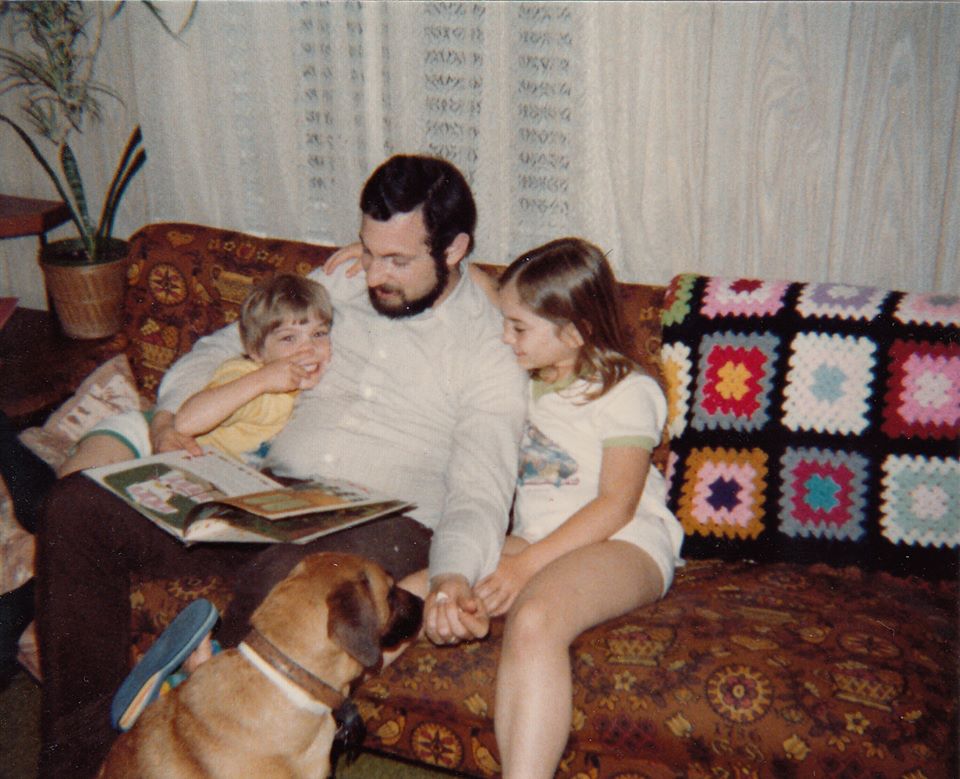
Me with my dad, little brother David, and our dog, Hector.

Me with my dad, little brother David, and our dog, Hector.

When I was about eight or nine years old we read at church the story of Abraham preparing to sacrifice his son, Isaac because God called him to. Later, at home, I asked my dad, “Dad, what would you do if God told you to sacrifice me?” I don’t know if he realized what an important question it was for me. I loved God, and our church, and the stories we read in the Bible. When I was three I had prayed for Jesus to come into my heart. But this story scared me. I knew God had provided Abraham with a ram so he didn’t have to sacrifice his son. I don’t remember if I understood at the time that it was an analogy to Jesus, to God the Father providing us with His only son as a sacrifice so we didn’t have to die. I do remember knowing it was supposed to be a good story, with a happy ending. But the meantime part, when Abraham tied his son to the pyre, fully expecting and intending to kill him out of obedience to his God — that part scared me. Looking back, it was very brave of me to ask my dad the question. If he had said yes, it would have devastated me, and probably destroyed my young faith.

“Dad, what would you do if God told you to sacrifice me?” With tears welling up in his eyes, my father said, “I wouldn’t do it, Jessica. I would say no.” And my young heart understood that my dad LOVED me, and did not love God one whit less. He was not choosing his daughter over God. He made a choice that showed us both God’s deeper broader love. My heart chose God at that moment because my dad chose me.

Yesterday, when Glennon Doyle Melton shared part of a letter she’d written to a young transgender person who had been kicked out of church, it reminded me of that moment. She wrote:

You need to remember that being rejected by church is not the same as being rejected by God. God did not kick you out of church, honey. The church kicked God out of church. Listen—I love the church, J. I spend every extra minute I have in mine. But I am here to tell you that the church is not God. You are more God than the church is, J—because you are made in God’s image: while the church is an institution. God loves you more than any institution He/She made for you, J. When folks decide they love any institution more than the individual souls inside them—they’re missing the mark. I love the church, J—but I love you more. If I’m forced to choose, I choose you and your heart every day and twice on Sundays. Just as God made you. Just as God made you.
(You can read the rest of her post here.)

Let me first say that this is the best use of the expression, “and twice on Sundays” that I have ever seen. G, if I had a Best Turn of Phrase award to give out, you would get it this week.

When I read Glennon’s post, this post came to me, almost full-fledged. That happens sometimes. I suddenly feel the push against my belly and realize there is something in there that needs to be born, and I rush to the computer and type it up, fingers stumbling over each other in my haste. I typed it as a Facebook status. And then, I have a confession: I paused. I thought, Do I really want to go there? Just 29 days ago I hit publish on a post about Jesus and gay weddings, and things got crazy. Good things happened, and are still happening, but it was big and scary and overwhelming. I got my first negative comment in over seven years of blogging, and I got my next five hundred negative comments the same week. Friends wrote praising me, and friends wrote rebuking me. My beloved little blog became something different than it was before. In good ways but in some hard ways, too.

So I looked at what I had written on Facebook, the story about my dad, the paragraph-long quote from Glennon’s blog, and the link to her blog, and I thought, Do I really want to bring up transgender people? Shouldn’t I take some time to let the LGB part settle in? Take some time myself to come to grips with the new Ten Thousand Places, my new readers, my new critics? And take some time to let the Christians I was writing to get used to the thought of baking for gay weddings, before I started in with, “And another thing…” The little girl I nanny was sleeping and would wake any minute, and I hesitated, the cursor hovering over the post button, my finger hovering over the track pad.

And then I thought about my eight year old self again. I thought about how scared I was, how much I loved God and my father and wanted to understand. I thought about my twelve year old self, feeling lost and rejected by my peers, and how boys were just starting to be on my mind, but I already felt there was something wrong with me that would keep me from having a normal life and normal relationship. I was a straight cis girl who would grow into a straight cis woman — all of society was in my corner, and still it was so hard to grow up, to understand myself, my family, my faith, my gender identity, my sexuality. “Sex is difficult,” Rainer Marie Rilke wrote to his young poet friend, “yes. But they are difficult things with which we have been charged; almost everything serious is difficult and everything is serious.”

I thought, as I had many times before, about how integral my gender and my sexuality are to who I am, and how that has very little to do with the sex act itself. I have been celibate most of my life by choice, first because I was waiting to be married, and now because I don’t think I necessarily will get married — and I’m content with that. But the lack of sexual activity in my life has not made me any less of a woman or any less straight — I am a woman oriented towards the opposite sex. I was born that way. I grew up that way. It is as a straight woman that I understand and interact with the world. It is as a straight woman that I worship God.

If it was hard for me to grow up, to accept myself, to understand God’s love for me, I can’t imagine how hard it is for young people whose gender identity or sexual orientation isn’t as widely accepted by society, by their family, by their church. What if my dad had not chosen me? What if my parents had told me that they chose the church over me, that they chose society’s norms over me?

So I took a deep breath, and lowered my finger, and clicked “post.”

And I’m going to click “publish” here in a few minutes, if the little girl naps long enough for me to finish writing. Because I have a one more thing to say:

Maybe your parents, or your church, or society in general were not able to speak those words that you needed to hear. Maybe they chose their interpretation of the Bible or their view of the world over you, overtly or in subtle ways that hurt just as much. Maybe it was because of your sexuality or the gender you identified with. Maybe it was because you struggled with mental illness or addiction, and they didn’t know how to handle it. Maybe you were abused and they chose your abuser or the family or church’s reputation over you. Maybe there was nothing in particular but you just were never sure where you stood. Maybe you worked day and night to dot every i and cross every t so that you would never have to find out whether they would choose you.

If this is you: Listen. You are not alone, and you are not unchosen.

I choose you.

My dad chooses you.

Glennon chooses you.

John chooses you.

Rachel chooses you.

Laura chooses you.

Nadia chooses you.

Sarah chooses you.

We love the Bible, and we love God, and we love church, even though we sometimes have a rocky relationship with it. But if we had to choose, we would make the same choice that Jesus made, when he carried his cross, forgave his killers, and died for me and for you.

Jesus chose you. And so do we.

We choose you. Every day, and twice on Sundays.

Love,

Jessica

*****
Please check out Faithfully LGBT and their wonderful photo series of LGBT people of faith.

Come follow me on Facebook, Twitter, and Instagram and join in the conversation! (I’ll tell you a secret: I’m feistiest on Twitter!)

Some related posts:
How I came to support LGBT full inclusion in the church
Why we need to stop saying “Love the sinner but hate the sin”
Bake for them two


Save

What is your personality type? A tiny anecdote.

taipei-101This morning NPR was having a special on the issues facing modern China, and it reminded me of the year I spent as an intern at Park Street Church’s international student outreach. I lived in a house with several international students, including a few from Taiwan. I learned a lot from them, like the fraught relationship between Taiwan and China, differences in communication styles between the east and the west, and never, never to serve only brown rice when it was my turn to cook the house dinner.

But one thing confused me, and that was how often my Taiwanese housemates mentioned their personality type. They were always talking about how they were “type A.” As with many things in cultures I was learning about, I just absorbed the information and didn’t question it. I am a visual learner, and sometimes it takes me a while to understand information that comes through my ears. So it wasn’t until I saw, one day — in a book or a presentation, I can’t remember — the capital city of Taiwan spelled out. Taipei. Pronounced tie-pay. Type A. Ah-ha.


Things I’ve been wrong about for most of my life, part one.

stronggirlI spent most of my life believing that if I said and did exactly the right thing no one would get mad at me, no one would misunderstand me and everything would work out. Every time anyone was mad at me, I took it as a personal failure, and tried to figure out what I’d done wrong and what I could do differently the next time. I mean, EVERY TIME. It was, and is, exhausting. Constantly replaying and rehashing each interaction, no matter how small, as if my brain were perpetually tuned to sports radio after a big game, analyzing the plays and the players, the coach’s decisions, the referee’s calls, the weather, the history, the fans.

I can’t remember exactly when it first occurred to me that there might not be the perfect thing to say, and that other people’s flaws and imperfections might be contributing to misunderstandings, too. It might have been college. At various points over the years that thought came back, and I’d have a few moments of peace. But then I’d go back to living as if I could figure out how to do the right thing and make every relationship and every interaction go smoothly.

Yet all the time there was something strong and confident within me that knew that I was trying my best, knew that I was examining my heart and my motives and being as honest with myself as I could, and wanted me to stand up for myself. She was a child in many ways, strong and stubborn, tearful yet not backing down. I often tried to push her down and tell her she was too childish, too proud. I told her what the adults had told me, that she was too stubborn and defensive, that she had to be humble and willing to see her faults and weaknesses, that she couldn’t always be right. I pushed her away and pushed her down. But she never left. She stayed there, at my center, refusing to be broken.

So this was my constant struggle, my self analysis and self denial, always going on internally but sometimes bursting out of me in frustration when I couldn’t make things right, no matter how hard I tried. And then, in 2009, a woman moved into my community. She was angry with me almost from the beginning. She misunderstood almost everything I said. And my self analysis kicked into high gear. I prayed constantly that I would be able to be a better friend and community member to her. I apologized for things she said hurt her, even when my meaning was completely different than what she took from my words. I tried to speak better, to follow the rules that she laid down, to say the right thing so as not to make her mad or hurt her. But the more I prayed and repented and tried to change, the more she said I was hurting her and the more anger I felt from her. A lot of things were going on in my life that needed my attention and energy, but I was putting 99% of it into trying to figure out how to speak and act and BE in order to make things right with this one person. And we lived together so there was no escape from the situation. I couldn’t speak, even to someone else while she was there, without being told I was wrong. After a while I stopped speaking almost entirely. I stopped coming out of my room. I felt like I couldn’t breathe.

Then, one day, when she had been upset with me about something she thought I’d implied, and I’d tried to explain what I’d really meant, she wrote to me in an email: “You are the most defensive person I’ve ever known.”

Oh.

That stopped me in my tracks.

I thought, is that really possible? Am I really the most defensive person in the world, despite my best efforts?

Then I thought of the hours of prayer, of tears, of analysis, of effort I’d put into the relationship, and I thought, surely there are people who don’t put this much effort into figuring out what their flaws and faults are. I can’t be THE most defensive person she’s ever met. I feel like the least. I feel like I have no defense at all against this situation. I am not letting myself defend myself — I’m even going so far as to join in the attack.

And then I thought of that little girl. And I suddenly loved her so much. I suddenly thought, she’s right! She’s just a little girl but she’s trying to stand up for us. She’s trying to let us BE, let us LIVE without this constant struggle. She is doing what I won’t allow myself to do. She knows who she is. She knows who I am. And suddenly the words, “You are the most defensive person in the world,” took on another meaning to me. I thought of that little girl and I thought, GOOD! I WANT her to be defensive. I WANT her to protect herself and care for herself. STUBBORN and DEFENSIVE are good things! My community-mate might have thought she was saying something negative about me, but I realized — it was compliment! The little girl can defend herself! She can take care of herself. I can take care of myself.

And then I realized that I’d found what I’d been looking for all along: The thing that I was doing wrong, my fault, my flaw.
My fatal flaw turned out to be believing that I had a fatal flaw in the first place.

And so I stopped. I stood up for myself, in that relationship and in my head. I took Maya Angelou’s words as my truth: “You did what you knew how to do, and when you knew better you did better.” I stepped out of the striving and the analyzing and the “maturity” of self examination and I stepped into the skin of the strong little girl, who was stubborn and defensive and glad. I stopped repenting except when I was truly convicted of having done something wrong. And when that happened I said I was sorry and then forgave myself, regardless of whether the other person did or not.

It didn’t make that relationship better. If anything it made it worse. But it gave me back my life and my self. It gave me the energy to focus on the things I needed to do in my own life: My own healing and strengthening, my career, my other relationships, my faith. And eventually it gave me the strength to leave the community.

And now, of course, I forget that lesson. I forget all the time. Especially in Boston traffic. For some reason it’s so hard for me when people honk at me. I go back and watch the replay, listen to the commentators in my head, try to figure out how I could have driven better so as not to have gotten honked at. I have to remember, yet again, that it might not be my fault. Other people might have been driving poorly, or the driver might have been having a bad day, or she might have been honking just because people in Boston honk at each other. Or it may actually have been my fault. But that’s okay. As Ralph Waldo Emerson told himself,

“Finish each day and be done with it. You have done what you could. Some blunders and absurdities no doubt crept in; forget them as soon as you can. Tomorrow is a new day. You shall begin it serenely and with too high a spirit to be encumbered with your old nonsense.”

Blunders and absurdities! That does sound like me. But I do try my best, and I will try my best again tomorrow. I will tuck the little girl into bed with praise and a glass of water. And I will let myself rest, as well.