Option Three

makeupI saw a Revlon nail polish commercial yesterday, and the tag line was, “Don’t be envious; be envied.” No. No thank you. I can’t think of a worse way to deal with my own envy.

What a horrible, insipid idea, that the solution to our own feelings of inadequacy is to make others feel inadequate.

No, Revlon. I don’t want to be envious *or* envied. I choose option three: To appreciate the beauty of my sisters *and* celebrate my own. To build women up instead of trying to one-up. To release my own jealousy and replace it — not with vanity or disdain but with love. To care for and value my own body and marvel at the wonderful diversity of female bodies. To use my face to communicate compassion not superiority. To use my hands to touch and serve, not to repel.

I never want another woman to feel bad about herself because of me.

Who’s with me?

Season of Solitude

IMG_0877[1]Oh, how I love being alone.

I have always been an introvert, but I’ve been going through an especially introverted season the past year. Part of it is just limited energy, and needing to listen to my body and my mind when they say, “Rest.” But part of it is also the energizing, filling, settling, rejoicing, worshiping, processing, being that can only happen when no one else is around. Extroverts get their energy from being with people. Introverts can love people, be very social, be even more people-oriented than extroverts, but whether gradually or quickly our energy is being drained by the interaction.

I live with two housemates, one of whom, Mark, is a close friend of eight years. The other one Mark and I found on Craigslist — he’s very nice but not home very much, and we haven’t gotten to know him very well. Mark works from home, so is almost always here. But he, also, is an introvert, so it works out really well. In the evenings, when I get home from work, we chat for a minute or two and then go to our separate corners. Maybe once an hour or so we will chat, when he needs a break from work or I have something funny I want to share. This is almost idyllic to me, to have a friend a couple of rooms away — companionship, but space.

Mark was going away for two or three weeks, and I was a little nervous that I would feel too alone without him here. I wondered if I should try to schedule more time with friends, or a visit with my parents. But I am working a lot these days, and don’t have a lot of social energy. And as it turned out, I needn’t have worried. I have so appreciated these days of solitude. Eloise style, this is what I do:

  • Yoga
  • Read
  • Clean the house
  • Water the plants
  • Walk around the house observing the slow growth of the plants
  • Breathe
  • Pray (i.e. breathe while directing my attention toward God)
  • Drink big glasses of ice water
  • Make smoothies
  • Sit on the porch
  • Write
  • Email friends
  • Watch episodes of The Good Wife
  • Read my Facebook feed and comment on friends’ posts
  • Pay bills and run errands
  • Go for walks and bike rides in the Arboretum
  • Take pictures of things
  • Think
  • Be

Things I want to do but don’t even have time for because I am doing so many other things I enjoy:

  • Draw
  • Write more
  • Water the plants in the garden (I think I might not have enough energy and focus to take care of a garden)
  • Read German grammar books (for fun, really!)
  • Play the guitar and flute
  • Go to the farmer’s market Saturday mornings
  • Use the grill the previous tenants left behind

I can’t express how much these things fill me up, and I can’t explain why they are so much more filling when I am doing them completely alone. I know part of it is recovery from seven years in a large community. Our community was made up of four adjoining houses, and we generally had around 18 adults and a couple of handfuls of children. For many reasons, I don’t know how I made it so long in such an environment. That’s a subject for another post — for a book, probably. But re: my season of intense solitude, yes, part of it is detox from several years of intense community. I wonder how long it will take me to recover. For now I am so happy not having meetings and gatherings, not having to talk about vision or goals, or deal with crises, or discuss how and whether church discipline applies, or really to discuss and interpret the Bible at all anymore. In theory I would like to be part of a faith community again. But right now I just can’t imagine it.

Mark emailed yesterday to say he would be coming back today. So I’ll have my two-rooms-away friend again. I’ll miss the absolute solitude, but it’ll be good to have him around again.

Do any of you have stories of a season of solitude in your life? One you went through or are still in? I’d love to hear them.


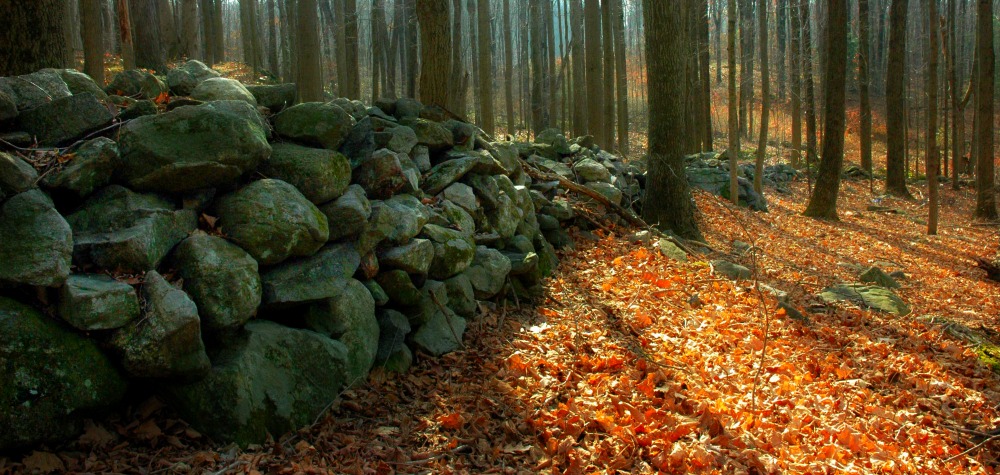
Something there is that doesn’t love a wall

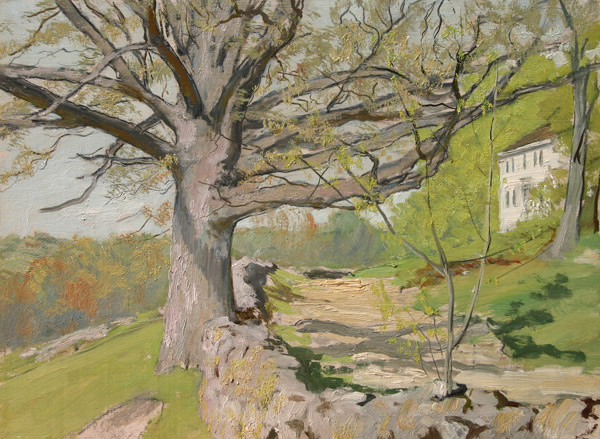
The Last View Home by Allen Butler Talcott

The Last View Home by Allen Butler Talcott

People often quote Robert Frost as saying, “Good fences make good neighbors.” In fact, though the old adage is in his poem, Frost puts in in the mouth of his neighbor farmer, quoting the old saying as gospel. Frost’s point, and the point of the poem, is: Why? What are we walling out or walling in? He wants to ask his neighbor:

Why do they make good neighbors? Isn’t it
Where there are cows? But here there are no cows.

Frost points out his neighbor’s farm has pine trees, and his apple trees:

My apple trees will never get across
And eat the cones under his pines, I tell him.

Pretty cheeky, especially for a  New Englander! The stoic farmer just repeats the adage and goes on repairing the wall. In fact, that is what they are both there to do, repair the stone wall that has been broken up over the winter, raising the other question of the poem: By whom? Something there is that doesn’t love a wall, says Frost

That sends the frozen-ground-swell under it,
And spills the upper boulders in the sun;
And makes gaps even two can pass abreast.

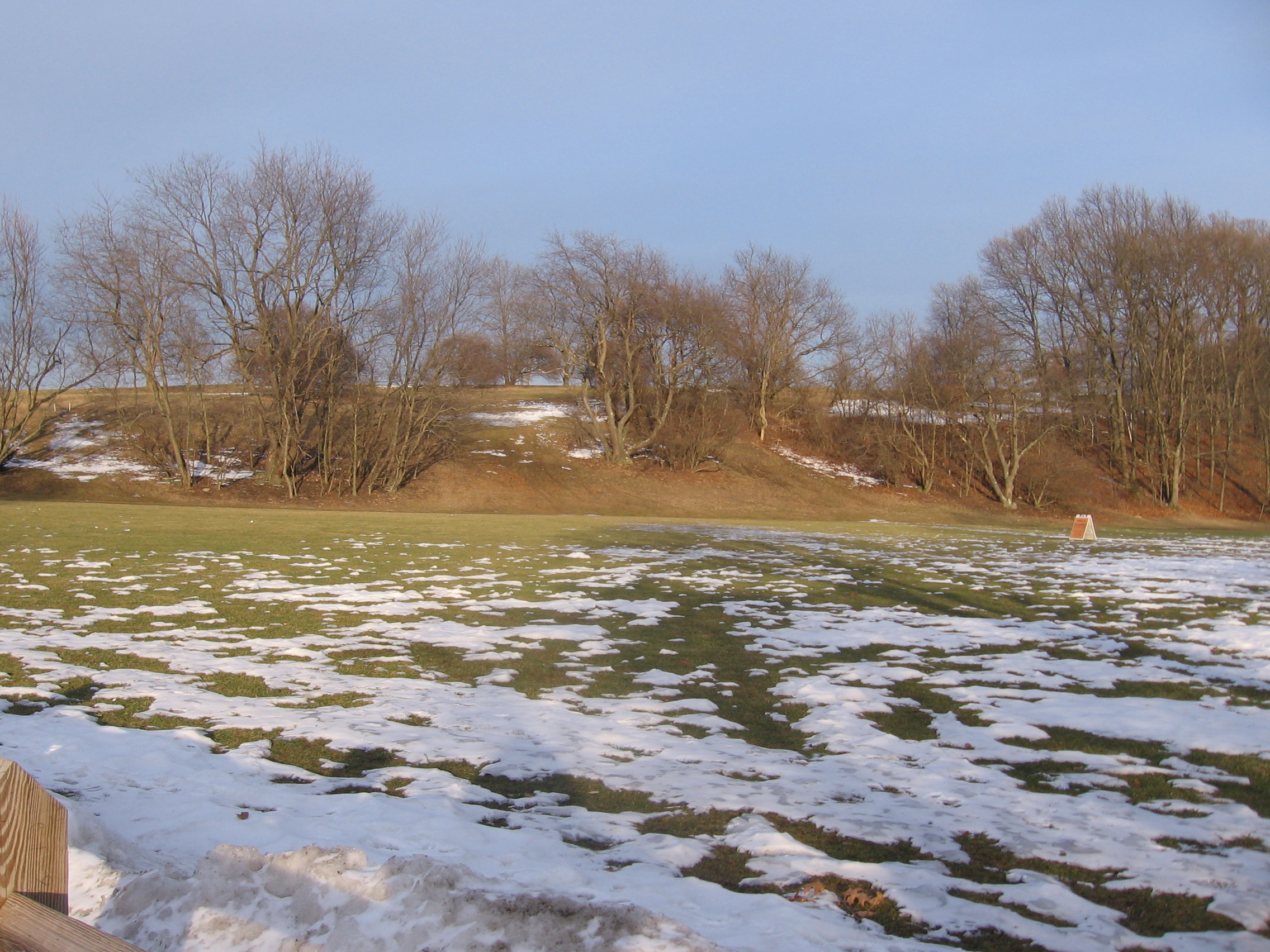
I thought about this poem a lot this winter, as the 60+ inches of snow fall in Boston had me out shoveling day after day, creating, by necessity, giant walls of snow along the sidewalk and between parked cars. There was nowhere else to put it all. One day my neighbor came out, angry, to clarify the property line between our two houses and tell me all the things, in his opinion, I was doing wrong in my shoveling. I was not happy at being yelled at, already tired from so much shoveling, nursing a shoulder injury from it that is bothering me, still, in May.

And I’d been doing more than my fair share of the work for the five of us who lived in the two units in my house, and trying to do it generously and not resentfully. I’d actually been praying with each shovelful, thinking of my housemates and downstairs neighbors, praying to love and serve them, hoping they’d be blessed when they came home from a long, maybe rough day and found a parking spot dug out for them. Praying to be loving and not grudging. So I was not in the mood to be taken to task. Not at all. I was working hard to be okay with not being recognized and affirmed, but actually being scolded? No. Too much.

So I yelled back. Not yelled, really, but stood up for myself. Vented my frustration. Asked my neighbor to give me suggestions about where the heck to put all the snow if he didn’t want me to put it in x, y and z places. He was going to just yell at me and walk away, but I drew him back, asking questions, arguing but trying to listen as well.

I thought about the poem again in March, as the walls of snow began to melt, and my muscles, tensed against the long, cold, dark winter began to relax. Something there is that does not love a wall. I thought about my neighbor, and the intentional Christian community I’d lived in for seven years, and about cows and trees and boundaries. There’s so much I don’t understand about community, so much I experienced in reality that doesn’t go along with what I still believe strongly in theory. But here’s what I do know:

Sometimes your neighbors have pine trees, and you have an apple orchard, and you have to ask yourself, Why am I building a wall here? Or, why are they? Do we need one? Can we leave the crumbled part of the wall that Something broke down, leaving room enough for two to walk abreast? Can we walk through it together?

And sometimes you or your neighbors have cows, and it is very, very important to build up your walls and fences. You do not have to allow your neighbor’s cows to trample your crops. They do not have to allow yours to trample theirs. Boundaries are okay. They are important. In that case, good fences do make good neighbors. But, as Cloud and Townsend point out, good fences also have gates in them, so you can let yourself out and let others in.

So, I will continue to build and repair the walls on my property line; continue to learn to respect my neighbor’s boundaries. But I will also continue to question, and to listen to the swelling ground and the crumbling stone walls, the Something that breaks down our man-made boundaries and spills the boulders into the sun.


 

stone-wall2

On my way to work this morning

This morning an elderly man stomped up my street half yelling and half mumbling, “There’s nobody up there! There’s nobody up there!” I stepped out of my porch on my way to work and and he turned his bright blue eyes onto me and asked, “How can you say that there’s somebody up there?” I was caught between fear of getting drawn into conversation with a mentally unstable person and a deep desire to tell this man that he is the Beloved, that not only is there somebody up there but that that Somebody created this man and loves him dearly, and cares about his struggles.

But I was caught off guard, and the man’s eyes slid off of me in a way that made me sure he wasn’t expecting me to speak to him. So I spoke. I said all that I was able to say at that moment. I said, “I believe.”

He glanced at me again in surprise. “You believe?” he said, and I didn’t hear the rest of his mumbled response as he continued up the street.