Kayaking


Great blue heron

Discovering the Water’s Edge by Mark Slawson

I went kayaking today on the Charles river out in Newton. I love kayaking on a river — it’s different than sea kayaking. With no waves it’s more peaceful, and you feel more in control. The kayak becomes an extension of your torso; the paddle an extension of your arms. You just sit on top of the water and your arms move you in whatever direction you want to go. It’s so easy and seamless, as if you finally have all of your limbs and are remembering what to do with them. Your arms pump in a figure eight, dipping one end of the paddle down through the water while the other arcs up and forward, then bends to dip again.

I slid out of the dock and quickly passed the hapless summer campers in their canoes. A canoe full of girls headed towards me and their eyes widened in panic: “Sorry!” they shouted, “Sorry, we don’t know how to turn!” “You’re okay, don’t worry,” I smiled and moved effortlessly aside, wise, gentle, and accomplished in a way that I rarely am on land. Then I left the groups behind, headed up the river past the fields of lily pads which were possessed by one great blue heron each. Swallows zipped back and forth, close to the water, catching the little water bugs. A hawk soared overhead in a circle, and I wondered if he was looking for fish.

My shoulders had stiffened after a few minutes, but they actually loosened as I paddled on. I peered over the blue puff of my life jacket at my bare arms, and watched the muscles move in them as they turned the paddle, the skin beginning to freckle from the sun. They looked so strong and purposeful, and felt so natural, taking a rare turn at all the action while my legs rested, crossed, in the kayak. This! I thought: This is what arms are for! To be strong, to carry you across the water, to pull and push, hold and carry, reach and touch. How often have I judged my poor arms for being too fat, having loose skin and stretch marks, thought them inadequate and imperfect. But look what they can do! Look how confident and beautiful they are, moving over the green-grey water.

Later in the day I babysat for a two year old girl, fed her dinner, bathed her, and read her stories before laying her down in her bed for sleep. In the bath I marveled at her dark skin and hair, her lean arms and legs and round belly. As we toweled her off she rubbed her belly and cried joyfully, “Belly! Belly!” “Yes!” I said, “I love your belly! It takes in your food and makes you strong and healthy. And it gives you big belly laughs!” We brushed her hair and she said, “Hair!” “Yes!” I said, “I love your hair! It keeps your head warm in the winter, and protects you from the sun and from bugs.” She is truly one of the loveliest creatures I have ever known, and I want her to know that she’s beautiful. But I also want her to know that her body is strong and capable and there for a purpose. Her body was not given to her to be cute, to keep slim and perfect so it will attract admiration. It was given to her to use, to run and jump, to laugh and touch and hold and carry. And, some day soon, to sit cross-legged in a kayak and slip smoothly through a river filled with flowering lily pads.

Season of Solitude

IMG_0877[1]Oh, how I love being alone.

I have always been an introvert, but I’ve been going through an especially introverted season the past year. Part of it is just limited energy, and needing to listen to my body and my mind when they say, “Rest.” But part of it is also the energizing, filling, settling, rejoicing, worshiping, processing, being that can only happen when no one else is around. Extroverts get their energy from being with people. Introverts can love people, be very social, be even more people-oriented than extroverts, but whether gradually or quickly our energy is being drained by the interaction.

I live with two housemates, one of whom, Mark, is a close friend of eight years. The other one Mark and I found on Craigslist — he’s very nice but not home very much, and we haven’t gotten to know him very well. Mark works from home, so is almost always here. But he, also, is an introvert, so it works out really well. In the evenings, when I get home from work, we chat for a minute or two and then go to our separate corners. Maybe once an hour or so we will chat, when he needs a break from work or I have something funny I want to share. This is almost idyllic to me, to have a friend a couple of rooms away — companionship, but space.

Mark was going away for two or three weeks, and I was a little nervous that I would feel too alone without him here. I wondered if I should try to schedule more time with friends, or a visit with my parents. But I am working a lot these days, and don’t have a lot of social energy. And as it turned out, I needn’t have worried. I have so appreciated these days of solitude. Eloise style, this is what I do:

  • Yoga
  • Read
  • Clean the house
  • Water the plants
  • Walk around the house observing the slow growth of the plants
  • Breathe
  • Pray (i.e. breathe while directing my attention toward God)
  • Drink big glasses of ice water
  • Make smoothies
  • Sit on the porch
  • Write
  • Email friends
  • Watch episodes of The Good Wife
  • Read my Facebook feed and comment on friends’ posts
  • Pay bills and run errands
  • Go for walks and bike rides in the Arboretum
  • Take pictures of things
  • Think
  • Be

Things I want to do but don’t even have time for because I am doing so many other things I enjoy:

  • Draw
  • Write more
  • Water the plants in the garden (I think I might not have enough energy and focus to take care of a garden)
  • Read German grammar books (for fun, really!)
  • Play the guitar and flute
  • Go to the farmer’s market Saturday mornings
  • Use the grill the previous tenants left behind

I can’t express how much these things fill me up, and I can’t explain why they are so much more filling when I am doing them completely alone. I know part of it is recovery from seven years in a large community. Our community was made up of four adjoining houses, and we generally had around 18 adults and a couple of handfuls of children. For many reasons, I don’t know how I made it so long in such an environment. That’s a subject for another post — for a book, probably. But re: my season of intense solitude, yes, part of it is detox from several years of intense community. I wonder how long it will take me to recover. For now I am so happy not having meetings and gatherings, not having to talk about vision or goals, or deal with crises, or discuss how and whether church discipline applies, or really to discuss and interpret the Bible at all anymore. In theory I would like to be part of a faith community again. But right now I just can’t imagine it.

Mark emailed yesterday to say he would be coming back today. So I’ll have my two-rooms-away friend again. I’ll miss the absolute solitude, but it’ll be good to have him around again.

Do any of you have stories of a season of solitude in your life? One you went through or are still in? I’d love to hear them.


The revelations of love

CandlePeople generally suppose that they don’t understand one another very well, and that is true; they don’t.  But some things they communicate easily and fully.  Anger and contempt and hatred leap from one heart to another like fire in dry grass.  The revelations of love are never complete or clear, not in this world.  Love is slow and accumulating, and no matter how large or high it grows, it falls short.  Love comprehends the world, though we don’t comprehend it.  But hate comes off in slices, clear and whole – self-explanatory, you might say.

From Jaybur Crow, by Wendell Berry


Forty: A preface

Once Upon a TimeI have some ideas, some thoughts I’d like to share, some stories I’d like to tell. I have some inklings and some convictions, some anecdotes and some parables, some bluntly factual reports and some metaphorical fictions.

They’re in me. I feel them brewing.

Ever since I was five or six I’ve wanted to be a writer. I still have stories from those days, mostly about cats and unicorns, with an overabundance of commas and adverbs. I’ve kept up my writing in various ways over the last thirty five years, through journaling, writing poems and short stories, several brief attempts to formulate novels and, most recently, blogging. I sent stories to literary journals in my late twenties, had a writing partner for a while in my early thirties. Yet I remember thinking, as early as college, that as much as I wanted to write, I didn’t have my stories yet — my life experience to draw on. I kept writing anyway. But I had this strong feeling that it wasn’t until I was forty that I was going to be able to write anything real. That feeling has stayed with me.

Three weeks ago I turned forty. And I feel it. It’s time.

For a while now I’ve been thinking about what Anne Lamott said in Bird by Bird:

You own everything that happened to you. Tell your stories. If people wanted you to write warmly about them, they should have behaved better.

There are other people in my stories. Some haven’t behaved that well, and their bad behavior is part of my story. But, still, this doesn’t feel quite right to me. *I* haven’t behaved well in other people’s stories. And other people have blogs (and theoretical book deals) too. So I’ve been worried, not wanting to be unjust or to write to validate myself at another’s expense.

But then Glennon Melton posted this the other day:

When internet writers ask me for advice- one of the first things I tell them is: ”If you can avoid defending yourself for being human, you might have enough energy to keep writing. Don’t defend yourself, and don’t get your needs confused. You don’t need to be right- you just need to write.

So, I am going to write, knowing that I may not be right about everything, but knowing, too, that I have to write. “A bird doesn’t sing because it has an answer,” said Maya Angelou. “It sings because it has a song.”

I have a chronicle, a myth, a fable; I have a memoir and an apologue. I have a saga, a romance, a spiel; I have a scoop and a cliffhanger. I have a song.

Something there is that doesn’t love a wall

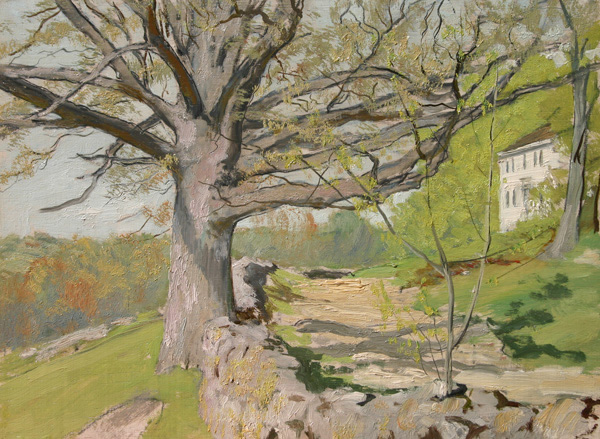
The Last View Home by Allen Butler Talcott

The Last View Home by Allen Butler Talcott

People often quote Robert Frost as saying, “Good fences make good neighbors.” In fact, though the old adage is in his poem, Frost puts in in the mouth of his neighbor farmer, quoting the old saying as gospel. Frost’s point, and the point of the poem, is: Why? What are we walling out or walling in? He wants to ask his neighbor:

Why do they make good neighbors? Isn’t it
Where there are cows? But here there are no cows.

Frost points out his neighbor’s farm has pine trees, and his apple trees:

My apple trees will never get across
And eat the cones under his pines, I tell him.

Pretty cheeky, especially for a  New Englander! The stoic farmer just repeats the adage and goes on repairing the wall. In fact, that is what they are both there to do, repair the stone wall that has been broken up over the winter, raising the other question of the poem: By whom? Something there is that doesn’t love a wall, says Frost

That sends the frozen-ground-swell under it,
And spills the upper boulders in the sun;
And makes gaps even two can pass abreast.

I thought about this poem a lot this winter, as the 60+ inches of snow fall in Boston had me out shoveling day after day, creating, by necessity, giant walls of snow along the sidewalk and between parked cars. There was nowhere else to put it all. One day my neighbor came out, angry, to clarify the property line between our two houses and tell me all the things, in his opinion, I was doing wrong in my shoveling. I was not happy at being yelled at, already tired from so much shoveling, nursing a shoulder injury from it that is bothering me, still, in May.

And I’d been doing more than my fair share of the work for the five of us who lived in the two units in my house, and trying to do it generously and not resentfully. I’d actually been praying with each shovelful, thinking of my housemates and downstairs neighbors, praying to love and serve them, hoping they’d be blessed when they came home from a long, maybe rough day and found a parking spot dug out for them. Praying to be loving and not grudging. So I was not in the mood to be taken to task. Not at all. I was working hard to be okay with not being recognized and affirmed, but actually being scolded? No. Too much.

So I yelled back. Not yelled, really, but stood up for myself. Vented my frustration. Asked my neighbor to give me suggestions about where the heck to put all the snow if he didn’t want me to put it in x, y and z places. He was going to just yell at me and walk away, but I drew him back, asking questions, arguing but trying to listen as well.

I thought about the poem again in March, as the walls of snow began to melt, and my muscles, tensed against the long, cold, dark winter began to relax. Something there is that does not love a wall. I thought about my neighbor, and the intentional Christian community I’d lived in for seven years, and about cows and trees and boundaries. There’s so much I don’t understand about community, so much I experienced in reality that doesn’t go along with what I still believe strongly in theory. But here’s what I do know:

Sometimes your neighbors have pine trees, and you have an apple orchard, and you have to ask yourself, Why am I building a wall here? Or, why are they? Do we need one? Can we leave the crumbled part of the wall that Something broke down, leaving room enough for two to walk abreast? Can we walk through it together?

And sometimes you or your neighbors have cows, and it is very, very important to build up your walls and fences. You do not have to allow your neighbor’s cows to trample your crops. They do not have to allow yours to trample theirs. Boundaries are okay. They are important. In that case, good fences do make good neighbors. But, as Cloud and Townsend point out, good fences also have gates in them, so you can let yourself out and let others in.

So, I will continue to build and repair the walls on my property line; continue to learn to respect my neighbor’s boundaries. But I will also continue to question, and to listen to the swelling ground and the crumbling stone walls, the Something that breaks down our man-made boundaries and spills the boulders into the sun.


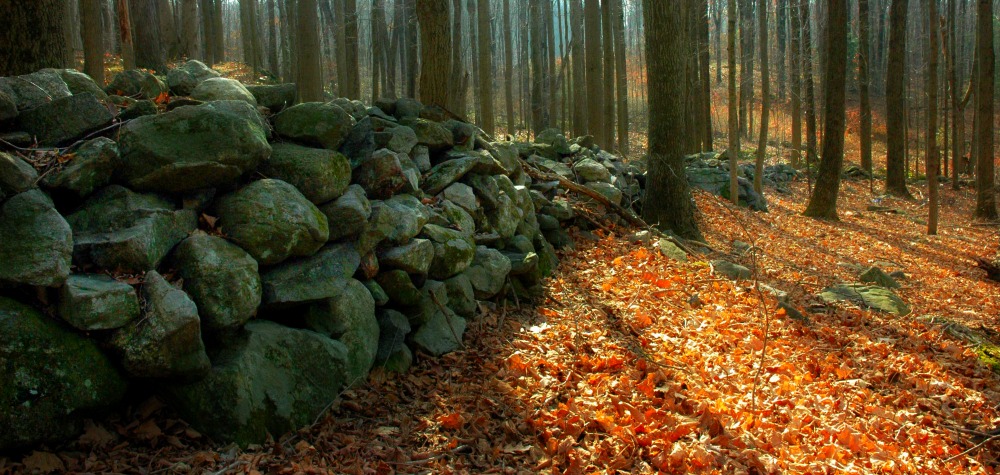
stone-wall2

Messy and BeautyFULL — A guest post by Dawn

messy-beautiful-450b

Hello, I’m Dawn. I’m not really a writer and I don’t have a blog, but I’m messy and I’m beautiful. I have a story to tell and so Jessica, my beautiful friend, offered to let me guest blog. I am what some call “religious” so please know this one will be heavy on the “God talk”. Thank you so much Jessica! I am truly honored, and terrified. Deep breath here goes….

My son doesn’t know we are poor. He has no idea he is homeless or anything about the national poverty line. He doesn’t lay awake at night worried that the bills might not get paid.

The Wal-Mart cashier knows. She rolled her eyes at me and told me to just not panic. My son hopped beside me humming a happy tune trying to be patient and wait for the lady to put his new Hotwheels in a bag.

“Don’t panic” she said. She tapped her fingers on the scanner. “Do you want me to just stop?” she pushed. “No.” I tell her. “Let me think a moment” I beg. I’m trying to figure out what I really need and what I can put back and get later. I’m trying to do math in my head and that is never good. I think I’d rather put most of the food back and leave. I’d rather pretend I forgot my wallet and say “I’m gonna run out to my car,” but then not come back.

“Look, Mom! That red car is cool!” my three year old beamed. I can’t leave. I can’t tell him we will get the cars another time. He doesn’t know. He has no idea I don’t have a job and I don’t have anything in reserve. Don’t panic?

I look at the tiny bit of groceries laid out on the conveyer belt and mumble, “I’m sorry.” I don’t even know who I’m apologizing to anymore. The lady sighs huffily and flips the light over her station to blink. She is calling a manager to void my transaction. The manager comes over and the checkout clerk hisses in her ear, “She doesn’t have enough for this.”

The manager is much nicer. She smiles sympathetically at me but there is nothing she can do. I am worried and embarrassed. My unemployment benefits that were supposed to be on this card weren’t there. They were supposed to be, but they weren’t.

Now for the hard part. I bend down to speak softly to my son. He is standing still now, watching with wide eyes as the cashier and the manager carefully unpack the food and put it off to the side. “Honey, momma can’t get the cars this time.” I murmur in his little ear. “Oh,” he replies and nothing more. I take him by the hand and lead him to the car. As I put him in his carseat he looks at me and asks, “What happened, Mommy? Why did the ladies take my cars?” I don’t remember what I told him. Whatever it was satisfied him and within moments he was back to swinging his legs and singing loudly to himself. Whatever it was I said worked for him, but it didn’t satisfy me. And that wasn’t the only time this had happened.

This was life. A single mother, I was in the process of finishing school when I lost my job due to an “economic roll back.” I didn’t have too much longer until I finished my degree, but every day was starting to seem more and more like an eternity. While I didn’t have much, my son never knew. He simply trusted that he’d eat when he was hungry, play toys when he was bored, and wear clothes because he had to. What I couldn’t do, I learned to turn over to God.

I remember driving to take him to preschool one day. He was talking happily about something, and not in the least concerned with anything. I prayed as I drove, “God, my baby needs a coat. I don’t have the money to get one so here is what I’m going to do. I’m going to trust. It is not my job to know how You’re going to do it. It is simply my job to trust that you will provide.”

We got to preschool and I carried my little in. I set him down and off he went to play with friends. The teacher stopped me then, and said she needed to give me something. She brought me two large garbage bags and set them down on the table in front of me. “I hope that you are not offended,” she began, “but the other teachers and I could see that you are trying so hard. We wanted to help. We sorta put the word out that you needed some winter things for your little one.” Offended? I was dumbstruck. “Can you tell me,” I managed to gasp, “if there’s winter coat in there?” The teacher looked almost guilty and nodded. “There are two. You don’t have to be embarrassed. They are hand me downs….” she began. I didn’t let her finish. I was half laughing / half sobbing and I hugged her hard. I think I may have scared her at first, until I told her what I had just been praying on the way to school. Yup, this was Life.

It has been four years since this happened. I still cry when I remember those times. I’ve finished school, gotten a professional license, and found a job since then. But, even with the hard work and positive changes, my son and I still live with my parents because even with the job, I can’t swing the car payment, groceries, *and* rent. I still have a hard time juggling bills.

Going to Wal-Mart still fills me with a special sort of dread, like the ghost of embarrassment, and a flicker of panic whenever I slide my card. Is it just me or do the machines take an excruciatingly long time to “approve”?

In fact, just today I went to Wal-Mart to get a few things. Like years ago, my son was hopping beside me trying to be patient while the lady put his new Hotwheels in a bag. And yet again somehow I didn’t have enough on my prepaid debit card and the ATM was out of order too. That feeling of dread spread all over me again. I opened my wallet and was desperately counting cash, all the while thinking about what I would have to put back. “Take your time,.” sighed the cashier.

This time was different. This time my eye fell on a blue plastic Wal-Mart card. It had been a gift from some Monkees back on Valentine’s Day. Today I didn’t have to put anything back. This time was also different because I told my son. I told him that so many times momma can’t buy the toys, fancy games, and clothes, but this time he could take his cars home because of the way that God had blessed us. God blessed us through the love and generosity of the Monkees, 154,000+ people he didn’t know. His eyes were wide this time as he watched the lady carefully pack the food and cars into our bags. Today, he climbed into the car with me and asked, “Why did all those other mommies and people know you needed a card, mommy?” and I replied, “Because, I am a mess. My life is a mess, but that’s okay. I am beautiful, and my life is beauty- full.”
mom

This essay is part of the Messy, Beautiful Warrior Project — To learn more and join us, CLICK HERE. And to learn about the New York Times Bestselling Memoir Carry On Warrior: The Power of Embracing Your Messy, Beautiful Life, just released in paperback, CLICK HERE.