Sam Lamott teaches his mom, and us, about love and grace

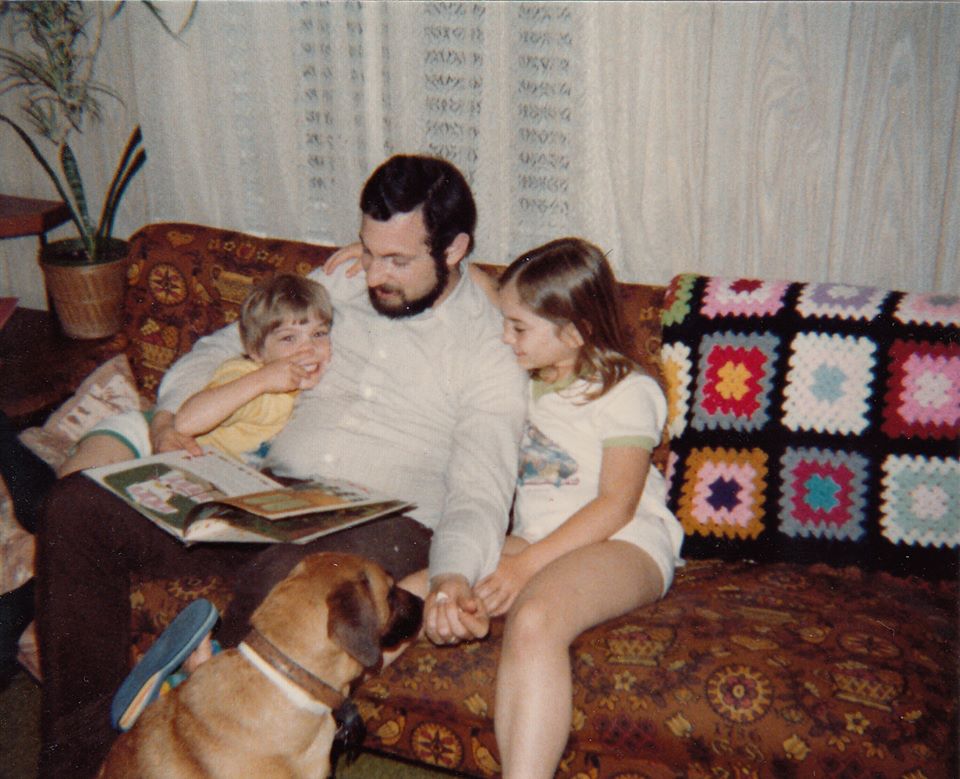
Anne and Sam Lamott when he was little

Anne Lamott with a young Sam

Sam Lamott is my new hero. His mother, Anne, whom I adore and whose books I read for the same reasons I call a good friend — to relax, to laugh, and to feel understood and at home — made a couple of really awful comments about Caitlyn Jenner on twitter yesterday. I won’t repeat them here, but they were snarky and mean and insensitive. This was really surprising to me, and saddening.  But then her son, Sam (of Operating Instructions fame) replied to her with such love and grace, it left me stunned:

“The pee pee tweet is not truth, love, or funny. I’ll explain it all. Let’s start by deleting it.”

“You can be part of the noise, but when the noise quiets down…you’ll wish were part of the change, it lasts longer.”

And then just as gently and articulately he asked for grace for his mom:

“Everybody gets to make mistakes. It’s a shame this lesson is so public, but the best lessons are often painful and embarrassing.”

“I know. It’s shocking. When the adrenaline wears off, remember that before you knew about trans issues, you didn’t know.”

“I learned about trans life from a close FTM friend who was willing and patient to answer my ignorant and incredibly personal questions.”

“Trans life is so outside pop culture, and my moms small town life. This is how the truth gets out, this is how we evolve. We talk about it.”

Anne retweeted Sam’s quotes. And then, after a while, she apologized.

“I am so sorry to have caused pain to people in the transgender community, esp to parents of transgender children. You are loved and chosen.”

Before you knew, you didn’t know.Tweet: Before you knew, you didn't know. @jfkantrowitz http://ctt.ec/Fjwxd+

The whole exchange gives me so much hope that beneath the yelling and arguing and hyperbole that I’ve been seeing in my Facebook and Twitter feed, there may actually be some new, fragile-green growth. Before you knew, you didn’t know. Listen to those whose lives you are discussing. Listen to their stories and ask questions (ask, first, if it’s okay to ask questions, though). And offer grace to others who trip and stumble along the way. I hope to follow Sam’s example in my life and in my writing. And I hope that Ten Thousand Places can be a place where we practice that same loving, and listening, and extending grace.

Come join me on Facebook, Twitter, and Instagram and let’s try! (I’ll tell you a secret: I’m feistiest on Twitter!)

Love,
Jessica

Save

Birdsong and girlsong

Swallows

Swallows

It had been a hard day.

One day last week I’d been working from home and struggling with how much there was to do, and how many things were falling apart (my car, my teeth, my finances). Worse than that, I hadn’t had time to just be and process all these things, because I had to just keep doing them. I was feeling overwhelmed and disconnected from my own heart and mind. Does anyone else find that unprocessed feelings build up and create a sense of chaos? I need to get them out, by writing, drawing, or just spending time thinking.

Finally, that evening, I closed my computer and my to do list, and went for a walk in the arboretum. It was a beautiful warm spring evening, with a perfect cool breeze. A stillness seemed to settle on the world, and on myself, as I walked up Peter’s Hill and down the other side, past Conifer Path, and around to where the short, twisted pear trees gave off an intriguing scent. And — the birds! There are so many birds in the arboretum. In Jamaica Plain I was used to seeing robins, sparrows, and the occasional cardinal. I know the songs of all of those. But here there were so many more, and they were singing out with the joy overtakes birds in the mornings and evenings. “…everything smiling in the sun, and the song-birds just going it!” as Huckleberry Finn said.

The birds’ clear song, the cool breeze rustling the trees, and the movement of my arms and legs began to clear my heart and my mind, and the stress of the day began to slowly sink through my feet into the ground. It was just what I needed. Another half hour or so, I thought, and I would be better, ready to go back home and re-engage with my life.

Then the birdsong was interrupted by the tinny sound of pop music coming over a cheap speaker. I looked up and realized I was gaining on a group of three girls, one of whom was holding up a smart phone blaring this unholy sound. They were walking slowly — I was gaining on them but by the time I passed them and got away from their music I would be almost home, and my chance to enjoy the peace of the evening would be ruined. I slowed down, debating whether to try to pass them or take a different route, and they glanced back and caught my eye.

I gave them a look, I’m afraid. I don’t know how it came across to them, but in my heart at that moment I was thinking, “I don’t want you here, you’re bothering me.” A grown-up look, a scolding look. And then, while still trying to decide where to walk, I began to notice things I hadn’t at first. The girl with the phone was lagging behind her two friends. She was overweight, and struggling with the slope of the hill. Her friends were encouraging her, calling her forward: “You can do it! Keep going!” She was holding the phone up in the air, the music helping her to keep putting one foot in front of the other. This was *her* evening, too — her triumph at getting out of the house, her healing walk. And I had given her a look.

I moved onto a side path, away from the music and away from my guilt. Hopefully they hadn’t noticed my look. I said a prayer for them, as I faded into the woods and their music faded away. And I said a prayer for myself for a better heart. Back amidst the trees and the birdsong I felt peaceful again. It is so much easier to love people when they are just a thought or a memory. So much harder to love when they are right in front of you. Next time, Lord, I prayed. Next time let me give an encouraging smile. Next time let me be as pure and joyful as the birds, who didn’t begrudge me my presence in their woods, who sang out just as joyfully and freely as if they had been alone. Next time let me see the girls’ beauty first, before I judge them. Next time let me love my neighbors as myself, even when they are playing pop music.

We choose you

Me with my dad, little brother David, and our dog, Hector.

Me with my dad, little brother David, and our dog, Hector.

When I was about eight or nine years old we read at church the story of Abraham preparing to sacrifice his son, Isaac because God called him to. Later, at home, I asked my dad, “Dad, what would you do if God told you to sacrifice me?” I don’t know if he realized what an important question it was for me. I loved God, and our church, and the stories we read in the Bible. When I was three I had prayed for Jesus to come into my heart. But this story scared me. I knew God had provided Abraham with a ram so he didn’t have to sacrifice his son. I don’t remember if I understood at the time that it was an analogy to Jesus, to God the Father providing us with His only son as a sacrifice so we didn’t have to die. I do remember knowing it was supposed to be a good story, with a happy ending. But the meantime part, when Abraham tied his son to the pyre, fully expecting and intending to kill him out of obedience to his God — that part scared me. Looking back, it was very brave of me to ask my dad the question. If he had said yes, it would have devastated me, and probably destroyed my young faith.

“Dad, what would you do if God told you to sacrifice me?” With tears welling up in his eyes, my father said, “I wouldn’t do it, Jessica. I would say no.” And my young heart understood that my dad LOVED me, and did not love God one whit less. He was not choosing his daughter over God. He made a choice that showed us both God’s deeper broader love. My heart chose God at that moment because my dad chose me.

Yesterday, when Glennon Doyle Melton shared part of a letter she’d written to a young transgender person who had been kicked out of church, it reminded me of that moment. She wrote:

You need to remember that being rejected by church is not the same as being rejected by God. God did not kick you out of church, honey. The church kicked God out of church. Listen—I love the church, J. I spend every extra minute I have in mine. But I am here to tell you that the church is not God. You are more God than the church is, J—because you are made in God’s image: while the church is an institution. God loves you more than any institution He/She made for you, J. When folks decide they love any institution more than the individual souls inside them—they’re missing the mark. I love the church, J—but I love you more. If I’m forced to choose, I choose you and your heart every day and twice on Sundays. Just as God made you. Just as God made you.
(You can read the rest of her post here.)

Let me first say that this is the best use of the expression, “and twice on Sundays” that I have ever seen. G, if I had a Best Turn of Phrase award to give out, you would get it this week.

When I read Glennon’s post, this post came to me, almost full-fledged. That happens sometimes. I suddenly feel the push against my belly and realize there is something in there that needs to be born, and I rush to the computer and type it up, fingers stumbling over each other in my haste. I typed it as a Facebook status. And then, I have a confession: I paused. I thought, Do I really want to go there? Just 29 days ago I hit publish on a post about Jesus and gay weddings, and things got crazy. Good things happened, and are still happening, but it was big and scary and overwhelming. I got my first negative comment in over seven years of blogging, and I got my next five hundred negative comments the same week. Friends wrote praising me, and friends wrote rebuking me. My beloved little blog became something different than it was before. In good ways but in some hard ways, too.

So I looked at what I had written on Facebook, the story about my dad, the paragraph-long quote from Glennon’s blog, and the link to her blog, and I thought, Do I really want to bring up transgender people? Shouldn’t I take some time to let the LGB part settle in? Take some time myself to come to grips with the new Ten Thousand Places, my new readers, my new critics? And take some time to let the Christians I was writing to get used to the thought of baking for gay weddings, before I started in with, “And another thing…” The little girl I nanny was sleeping and would wake any minute, and I hesitated, the cursor hovering over the post button, my finger hovering over the track pad.

And then I thought about my eight year old self again. I thought about how scared I was, how much I loved God and my father and wanted to understand. I thought about my twelve year old self, feeling lost and rejected by my peers, and how boys were just starting to be on my mind, but I already felt there was something wrong with me that would keep me from having a normal life and normal relationship. I was a straight cis girl who would grow into a straight cis woman — all of society was in my corner, and still it was so hard to grow up, to understand myself, my family, my faith, my gender identity, my sexuality. “Sex is difficult,” Rainer Marie Rilke wrote to his young poet friend, “yes. But they are difficult things with which we have been charged; almost everything serious is difficult and everything is serious.”

I thought, as I had many times before, about how integral my gender and my sexuality are to who I am, and how that has very little to do with the sex act itself. I have been celibate most of my life by choice, first because I was waiting to be married, and now because I don’t think I necessarily will get married — and I’m content with that. But the lack of sexual activity in my life has not made me any less of a woman or any less straight — I am a woman oriented towards the opposite sex. I was born that way. I grew up that way. It is as a straight woman that I understand and interact with the world. It is as a straight woman that I worship God.

If it was hard for me to grow up, to accept myself, to understand God’s love for me, I can’t imagine how hard it is for young people whose gender identity or sexual orientation isn’t as widely accepted by society, by their family, by their church. What if my dad had not chosen me? What if my parents had told me that they chose the church over me, that they chose society’s norms over me?

So I took a deep breath, and lowered my finger, and clicked “post.”

And I’m going to click “publish” here in a few minutes, if the little girl naps long enough for me to finish writing. Because I have a one more thing to say:

Maybe your parents, or your church, or society in general were not able to speak those words that you needed to hear. Maybe they chose their interpretation of the Bible or their view of the world over you, overtly or in subtle ways that hurt just as much. Maybe it was because of your sexuality or the gender you identified with. Maybe it was because you struggled with mental illness or addiction, and they didn’t know how to handle it. Maybe you were abused and they chose your abuser or the family or church’s reputation over you. Maybe there was nothing in particular but you just were never sure where you stood. Maybe you worked day and night to dot every i and cross every t so that you would never have to find out whether they would choose you.

If this is you: Listen. You are not alone, and you are not unchosen.

I choose you.

My dad chooses you.

Glennon chooses you.

John chooses you.

Rachel chooses you.

Laura chooses you.

Nadia chooses you.

Sarah chooses you.

We love the Bible, and we love God, and we love church, even though we sometimes have a rocky relationship with it. But if we had to choose, we would make the same choice that Jesus made, when he carried his cross, forgave his killers, and died for me and for you.

Jesus chose you. And so do we.

We choose you. Every day, and twice on Sundays.

Love,

Jessica

*****
Please check out Faithfully LGBT and their wonderful photo series of LGBT people of faith.

Come follow me on Facebook, Twitter, and Instagram and join in the conversation! (I’ll tell you a secret: I’m feistiest on Twitter!)

Some related posts:
How I came to support LGBT full inclusion in the church
Why we need to stop saying “Love the sinner but hate the sin”
Bake for them two


Save
The long, slow work of love

grassfire“People generally suppose that they don’t understand one another very well, and that is true; they don’t. But some things they communicate easily and fully. Anger and contempt and hatred leap from one heart to another like fire in dry grass. The revelations of love are never complete or clear, not in this world. Love is slow and accumulating, and no matter how large or high it grows, it falls short. Love comprehends the world, though we don’t comprehend it. But hate comes off in slices, clear and whole — self-explanitory, you might say. You can hate people completely and kill them in an instant.”

~Wendell Berry, in Jayber Crow

I love the book Jayber Crow by Wendell Berry. When I first read it several years ago I wrote this paragraph in my journal in awe. At first the sentence, “Love is slow and accumulating and no matter how large or high it grows, it falls short” gave me pause. What did he mean, that love “falls short?” Isn’t it supposed to be the strongest force in the universe? But as I thought about it more I realized how true this is of our love for each other. It is so hard to show love and receive it. For every loving, selfless action or word that builds love and trust, we stumble and show our fear, bitterness, jealousy, and even anger, even to those we love the most. As Doctor Phil always used to say, “It takes ten ‘atta boys’ to make up for one ‘you jerk.'”

Love is slow and accumulating, it takes a lifetime to build trust, to feel safe, known, seen, and loved for who we are, and to know, see, and love others.  But anger, contempt, fear, judgement, scorn, and hatred leap from one heart to another like fire in dry grass. You can hate people completely and kill them in an instant.

This is why expressions like “love the sinner, but hate the sin” come across as hate, even from well-meaning people. Love is slow and accumulating, and cannot be communicated in the same sentence as the word hate. But the hate leaps from one heart to another like fire in dry grass, leaps from the phrase, “love the sinner, but hate the sin” to the heart of the one being called a sinner. And the hate, coming in the same package as promised love, becomes even more powerful.

I had a boyfriend in college who said to me, “I love you but I hate that you’re fat.” Did this make me stop overeating? Yes, but it didn’t make me healthy. It made me starve myself instead, eating as few as 500 calories a day for months, ruining my metabolism, forcing my body into starvation mode, and setting myself up for many more years of unhealthy eating. The hatred leapt to my heart like fire, and has taken the better part of two decades to extinguish.

When I posted my “Bake for them two” essay three weeks ago, hundreds of people commented saying I was wrong and homosexuality was wrong, and some of them said it as kindly as they knew how, and others didn’t bother with kindness. But all the comments merged together like sparks into a single fire and I felt the flames against my skin. And I understood more than ever why LGBT people were leaving church and fleeing from these flames, and, worse, why they were catching fire and hating themselves and harming themselves and dying.

I had a friend, Andrew, who came out to me in high school and made his first suicide attempt a few months later. His parents and his church told him that he had to change to be loved and accepted by them and by God. And he tried, but he couldn’t change. And he feared the fires of hell but he feared the sparks of hatred in this life even more. He was found that time, running his car in the closed garage. I went to college and he moved to the West Coast and we lost touch for fifteen years. Then, in 2007, I reconnected with our mutual friend Tammy, Andrew’s best friend. “Andrew will be so excited that we’re back in touch with you!” she said. Five days later Andrew made his fourth or fifth suicide attempt, and this one was successful. For five days he had still been alive. I think I had his email address from Tammy but I hadn’t gotten in touch yet.

Love is slow and accumulating. But you can hate people completely and kill them in an instant.

So many people wrote to me after Bake for them two saying that they had not heard a message of love from a Christian in years. Many others were mad at me for screening the comments and posting more from people who agreed with me than from those who disagreed. Hundreds of people wanted me to post their Biblical arguments against homosexuality, their version of “love the sinner but hate the sin.” But love is slow and accumulating and I want Ten Thousand Places to be a place where love can be heard over the arguments.

My father, Matt Kantrowitz, and some of his friends shared my post on Facebook, where one woman commented that she was not a hater, that she was just calling sin sin. This was my father’s reply:

In 30 years of ministry with those society considers the “worst” sinners: prison ministry, I have learned one thing: We can’t scold people into the kingdom. Our rebuke: “Calling sin sin” comes across as disapproval, judgementalism, scorn, and rejection. We take their sin (and our own ) seriously. But we realize they will find salvation and forgiveness for their sin, healing and transformation to live a new life: they will find all this a lot faster if we incarnate God’s LOVE to them than if we sin against them by lecturing them when God is calling us to love them.

Love is slow and accumulating. The revelations of love are never complete or clear in this world. But we can do our best to communicate them by showing up in the prisons, in our workplace, in our homes, and in our churches, alongside those who are hurt and struggling. We can sit and listen to people’s stories and share our own. As theologian Paul Tillich said, “The first duty of love is to listen.” But we can’t communicate love in the same sentence as hate. Love can’t be heard in the sentence, “I love you, but…”

Christians, let’s dig deeper and begin to do the long, slow work of love.

*****

For those looking for more ways to listen and love, please check out my post Bake for them two follow-up and resources. And if you’d like to read more about my dad’s prison ministry, check out his blog, Visiting Jesus in Prison.

How I finally learned to feed myself

JessicaLarsAnderson

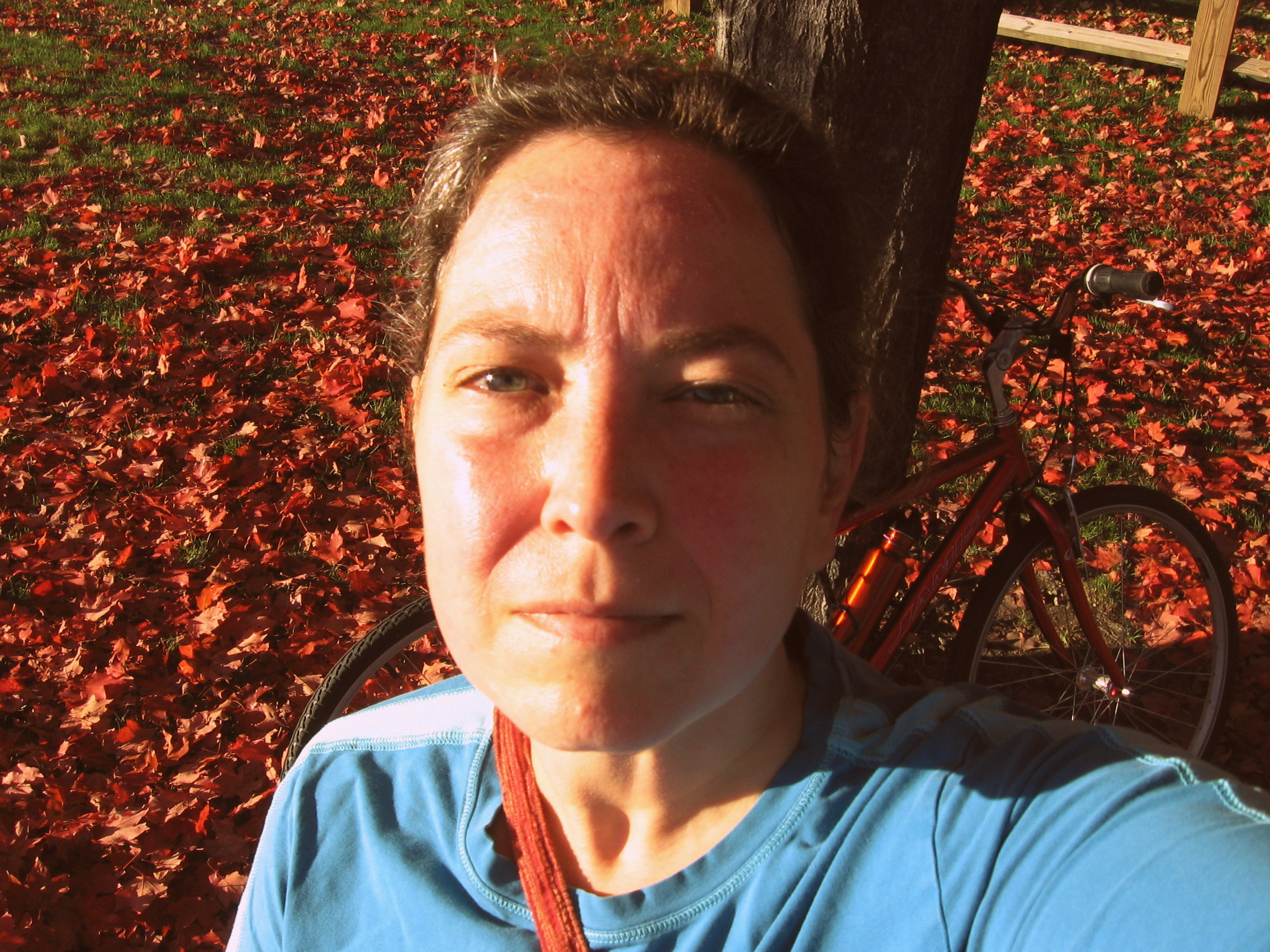
Me on a bike ride last autumn.

“As psychoanalyst Erik Erikson once noted, there are only two choices: Integration and acceptance of our whole life-story, or despair.” ~From Ruthless Trust by Brennan Manning

I’ve been doing a new exercise lately, when difficult memories surface. I take a deep breath, and the in-breath represents full acceptance of myself and everyone in my past, my life story and theirs. Then I breathe out, and that represents letting go of the pain and trauma that I experienced, forgiving myself and others. Breathe in — acknowledge and accept; breathe out — let go.

In the spirit of accepting myself and acknowledging my whole life story, yesterday when I was posting some pictures from ten years ago I included a somewhat unflattering picture of myself — worthwhile because of my two adorable cousins.

Poland, 2004 -- Me with Hannah and Alex

Poland, 2004 — Me with Hannah and Alex

I wanted to avoid the temptation to edit out parts of my life that I don’t like — like the fact that I was significantly overweight for most of my late twenties and early thirties. That was a part of me, and I can’t breathe out and forgive myself unless I breathe in and acknowledge it. I did so many fun things during that time, and it’s impossible to post pictures of them without showing that aspect of myself as well.

Eleven years later, I’m forty years old — about to turn forty-one. And I’m almost sixty pound lighter, and have been for several years. Significantly, I didn’t lose the weight by finding the perfect diet or exercise regime. I lost it by letting go of self-recrimination and shame. I lost it by forgiving myself each time I overate. I lost it by letting go of my identity as someone who was fatally flawed. After thirty-plus years of dieting, binge eating, and starving myself, I told myself that I wouldn’t diet anymore, that I would only have three rules for myself from now on:

1. Eat when you’re hungry.

2. Stop eating when you’re full.

3. Forgive yourself when you don’t.

For years I was stuck in a cycle of overeating, feeling shame because of it, trying to diet and exercise because I hated who I was, and then overeating again from that place of shame and hunger. I tried breaking the cycle over and over again, but I always tried to break it in the eating stage or the stopping stage. I finally realized after years and years that I needed to break the cycle in the shame stage. “Forgive yourself when you don’t.” That’s #3 on the list, but it’s the most important part.

I started out pretty well with “eat when you’re hungry” — not a simple thing when you have felt your most beautiful and affirmed when you were dieting or flat-out starving yourself. I bought healthy food and prepared it and tried to feed myself with as much love as I would feed a child, and with as much purpose as I put gas in my car. But the “stop when you’re full” part took a lot longer. The overeating had grown compulsive — sometimes the food just tasted so good, and I was getting such an endorphin rush from it that I couldn’t stop; but other times I was sick of eating, my jaw hurt from chewing, and the food tasted like sand, but something in me kept saying eat, eat, and I couldn’t stop.

That’s when I started pulling out my new rule, #3: “Forgive yourself when you don’t.” Instead of wallowing in shame and self-hatred, I got myself a drink of water, patted myself gently on the arm, and said, “That’s okay. You’re doing the best you can, and that’s a lot! Get a good night’s rest — tomorrow’s another day.”

It didn’t work overnight. In fact, without the shame and constant inner struggle I did gain weight at first. But gradually, slowly, I found myself eating and thinking, “Hm, I think I’m full,” and putting the food away. Without the shame the compulsion began to diminish. Eating became a thing to enjoy and be proud of — I was giving my body what it needed to live! Exercise flowed out of that joy. Instead of beating my bad flesh into line, I was enjoying the strength in my legs as I ran, and biked, and in my arms as I kayaked or did yoga. Shame got me short-term success and deeper longer-term problems. Forgiveness is healing me.

It was a long process, and I have far from mastered it. I still overeat occasionally. And I still am tempted to feel ashamed of myself. But then I remember how far I have come, and I pat myself gently and say:

You have done the very best you can, every step of the way. You have made mistakes, but you are forgiven. Accept yourself and your past, forgive yourself, and let it go. When you have learned to forgive yourself, it will be possible to forgive others for the times they have hurt you. Breathe in — it’s okay. Everything that has happened to you is part of your story — there’s nothing you need to deny or forget. It has all led here, and here is where you are supposed to be right now. Breathe out — Let it go. You are not defined by your pain or your mistakes, or the way others have hurt you. You can let go of all of it and live fully in the moment, and accept fully what this day and this moment have to offer you.

Friends, is it time to forgive yourself? Is it time to break the cycle and let go of your shame? Is it time to learn to feed yourself? Can you start tonight? — Pat yourself gently on the arm and say, “It’s okay! You did the best you could today, and that’s a lot!” Start tomorrow fresh, not needing to skip lunch to make up for today’s dessert, or to start a new diet because you had seconds at dinner. Wake up, not bad, not fatally flawed, just human. Wake up, forgiven and new, and feed yourself.

***

Come follow me on Facebook, Twitter, and Instagram and join in the conversation! (I’ll tell you a secret: I’m feistiest on Twitter!)

*Parts of this essay were originally posted last year as part of Momastery’s Messy Beautiful project.*

Save

Save

Bake for them two follow up and resources

belovedGood morning, friends! Well, it has been quite the few days around here. My little blog that usually gets about 100 readers per post has had more than 300,000 1,000,000 since April 1st. I’ve closed the comments on Bake for them two, but I wanted to share a few resources for those who had questions that I haven’t been able to get to.

For those who are looking for safe space to discuss issues of Christianity and homosexuality, The Gay Christian Network has some great resources. Here is what they’re about:

Founded in 2001, GCN is a nonprofit Christian ministry dedicated to building bridges and offering support for those caught in the crossfire of one of today’s most divisive culture wars.

Our membership includes both those on Side A (supporting same-sex marriage and relationships) and on Side B (promoting celibacy for Christians with same-sex attractions). What began as an organization to provide support to LGBT (lesbian, gay, bisexual, and transgender) Christians has grown into a worldwide movement for compassion with many straight members as well.

GCN helps create safe spaces both online and offline for Christians of all sorts to make friends, ask questions, get support, and offer support to others.

Through conferences, speaking events, videos, message boards, and more, we’re transforming the conversation in the church and working to “share Christ’s light and love for all.”

There you can find message boards, videos, and essays by gay Christians. I so admire GNC for creating space for safe, loving dialogue on this issue.

For Christians, gay or straight, who are struggling how to best follow Christ on these issues, I recommend reading a variety of perspectives. Jen Hatmaker shared this wonderful essay last year which I think is a great example of a conservative Christian sharing her view in as loving a way possible.

Rachel Held Evans has written extensively on the subject. Here is an excerpt from her book Searching for Sunday that talks about her journey. Nadia Bolz-Weber and her church have addressed the issue in many ways — you can start with this wonderful video made by members of her church. My dear friend Glennon Doyle Melton wrote this wonderful essay in the form of a letter to her son.

My friend Steve Watson, pastor of the Greater Boston Vineyard church directed me to this really interesting website, the Third Way Newsletter.

And Steven Kostner at Think Christian published this deeply thoughtful statement on their position on homosexuality. “A theological position is a foundation for ministry, but it is not ministry on its own.”

And lastly, I’d like to recommend two Christian authors without whose writing I would not have made it through the last few years. They didn’t write about gay marriage per se, but just about the incredible love of God for all of us. Brennan Manning wrote The Ragamuffin Gospel and Ruthless Trust among many other incredible books. And my dear, wonderful, beloved Henri Nouwen wrote The Wounded Healer: Ministry in Contemporary Society and The Inner Voice of Love: A Journey Through Anguish to Freedom.

If you have other resources you’d like to share, please leave them in the comments. I will try to update the comments tonight.

Oh, and some of you have asked about following me on Facebook — I don’t have a public Facebook page right now, but you can keep in touch with me on Twitter.

Thank you so much for stopping by!

Jessica

Late Fragment
And did you get what
you wanted from this life, even so?
I did.
And what did you want?
To call myself beloved, to feel myself
beloved on the earth.”

~Raymond Carver, A New Path to the Waterfall