Welcoming the dark

IMG_0478

Sunset at Arnold Arboretum

Sunset in Boston these days is at 4:12 pm. Today it finds me sitting on my couch finishing up an editing job, glancing now and then out my eastward facing window at the darkening sky. More than the cold and the snow, winter in New England is defined by me by these early sunsets. It’s still day by the clock, I still have two hours of work on work days and two hours till dinner on non-work days, and four hours after that till bedtime, but night has set in and the next six hours will be passed under artificial lights.

There is something called Seasonal Affective Disorder which means that the person becomes depressed in fall and winter, but I don’t know many people who aren’t affected by the encroaching darkness. It’s just harder to move about in the dark; even with all the lights on you can’t trick your body and spirit into thinking it’s light out. So I’ve found that it helps me to acknowledge the difference. I try to notice when the sun is setting, to take a moment to look out the window, say goodbye to the light, and welcome the darkness. Sometimes it’s just a brief glance and a deep breath, others I take the time to light a candle, say a prayer, or put my hands over my heart in anjali mudra, the gesture of greeting that is also how you set an intention in yoga. I would rather stay in sunlight, but since the night is here I welcome it, acknowledge the sadness and fear that accompany it, and set my intention to move through it as well as I can.

Anjali Mudra by Claudia Tremblay

Anjali Mudra by Claudia Tremblay

Scraps of poems and passages help me, too. I’ll share a few of them here in case they are useful to you, too.

Steadily and continuously that process went on, till now, as he faced his enemies, he felt the interior loss which had attacked him at other stages of his pilgrimage grown into a final overwhelming desolation.  He said to himself again, as he so often said, “This also is Thou,” for desolation as well as abundance was but a means of knowing That which was All.
~Charles Williams, War in Heaven

(Sometimes I say to myself simply, “This also is Thou.”)

And though the last lights off the black West went
Oh, morning, at the brown brink eastward, springs–
Because the Holy Ghost over the bent
World broods with warm breast and with ah! bright wings.
~Gerard Manley Hopkins

I love to think of those lines while watching a winter sunset.

Goodness is stronger than evil;
Love is stronger than hate;
Light is stronger than darkness;
Life is stronger than death;
Victory is ours through Him who loves us.
~Desmond Tutu

Light is stronger than darkness, even when it seems like the darkness is winning.

O holy night!
The stars are brightly shining
It is the night of the dear Savior’s birth!
Long lay the world in sin and error pining
Till he appeared and the soul felt its worth.
A thrill of hope the weary soul rejoices
For yonder breaks a new and glorious morn!
~Adolphe Adam

Gregory Boyle writes movingly about what it means for the soul to find its worth in his book Tattoos of the Heart.

The Welcoming Prayer
Welcome, welcome, welcome.
I welcome everything that comes to me today
because I know it’s for my healing.
I welcome all thoughts, feelings, emotions, persons,
situations, and conditions.
I let go of my desire for power and control.
I let go of my desire for affection, esteem,
approval and pleasure.
I let go of my desire for survival and security.
I let go of my desire to change any situation,
condition, person or myself.
I open to the love and presence of God and
God’s action within. Amen.
~Father Thomas Keating

That’s a lot to let go of all at once; it helps me to just focus on one or two of those things at a time.

Do you have a ritual for welcoming the dark?

Love,
Jessica


Please be as weird as me

Jessicacat

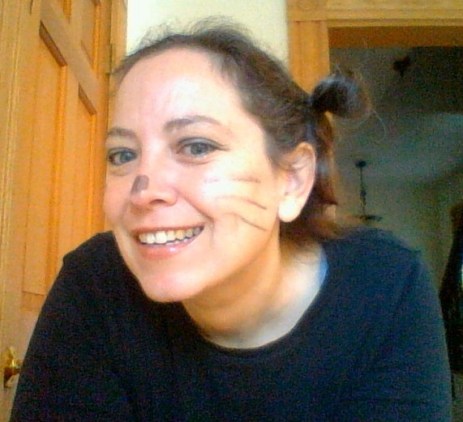
Me dressed as a cat for Halloween

I talk to myself. It’s something I’ve inherited from my mother, who got it from her mother. Not long conversations, but little exclamations of external processing that keep me sane. Sometimes swear words, sometimes prayers, and sometimes just little expressions of how I’m feeling or what I’m thinking.

I also talk to inanimate objects. Things like alarm clocks and telephones are the obvious things to anthropomorphize: “Okay, okay, I’m awake!” or “I’ll be right there!” or, more often, “You know I never answer you, so why even try?” But when I am with kids, that’s when I feel free to let it all come out, being as silly as I want to be.

I’ve been five year old Arslan’s nanny since he was an infant, but about a year and a half ago ago he began to have mixed feelings about my habit. He and his older brother were swinging at a park, and I took their soccer ball, put it in one of the baby swings, and started pushing it.

“What are you doing?” Arslan asked.

“He was sad that everyone else got to swing, so I thought I’d give him a chance,” I said. His big brother thought that was funny, but Arslan said indignantly,

“Jessica!! Soccer balls can’t talk!”

“Sure they can,” I said. “Listen to him: ‘Thank you for pushing me, Jessica!'”

“That’s not the soccer ball, that’s you!”

As the week and months went on, Arslan and I played the “things talking” game off and on. Sometimes he played along, but sometimes he insisted that “things can’t talk, only people can talk.” I thought it was interesting, his desire to play imaginatively butting up against his desire for the world to have clear rules and delineations. I never pushed it if he seemed to be actually getting upset, just as with any kind of joking or imaginative play if a child asks for a clear answer about the way the world works — “But there aren’t dragons, really, right?” — I’ll tell the truth. No, as sad as it is, there are no dragons, really, and no unicorns. (About things like Santa Claus my answer is usually, “What do you think?” or “What did your parents tell you?”)

The other day when I picked up Arslan after school, as he was getting his things he told one of his friends,

“Guess what? My babysitter thinks everything talks.”

The other boy glanced at me and I smiled at him.

“Like she thinks windows talk, and shoes, and backpacks,” Arslan explained.

They laughed, and I said,

“Listen! The window is talking, and the backpack, too.” I put my ear to Arslan’s backpack and said in a high pitched voice, “Ooh, it’s so nice and warm here on Arslan’s back!”

They laughed, and I laughed and smiled, too, and said,

“Everything talks if you listen hard enough.”

Then another boy came over with his dad, and Arslan said to them,

“My babysitter thinks that everything talks!”

The dad laughed and said, “That’s so silly!”

I smiled at him, but I didn’t make the backpack talk. Suddenly, just for a moment, I felt like they were laughing at me, not with me.

Another dad came up with his daughter, and Arslan told him the same thing.

“Of course everything can talk!” the second dad replied. “Listen!” And he bent down and put his ear to his daughter’s jacket and told us, in a high pitched voice, what the jacket was saying.

***

A few weeks ago a Twitter user who calls herself Common White Girl tweeted, “‘Please be as weird as me, please be as weird as me, please be as weird as me’ ~me every time I meet someone.” It was liked and shared by thousands of people.

I think most of us can relate. Most of us feel a little weird (or a lot) and try to hide our weirdness. When you have, or work with, kids it can be harder to hide. And sometimes, even without kids, it slips out. I’m sure First Dad meant well, and probably didn’t even think about it, just laughed at something the kids were laughing at then went along with his life. But, oh, how wonderful to meet Second Dad, to be braced for more laughter and to find unexpected affirmation. Someone as weird as me! What a treat! It doesn’t happen often, but when it does, it’s so nice. I hope that Second Dad could sense the gratitude in my smile.

I think there’s something deeper going on, though, than just some of us being weird and some of us not. First of all, I think we’re probably all weird, in our own ways. Finding other weird people just means finding people who are weird in that particular way that we are. The Enneagram divides personalities into nine types, or 18 subtypes; Myers-Briggs into 16. There are so many different ways of being. And it can be so hard sometimes to understand people who aren’t like us. It can be so easy to look at the ways people are different as flaws, to view them with suspicion. It can be easy to get together with people who are similar to ourselves and to look down on others who do things differently. If other people are weird, it helps us to feel normal.

Tina Fey wrote a wonderful essay, Tina Fey’s Rules of Improvisation That Will Change Your Life and Reduce Belly Fat. The number one rule of improv, she says, is to always say “yes” to your partner’s idea:

The first rule of improvisation is AGREE. Always agree and SAY YES. When you’re improvising, this means you are required to agree with whatever your partner has created. So if we’re improvising and I say, “Freeze, I have a gun,” and you say, “That’s not a gun. It’s your finger. You’re pointing your finger at me,” our improvised scene has ground to a halt. But if I say, “Freeze, I have a gun!” and you say, “The gun I gave you for Christmas! You bastard!” then we have started a scene because we have AGREED that my finger is in fact a Christmas gun.

Now, obviously in real life you’re not always going to agree with everything everyone says. But the Rule of Agreement reminds you to “respect what your partner has created” and to at least start from an open-minded place. Start with a YES and see where that takes you.

As an improviser, I always find it jarring when I meet someone in real life whose first answer is no. “No, we can’t do that.” “No, that’s not in the budget.” “No, I will not hold your hand for a dollar.” What kind of way is that to live?

Say yes! Isn’t that just what Second Dad did for me? And what a gift. What if we could take on that yes in our interactions with others. It doesn’t always happen in such an obvious way in real life. But when someone says something that to us seems dumb or weird (in a different way than we’re weird) or wacky, what if we tried assuming that there was something good in their perspective, something we could work with? In her essay Fourteen? Glennon Doyle talks about a man she met in the mental hospital who would only say numbers:

There was one man on our unit who spoke only in numbers. I ignored him at first . . . it’s hard to know what the appropriate response is to “Twenty-one ninety-six forty NINE?” But one day I decided to take a guess. “Fourteen?” I responded tentatively. I remember his face changing from empty to surprised to happy. Then back to empty, quickly. But I definitely saw happy, for a moment there. That taught me to try, at least once, to speak each person’s special language.

Maybe we’re all weird. Maybe the point of connection is not so much when we find another person who is weird like us, but when we acknowledge the validity, or even the beauty, of another person’s weirdness, even if it is different than our own.

In the intentional Christian community where I lived for seven years, there were many times when we failed to see that beauty in each other, when we made assumptions, and blamed each other, and struggled. But there were times, too, when weirdness turned into an opportunity to know each other more deeply and to love even when we did not understand. When instead of saying, “That’s silly,” or, “That doesn’t make sense,” or even, “That’s offensive,” we said, “We hear you. How can we help?” And those were the most beautiful times.

***

Follow me on Facebook, Twitter, and Instagram, and let’s be weird together!


How to save a life

loveoneanother My heart is heavy for Paris and Beirut today. It has been heavy for Syria and her refugees for a long time. I want to drop everything and fly to Germany and the refugee camps and help people, somehow, I don’t know how. I want to do something. Of course, as I told my friend the other day, I would be next to useless there. I would be overwhelmed and I would have a migraine all the time and just need to lie down. In fact, I did drop everything, sixteen years ago when I was in seminary, and flew to Croatia to help the seminary students who were working with refugees from the Bosnian War. But when I got there, it turned out the students had all left for the summer. I spent a month doing paperwork and cleaning for the seminary instead. I also went to Turkey that summer after the earthquake (though that was unplanned), and five years later to Morocco to try to help out some midwives there who were saving premature babies. I was pretty much useless in both those places, though it was fascinating and humbling to see how people responded to the presence of an American. The Turks, bleeding and shaking in makeshift tents next to the rubble of their homes thanked me for being there, as if America itself had come to their aid. But I had no medical knowledge, no training, nothing really to offer them.

So going over there, to Europe or the Middle East, is not really how I personally can best help. But I believe I can, and each of you reading this can, too. I believe that there are people all around us who have the potential for great works of love or great acts of destruction, and our presence in their lives could make the difference in which of these they choose. And I believe that it’s not necessarily great acts of altruism that make that difference, but the small things we do each day, how we choose to look upon people and respond to them, whether we choose to respond to anger with anger, or to do the hardest thing and offer gentleness in exchange.

What if we looked at every person who gave us an angry look, who cut us off in traffic, who interrupted us in a meeting, who spread rumors about us in the office, as a potential mass shooter, as a potential suicide bomber? And what if our gentle response to their anger made them stop and reconsider? What if the person who honked and yelled at me yesterday because I wasn’t pulling out of the parking space they were waiting for was on the brink of snapping, but if I smiled and rolled down my window and looked him in the eye I could have given him another day of peace, another chance to find hope? Instead, I got stubborn and passive-aggressive, and took another minute to adjust the heat and the radio settings before I pulled out. And even then, driving away, I felt anger washing over me. I wished I had stayed longer, I wished I had turned off the car and kept him waiting, claiming my space and my rights, even though the kids were hungry and tired and needed to get home for lunch and a nap. Driving away, I suddenly felt so angry and such a sense of injustice that tears came to my eyes.

Where does anger like that come from? It usually happens to me in the car. People are just awful to each other in their cars here in Boston. I think it is because we can’t really see each other. We don’t look each other in the eye, we just see a two thousand pound metal vehicle. We don’t have the subtlety of expression, we can’t tell if the other person looks sad or scared, all we have are blinkers and horns to try to communicate our opinions and feelings. We don’t know that the person who just cut us off was up all night with a sick toddler and had to go to a job they hate even though they are also sick. We don’t know that the person tailgating us is getting old and having trouble telling how close she is. All our empathy and compassion is reduced to a single feeling of right and wrong, justice and injustice, getting our way and making sure the other person knows it. I am such a kind person, usually, when I am face to face with people. At least, I remember to try. But in the car it is different.

And so I try to remember, and to love people with my driving. To smile and wave and say thank you when people let me go, even though I know they can’t hear me. To let people go in front of me, even if I technically have the right of way.  That’s the other thing about driving in Boston — the city wasn’t designed by architects, it evolved haphazardly and inconsistently. So while in other cities there is some kind of structure and order, and you turn when the lights tell you to turn, in Boston there are many places where it’s just never your turn to go. If we didn’t stop and let each other go, we’d never get anywhere. And generally you know when you are waiting to turn that someone, eventually, will notice you and let you out. We depend on it, or none of us would ever get anywhere. People are kind to each other here, too.

One morning this past June the kids I nanny hadn’t been napping well but they all fell asleep in the car, so I decided to just drive around for an hour to give them a solid rest. They live near an intersection on the border of Roslindale and West Roxbury, and I drove through that intersection about three or four times in that hour, looping around to find places to drive without getting too far from home in case they woke up. There were a lot of police cars and ambulances there, and I wondered what had happened. It wasn’t until I got home from work that evening and turned on the news that I saw that a potential terrorist had been shot and killed there by the police. It was just fifty yards or so from where the kids and I had passed several times that morning. Half a mile from their house. About a mile from mine.

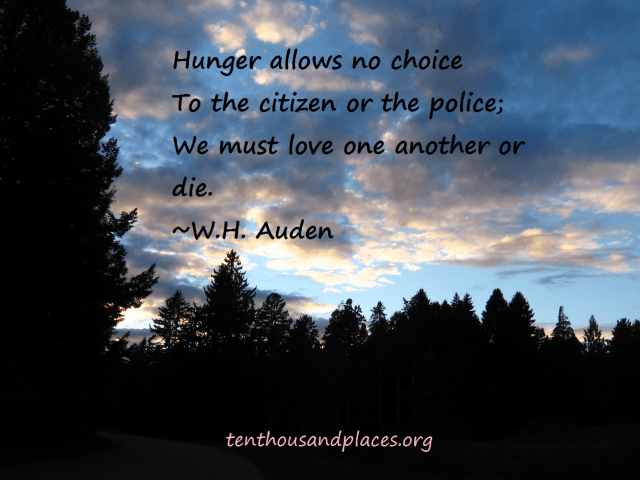
There is not much I can do right now for the Syrian refugees, shivering in tents on concrete floors as the cold weather sets in. There’s not much I can do for the families of the victims of the shootings in Paris and Beirut. But I can smile and wave and let people go ahead of me in traffic. I can humanize the driver in the car that cut me off and extend compassion to him or her. And I can get out of my car, and off of the internet — another closed-in vehicle that keeps me from really seeing the person I am interacting with — and actually get out into the city and interact with people. I can’t help the children drowning in the Mediterranean, but I signed up to lead a playgroup at a local homeless shelter. I can remember that everyone I meet is fighting a great battle, and give them a moment of refreshment and rest, a kind word in a world that has maybe been cruel to them. I can remember that we have no choice, that we must love one another or die.

lamplighthouseladder

Love,
Jessica


What kind of month has it been?

stepsI have a bunch of ideas for blog posts but life has been so busy the past few weeks that I haven’t had a chance to sit down and flesh them out. So I thought I’d tell you about what has been keeping me busy.

The most exciting thing was the Love Flash Mob over at Momastery. In 24 hours we raised over $475,000 dollars to build a new wing for the Heartline Maternity Center in Port au Prince, Haiti, and to buy warm clothes for mothers and babies from Syria who are still living outside in Berlin, even as the cold weather has set in. These Love Flash Mobs are my favorite times of the year because we take the power of community and turn it into concrete, practical action to love and care for each other. The maximum donation is $25 — the average for this one was $21. That means my $25 counts just as much as that of the millionaire or billionaire or anyone else. 21,000 of us got together and gave, and countless lives will be saved because of it. You just can’t get efficiency and joy like that anywhere else on the interwebs. Check it out here. And don’t be sad if you missed this one, just follow Momastery on Facebook and/or my Facebook page and we will be sure to tell you when the next one is happening.  I even stepped way out of my comfort zone for the flash mob to create and video tape myself doing a touchdown dance for every flash mob update. Enjoy!

I’ve also been busy with the launch team for Sarah Bessey’s upcoming book Out of Sorts: Making Peace With an Evolving Faith. The book is amazing — You are going to want to read it, trust me. I’ll have a review up soon, but for now you can preorder it on Amazon.com or Barnes and Noble, or support your local small bookstore by buying it there. The release date is November 3rd.

The launch team has been an incredible experience, not only discussing Sarah’s book with her and the others, but getting to know the other team members as well. I have two new favorite blogs through the launch team: Esther Emery’s Church in the Canyon and Tanya Marlow’s Thorns and Gold. Esther is a homesteader, deep thinker, and a brilliant writer. She crafts sentences like this, which I read several times over: “And even here I see God revealed — refracted, bent, and shattered — shining out the cracks of crooked people.” Tanya Marlow writes about struggling to find God and God’s will in her life while suffering from debilitating chronic illness, something which you know is dear to my heart. And it was also through the launch team that I found this beautiful, moving letter from a 19 year old girl with Asperger’s to her ten year old self. (The rest of Debby’s blog is well worth checking out, too.)

AAI_WritingContestAnother project I’ve been a part of is the Almost an Inkling flash fiction contest happening over at Mythgard. It’s a six week contest with a different prompt and guidelines every week. We’re in week five now, which is poetry. I just tried my hand at a Clerihew and a Triolet, two forms which were new to me. I actually won the literary prize for week three, the “Minute Mystery” which was very exciting for my twelve year old self, who didn’t dream of writing viral essays about gay weddings, but about writing stories. (She doesn’t really get blogging, even though I’ve tried to explain it to her. She just wants to know why we aren’t writing more stories about cats and unicorns.) My story for week two, with the prompt “Here Be Dragons” was dedicated to Say it Survivor, my friends’ Laura and Mary’s organization dedicated to helping women and men who have survived childhood sexual abuse tell their stories. They have workshops and talks coming up in Massachusetts and beyond — check it out on their website. The challenge for the story was to surprise the reader with an unexpected perspective on the dragon. My heart was full of Laura and Mary and the other brave survivors that week, so this is what I wrote:

She first saw the dragon the same night her uncle first came into her room. She was very young. After he left she lay there, choking back tears – he had warned her not to cry – and wondering, for the first time in her life, if there was something wrong with her. Then, suddenly the dragon was there, hovering over her bed, its green eyes shining in the darkness. It had brown-red scales, like muddied flame, and its wings spanned the room and, somehow, beyond.

She caught her breath and stopped crying, terror of the dragon greater than the pain. She waited for it to pounce, but it never moved, other than the slow beating of its wings and the whirl of its eyes, locked on hers. Time passed, minutes or hours. Then, despite her uncle and despite the dragon, her eyes began to droop and her small body fell into sleep. It was very late, and she was very young.

From then on, whenever her uncle came into her room, after he left the dragon would appear. Soon she found that she would wait for it, lying in the dark, holding her breath and blinking until its unblinking eyes appeared above her. She never really stopped being afraid of the dragon, but she was comforted, too, by its presence, its strong, sinewy legs and sharp claws, its tireless wings that beat the air, swirling it into a gentle breeze. Even though the worst had happened, even though she was so, so far from safe, she felt something her young mind did not have words for yet. Something like hope, something like confidence.

She only spoke to the dragon once, a year or so after the dual visits had started. One night she took a deep breath, lifted her small chin and said,

“Just go ahead and eat me, dragon. Do it.”

And the dragon lifted its own chin, and opened its jaw, and a blast of fire came out, heating the air above her head, but she was not harmed. She understood its answer: Yes, the dragon had said, I could fry you and swallow you whole, but I will not. And she cried harder that night than she ever had before.

The last time the dragon appeared to her was years later. She was older now, not young anymore, not at all young anymore, and the dragon came to her late one night. And she looked in its eyes and noticed something she never had before: They were the same color as her own green eyes, with the same brown flecks. And she saw that the mud-red scales were the same color as her own auburn hair, which shone in the sunlight.

Then she flexed her arms and legs and she felt the sinewy strength of a dragon flow through them. She felt the movement between her shoulders of powerful wings. And she stretched out her wings and she flew.

The Almost an Inkling contest is still going on if you would like to try your hand at a poem this week, or next week’s prompt which will be “Speculate and Subcreate.” Also at this link you can read the winning entries from the first three weeks, and vote on the poems from week five. The winning entries will be published in a special-edition ebook by Oloris Press and we’ll be reading our work aloud during a webinar at the end of the contest on Halloween.

restwellWhew, well, there’s more I could tell you about — what a busy month it’s been! — but I’ll stop there and give you a chance to check out the links I’ve included. I hope you’ve all had a good October so far! What have you been up to? Let me know in the comments. And if you haven’t been doing that much, that’s okay, too. The resting is part of the doing.

Love,

Jessica

Say it Survivor — Today is the day!

marypaullaura

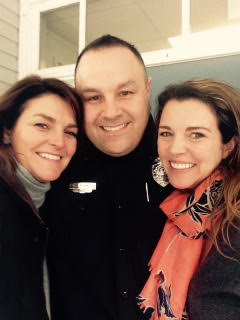
Mary, Officer Paul and Laura. January 18, 2015

Today is the day! In January, Officer Paul wrote down the story of my friends Laura and Mary’s abuse. Here is a little bit of Laura’s incredible essay, He Wrote it Down, which went viral:

We were ushered into a conference room, where a young officer came in to talk to us. He handles all of their sexual assault and rape cases. He introduced himself, sat down and proceeded to ask us questions about what happened. Names, addresses, dates. I called my sister, Aimee, and put her on speakerphone. We were all crying.

Aimee, I said, He’s writing it down.

He wrote it down.

We said, This happened to us, and he listened. He WROTE IT DOWN.

You can read the rest of the post here.

Since then they have been working hard to bring that same hope and healing to others. You guys, I’m so excited and proud of them that I almost can’t breathe. Look what they’ve done:

First, they have an article in the October issue of Boston Magazine. I drove all over my neighborhood yesterday looking for it but all the stores near me still had September’s issue. Come on, stores, seriously. September is so last month. I’m going out again in a little bit to look again. If you find it, will you let me know, here or on my Facebook page? You can also read it online, here.

Second, they are unveiling their new website, Say it Survivor, which features gorgeous videos of Mary and Laura sharing their story and their mission statement. Here’s a little bit of what they’re doing:

The thing is, our stories only have that power if we decide to give it to them.  They only wield that power if we keep them hidden inside, if we decide that our truths are so awful that they must be kept in the dark.  If we attach shame to them.  If we decide that they are UNSPEAKABLE.

Here’s the good news- and there is good news.  Shame cannot survive having a light shined on it.  Shame cannot survive being spoken aloud.  Shame requires a host, and it can’t survive if you don’t feed it.

Say it, Survivor was born when two cousins, abused in childhood by the same predator, decided to plant their feet firmly inside their stories and say them out loud. They wrote them down. They sent them out into the world.

Go read more and watch the videos at their website! www.sayitsurvivor.com

When He Wrote it Down went viral (spurred on by shares by Glennon Doyle Melton and Jen Hatmaker), so many people wrote to Laura and Mary, sharing their own stories, saying “me too, me too.” Laura wrote down the first name of everyone who wrote to her, bearing witness to their stories. And through that sharing and bearing witness, healing began to happen, and community was formed. So Mary and Laura asked, How can we widen this circle, and bring this healing to more survivors? And, knowing the power of writing down their own story, they created a writing workshop to help other survivors write theirs. The first one is November 14th, in Westford, Massachusetts. You can register here. And Mary and Laura will be traveling, speaking their story, speaking out for other survivors, and for change in perceptions and legislation that will prevent abuse from happening and make reporting it easier and more effective when it does. If you want to bring them to your town to speak, you can find more information and contact them here.

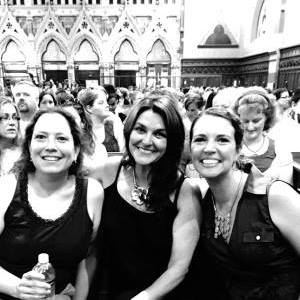
Me with Mary and Laura at Old South Church, waiting to hear our friend Glennon speak

Me with Mary and Laura at Old South Church, waiting to hear our friend Glennon speak

I am so darned proud of my friends. Look at them. Warriors.

And I am proud of all of you, too, who have stories of childhood abuse. You have been through hell but you survived. You are here. You are stronger than you know. I pray that you would find community and find the words to tell your story.

So much love,

Jessica

How I came to support full inclusion of LGBT people in the body of Christ

RainbowPeterIn Acts chapter 10 Peter was up on the rooftop praying. He was a follower of the risen Christ, and he was  a good Jewish boy — at that time the two pretty much went hand in hand. Jesus was Jewish, his disciples had all been Jewish except for the occasional woman at the well. Peter followed the commandments in the Torah, and this included the laws that prohibited eating certain animals.

So when he had a vision of a sheet of prohibited animals being lowered, and a voice told him, “Get up, Peter. Kill and eat,” he knew the answer: “Surely not, Lord! I have never eaten anything impure or unclean.” He probably wondered why God was testing him, but he felt secure in his answer. He had spent his whole life studying God’s word, and his time with Jesus had only strengthened that commitment. After all, hadn’t Jesus said, in his hearing, “I have not come to abolish the Law or the Prophets, but to fulfill them”? Maybe Peter thought his mind was playing tricks on him, since he was hungry and tired. Or perhaps he thought it was Satan tempting him away from the right path. But when the voice from heaven replied, “Do not call anything impure that God has made clean,” he may have thought to himself, huh, that does sound like something Jesus would say. But, still, no. He wasn’t going to abandon what he believed that easily.

Then it happened again. The sheet was lowered, the instruction repeated: “Kill and eat.” Peter again protested, and again the voice from heaven said, “Do not call anything impure that God has made clean.” It happened a third time, and then the sheet was lifted back up to heaven. As he was wondering what this meant, some messengers came for him from Cornelius the centurion — a Gentile (Gentile means not Jewish). And Peter began to understand. It wasn’t about the food. It was about the people. God was opening wide the kingdom to those who had not been welcome into it before.

And then he went and listened to Cornelius’ story, and learned that God had spoken to Cornelius, too. And then, and then — a second Pentecost. The Holy Spirit came upon Cornelius and the other Gentiles gathered there, just as the Spirit had come upon Jesus’ disciples in Acts 2. “The circumcised believers who had come with Peter were astonished that the gift of the Holy Spirit had been poured out even on Gentiles. For they heard them speaking in tongues and praising God.” In the next chapter, Peter related this story to the other Jewish disciples and said to them, “So if God gave them the same gift he gave us who believed in the Lord Jesus Christ, who was I to think that I could stand in God’s way?”

I was reading Acts 10 and 11 the other day, and I suddenly realized: This is how it happened for me. This is the same process I went through in my understanding of homosexuality from a Christian perspective.  And I think this is how it happened, and is happening, to other Christians, too. We were up on the roof praying. Or we were watching TV, or reading a newspaper, or just going about our lives. And we heard a voice from heaven. Some heard a loud voice, and some heard it softly, in their hearts, the way they were accustomed to hearing God’s voice. Some of us didn’t recognize the voice right away — we thought it was just a thought passing through our mind, a question, a wondering. For some it took the form of, “If God created gay people, who am I to call them unclean?” For others we just felt a sense of our comfort being challenged. We were good Evangelicals, or Catholics, or other Bible-believing Christians. We knew what the Bible said, and how we were taught to interpret it, how our church, our school, our seminary interpreted it. So we dismissed the thought. “Never, Lord,” we said, each in our own way.

Some of us are there right now. The question has yet to be posed for a second time. We are still on the roof, praying.

Others of us have heard the voice a second time, and rejected it a second time. We are still on the roof, praying.

Others have heard the voice a third time, and pushed back against it a third time. We have come down from the roof and are wondering what it means.

For me, when I came down from the roof, the question burning in my heart and mind, I did what Peter did. I took the idea, the theory, into its context. Just as Peter went to Cornelius’ house, I went to the homes of gay couples, cared for their children (I am a nanny, in my day job), listened to their stories, and payed attention to what the Spirit was doing there. I started reading the stories of gay Christians who had struggled with their sexuality. I stopped talking about what I thought, and I started listening. And what I saw were people who were seeking God and wanting to serve God with their lives, just like I was. I didn’t see people in rebellion, rejecting God and choosing their sinful desires over God’s will. I saw people who had been called by God and who had received his Spirit, just as I had. I saw people like these, who attend Nadia-Bolz Weber’s church, A House For Saints and Sinners. And I saw young people like these, who fought for a long time to change who they were before they finally listened to God’s voice, and heard, “Do not call anything impure that God has made clean.” I saw people who thought they had to change to be a part of the body of Christ, but who were discovering that God created them that way for a reason, for his glory. I saw people who were using their same-sex relationships to love and serve God and feed his sheep, just as heterosexual couples were.

(I heard other stories, as well. Some gay people believed that God was calling them to celibacy, and I want to make space for them in my thinking and my writing, too. As I’ve said probably seventy times by now, that’s one of the reasons I love the Gay Christian Network, because they create that space.)

Many of us Christians have come down from the roof, and are still praying, still wondering.

Some of us have started listening to the stories of gay Christians, but we are not yet sure.

Some of us have seen the Spirit descend on LGBT Christians, and we are starting to wonder, “If God gave them the same gift he gave us who believed in the Lord Jesus Christ, who am I to think that I could stand in God’s way?”

Me, I’m pretty sure of it. It took a while, and it took many times of me saying, “Never, Lord.” But there are only so many times you can cling to your beliefs in the presence of the Living God. There are only so many times you can repeat the words of scripture to the God that wrote them and expect to win the argument. Job and his friends learned that lesson, as they tried for chapter after long chapter to lecture each other about what God was doing, only to be silenced when God himself showed up. Paul learned that lesson when he took what his faith taught him about Jesus to the nth degree, only to be thrown to the ground and blinded when he met the Man himself. And Peter, dear Peter, who betrayed Jesus, who said the silliest things sometimes (oh, I do relate to Peter), and who was chosen, nevertheless, to lead and feed Jesus’ sheep — Peter learned that lesson when he saw the Holy Spirit poured out on those whom he thought were other, separate, not part of God’s plan.
“Do not call anything impure that God has made clean.”

I believe God is speaking this into the hearts of many Christians. I believe that God is moving among his people in a similar way to which he moved in Acts. Walls are being broken down. The Kingdom is expanding. Gentiles are invited in, along with Jews; gay, lesbian, and bisexual people are invited in, along with straight people; transgender along with cis. Those who are not there yet, who are still on the rooftop praying, are invited in, too. There is room for all of us here. There is room.

***

Update: I am embedding the two videos I mentioned earlier, because I really want you to watch them. The first is five minutes long, and the second about 45 minutes.

***

For more testimonies of LGBT people of faith, visit Faithfully LGBT.

A note on comment moderation: I value everyone who takes the time to read and to comment, even if you disagree with me. But I do not post all the comments. I know that’s hard. But my goal is to create a space here at Ten Thousand Places where people’s stories can be heard above the din, and where those whose lives we are discussing have a chance to speak for themselves. I do post comments by those who disagree with me, but I might not post all of them. I do my best to read all of them, though. Thank you so much for being here.
Love,
Jessica