On jealousy and the need to be special

greendragoneye I had a relapse yesterday. It wasn’t depression or cancer, I didn’t get drunk after months of sobriety, but those are pretty good analogies to the way jealousy tries to take over and destroy. What happened was, well, two things. First, my family is getting together this weekend for our Thanksgiving celebration, and since I’ve had a really busy work schedule this month I decided to stay home alone Thanksgiving day to rest and get in some much needed introvert recharging time. So I chose to spend that day alone, because I like being alone.

But despite that very good logic, something happened when I looked on Facebook and saw all the pictures of friends and families gathering for meals. One picture in particular, of a group of friends of mine eating together, sent such a feeling of grief through me that I had to do a breathing exercise to recover. I knew those friends loved me, and I knew I would have been welcome at the table, and I knew that the very good reason that they hadn’t invited me was because I live several states away, but still it triggered that deep feeling of being left out, that feeling that has not only plagued me since I was a kid, but somehow defined me.

The other thing that happened was that Sarah Bessey commented on the post I wrote for her synchroblog, and instead of feeling excited and happy that she had read it and like it, I felt sad that she had read and commented on all 133 submissions. How can I be special if everyone else is special, too?? If you could somehow scan my brain, you would find that question etched into the deepest parts of it. If everyone is special, how can I be special? That’s not even what the word means, right? Just like something can’t be very unique, as I learned from the West Wing:

But the thing is, I believe exactly that. I believe we are all special, all unique, and all deeply loved. And I believe my own specialness, my own calling, does not lie in convincing others that I am more special, more unique, and more deserving of love, but in noticing and affirming the ways that others are unique, special, and loved. I believe the ways I am different from others are not as important as what I have in common with others.

A little while after Sarah commented on my blog she posted a few of her favourites (with a u because she’s Canadian 🙂 ) on her blog. Mine was not among them. And I had to have a little chat with myself. Listen, self, I said. You do not have to be told you are special all the time. And the times that you are told that — when a blog post goes viral, or your friends share and compliment a post, or you win a contest — those are not the things that define you and your writing. Those are nice things, those affirmations, but it’s not why you write. You write to bring the deep, scary things to light, to express as well you can your own struggles and perspective, not to show off how deep you are or how clever or how good a writer, but to know you are not alone, and to tell others that they are not alone. If you were so unique and special that no one could relate to your experiences, then no one would want to read what you wrote.

It has taken 41 years to get to the point where I believe that. And I mostly did, yesterday, after the breathing exercises and the firm but gentle self-talk. But there was still a part of me that felt left out and lonely, over-looked and unimportant. And then this morning Sarah posted the winning submission, the entry in the synchroblog that had most stuck with her, that she most wanted to share with her readers. It is an essay by Rachel Roth Tapling about her struggle with faith, with the Bible, with church and leadership, and it is gorgeous. It spoke to me; in fact, it did what great writing does, what I aim to do with my writing, it described my own experience in a way that helped me understand it better. It made me say, “Oh my gosh, me too!” It was healing. And as I read it and found healing in it, I also found the final piece of healing for yesterday’s relapse into jealousy. Because I realized Sarah had chosen this essay because it needed to be read — because I needed to read it. I realized that Sarah’s end goal, that Rachel’s end goal, and, ultimately, my own, is not to choose who is special and who is not, but to help us all to find healing, to find our way through the struggle and doubt and trauma back to Christ. And I absolutely agree with Sarah — Rachel did that best. You can read her wonderful essay here.

Friend, you are special. You are unique. You are loved. Just like me, just like everyone else. If you don’t believe me, here’s one of the only people I ever believe when he says it. If you want to, if you’re ready, listen to him singing this song and imagine it’s God singing it to you.

Love,
Jessica
Please be as weird as me

Jessicacat

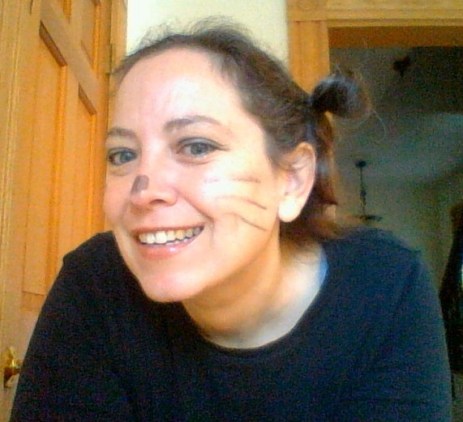
Me dressed as a cat for Halloween

I talk to myself. It’s something I’ve inherited from my mother, who got it from her mother. Not long conversations, but little exclamations of external processing that keep me sane. Sometimes swear words, sometimes prayers, and sometimes just little expressions of how I’m feeling or what I’m thinking.

I also talk to inanimate objects. Things like alarm clocks and telephones are the obvious things to anthropomorphize: “Okay, okay, I’m awake!” or “I’ll be right there!” or, more often, “You know I never answer you, so why even try?” But when I am with kids, that’s when I feel free to let it all come out, being as silly as I want to be.

I’ve been five year old Arslan’s nanny since he was an infant, but about a year and a half ago ago he began to have mixed feelings about my habit. He and his older brother were swinging at a park, and I took their soccer ball, put it in one of the baby swings, and started pushing it.

“What are you doing?” Arslan asked.

“He was sad that everyone else got to swing, so I thought I’d give him a chance,” I said. His big brother thought that was funny, but Arslan said indignantly,

“Jessica!! Soccer balls can’t talk!”

“Sure they can,” I said. “Listen to him: ‘Thank you for pushing me, Jessica!'”

“That’s not the soccer ball, that’s you!”

As the week and months went on, Arslan and I played the “things talking” game off and on. Sometimes he played along, but sometimes he insisted that “things can’t talk, only people can talk.” I thought it was interesting, his desire to play imaginatively butting up against his desire for the world to have clear rules and delineations. I never pushed it if he seemed to be actually getting upset, just as with any kind of joking or imaginative play if a child asks for a clear answer about the way the world works — “But there aren’t dragons, really, right?” — I’ll tell the truth. No, as sad as it is, there are no dragons, really, and no unicorns. (About things like Santa Claus my answer is usually, “What do you think?” or “What did your parents tell you?”)

The other day when I picked up Arslan after school, as he was getting his things he told one of his friends,

“Guess what? My babysitter thinks everything talks.”

The other boy glanced at me and I smiled at him.

“Like she thinks windows talk, and shoes, and backpacks,” Arslan explained.

They laughed, and I said,

“Listen! The window is talking, and the backpack, too.” I put my ear to Arslan’s backpack and said in a high pitched voice, “Ooh, it’s so nice and warm here on Arslan’s back!”

They laughed, and I laughed and smiled, too, and said,

“Everything talks if you listen hard enough.”

Then another boy came over with his dad, and Arslan said to them,

“My babysitter thinks that everything talks!”

The dad laughed and said, “That’s so silly!”

I smiled at him, but I didn’t make the backpack talk. Suddenly, just for a moment, I felt like they were laughing at me, not with me.

Another dad came up with his daughter, and Arslan told him the same thing.

“Of course everything can talk!” the second dad replied. “Listen!” And he bent down and put his ear to his daughter’s jacket and told us, in a high pitched voice, what the jacket was saying.

***

A few weeks ago a Twitter user who calls herself Common White Girl tweeted, “‘Please be as weird as me, please be as weird as me, please be as weird as me’ ~me every time I meet someone.” It was liked and shared by thousands of people.

I think most of us can relate. Most of us feel a little weird (or a lot) and try to hide our weirdness. When you have, or work with, kids it can be harder to hide. And sometimes, even without kids, it slips out. I’m sure First Dad meant well, and probably didn’t even think about it, just laughed at something the kids were laughing at then went along with his life. But, oh, how wonderful to meet Second Dad, to be braced for more laughter and to find unexpected affirmation. Someone as weird as me! What a treat! It doesn’t happen often, but when it does, it’s so nice. I hope that Second Dad could sense the gratitude in my smile.

I think there’s something deeper going on, though, than just some of us being weird and some of us not. First of all, I think we’re probably all weird, in our own ways. Finding other weird people just means finding people who are weird in that particular way that we are. The Enneagram divides personalities into nine types, or 18 subtypes; Myers-Briggs into 16. There are so many different ways of being. And it can be so hard sometimes to understand people who aren’t like us. It can be so easy to look at the ways people are different as flaws, to view them with suspicion. It can be easy to get together with people who are similar to ourselves and to look down on others who do things differently. If other people are weird, it helps us to feel normal.

Tina Fey wrote a wonderful essay, Tina Fey’s Rules of Improvisation That Will Change Your Life and Reduce Belly Fat. The number one rule of improv, she says, is to always say “yes” to your partner’s idea:

The first rule of improvisation is AGREE. Always agree and SAY YES. When you’re improvising, this means you are required to agree with whatever your partner has created. So if we’re improvising and I say, “Freeze, I have a gun,” and you say, “That’s not a gun. It’s your finger. You’re pointing your finger at me,” our improvised scene has ground to a halt. But if I say, “Freeze, I have a gun!” and you say, “The gun I gave you for Christmas! You bastard!” then we have started a scene because we have AGREED that my finger is in fact a Christmas gun.

Now, obviously in real life you’re not always going to agree with everything everyone says. But the Rule of Agreement reminds you to “respect what your partner has created” and to at least start from an open-minded place. Start with a YES and see where that takes you.

As an improviser, I always find it jarring when I meet someone in real life whose first answer is no. “No, we can’t do that.” “No, that’s not in the budget.” “No, I will not hold your hand for a dollar.” What kind of way is that to live?

Say yes! Isn’t that just what Second Dad did for me? And what a gift. What if we could take on that yes in our interactions with others. It doesn’t always happen in such an obvious way in real life. But when someone says something that to us seems dumb or weird (in a different way than we’re weird) or wacky, what if we tried assuming that there was something good in their perspective, something we could work with? In her essay Fourteen? Glennon Doyle talks about a man she met in the mental hospital who would only say numbers:

There was one man on our unit who spoke only in numbers. I ignored him at first . . . it’s hard to know what the appropriate response is to “Twenty-one ninety-six forty NINE?” But one day I decided to take a guess. “Fourteen?” I responded tentatively. I remember his face changing from empty to surprised to happy. Then back to empty, quickly. But I definitely saw happy, for a moment there. That taught me to try, at least once, to speak each person’s special language.

Maybe we’re all weird. Maybe the point of connection is not so much when we find another person who is weird like us, but when we acknowledge the validity, or even the beauty, of another person’s weirdness, even if it is different than our own.

In the intentional Christian community where I lived for seven years, there were many times when we failed to see that beauty in each other, when we made assumptions, and blamed each other, and struggled. But there were times, too, when weirdness turned into an opportunity to know each other more deeply and to love even when we did not understand. When instead of saying, “That’s silly,” or, “That doesn’t make sense,” or even, “That’s offensive,” we said, “We hear you. How can we help?” And those were the most beautiful times.

***

Follow me on Facebook, Twitter, and Instagram, and let’s be weird together!


How to save a life

loveoneanother My heart is heavy for Paris and Beirut today. It has been heavy for Syria and her refugees for a long time. I want to drop everything and fly to Germany and the refugee camps and help people, somehow, I don’t know how. I want to do something. Of course, as I told my friend the other day, I would be next to useless there. I would be overwhelmed and I would have a migraine all the time and just need to lie down. In fact, I did drop everything, sixteen years ago when I was in seminary, and flew to Croatia to help the seminary students who were working with refugees from the Bosnian War. But when I got there, it turned out the students had all left for the summer. I spent a month doing paperwork and cleaning for the seminary instead. I also went to Turkey that summer after the earthquake (though that was unplanned), and five years later to Morocco to try to help out some midwives there who were saving premature babies. I was pretty much useless in both those places, though it was fascinating and humbling to see how people responded to the presence of an American. The Turks, bleeding and shaking in makeshift tents next to the rubble of their homes thanked me for being there, as if America itself had come to their aid. But I had no medical knowledge, no training, nothing really to offer them.
So going over there, to Europe or the Middle East, is not really how I personally can best help. But I believe I can, and each of you reading this can, too. I believe that there are people all around us who have the potential for great works of love or great acts of destruction, and our presence in their lives could make the difference in which of these they choose. And I believe that it’s not necessarily great acts of altruism that make that difference, but the small things we do each day, how we choose to look upon people and respond to them, whether we choose to respond to anger with anger, or to do the hardest thing and offer gentleness in exchange.

What if we looked at every person who gave us an angry look, who cut us off in traffic, who interrupted us in a meeting, who spread rumors about us in the office, as a potential mass shooter, as a potential suicide bomber? And what if our gentle response to their anger made them stop and reconsider? What if the person who honked and yelled at me yesterday because I wasn’t pulling out of the parking space they were waiting for was on the brink of snapping, but if I smiled and rolled down my window and looked him in the eye I could have given him another day of peace, another chance to find hope? Instead, I got stubborn and passive-aggressive, and took another minute to adjust the heat and the radio settings before I pulled out. And even then, driving away, I felt anger washing over me. I wished I had stayed longer, I wished I had turned off the car and kept him waiting, claiming my space and my rights, even though the kids were hungry and tired and needed to get home for lunch and a nap. Driving away, I suddenly felt so angry and such a sense of injustice that tears came to my eyes.

Where does anger like that come from? It usually happens to me in the car. People are just awful to each other in their cars here in Boston. I think it is because we can’t really see each other. We don’t look each other in the eye, we just see a two thousand pound metal vehicle. We don’t have the subtlety of expression, we can’t tell if the other person looks sad or scared, all we have are blinkers and horns to try to communicate our opinions and feelings. We don’t know that the person who just cut us off was up all night with a sick toddler and had to go to a job they hate even though they are also sick. We don’t know that the person tailgating us is getting old and having trouble telling how close she is. All our empathy and compassion is reduced to a single feeling of right and wrong, justice and injustice, getting our way and making sure the other person knows it. I am such a kind person, usually, when I am face to face with people. At least, I remember to try. But in the car it is different.

And so I try to remember, and to love people with my driving. To smile and wave and say thank you when people let me go, even though I know they can’t hear me. To let people go in front of me, even if I technically have the right of way.  That’s the other thing about driving in Boston — the city wasn’t designed by architects, it evolved haphazardly and inconsistently. So while in other cities there is some kind of structure and order, and you turn when the lights tell you to turn, in Boston there are many places where it’s just never your turn to go. If we didn’t stop and let each other go, we’d never get anywhere. And generally you know when you are waiting to turn that someone, eventually, will notice you and let you out. We depend on it, or none of us would ever get anywhere. People are kind to each other here, too.

One morning this past June the kids I nanny hadn’t been napping well but they all fell asleep in the car, so I decided to just drive around for an hour to give them a solid rest. They live near an intersection on the border of Roslindale and West Roxbury, and I drove through that intersection about three or four times in that hour, looping around to find places to drive without getting too far from home in case they woke up. There were a lot of police cars and ambulances there, and I wondered what had happened. It wasn’t until I got home from work that evening and turned on the news that I saw that a potential terrorist had been shot and killed there by the police. It was just fifty yards or so from where the kids and I had passed several times that morning. Half a mile from their house. About a mile from mine.

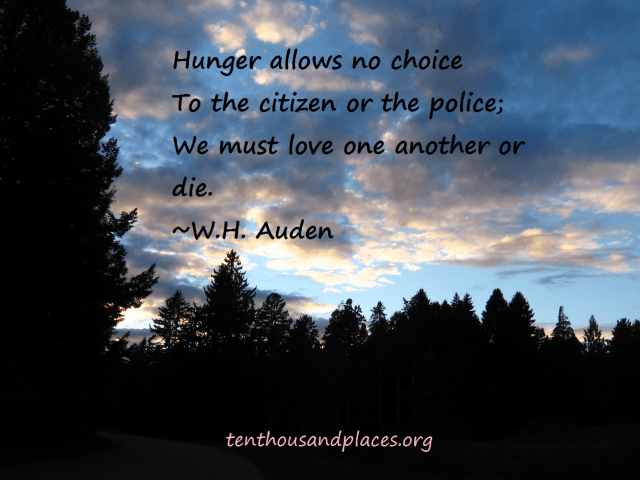
There is not much I can do right now for the Syrian refugees, shivering in tents on concrete floors as the cold weather sets in. There’s not much I can do for the families of the victims of the shootings in Paris and Beirut. But I can smile and wave and let people go ahead of me in traffic. I can humanize the driver in the car that cut me off and extend compassion to him or her. And I can get out of my car, and off of the internet — another closed-in vehicle that keeps me from really seeing the person I am interacting with — and actually get out into the city and interact with people. I can’t help the children drowning in the Mediterranean, but I signed up to lead a playgroup at a local homeless shelter. I can remember that everyone I meet is fighting a great battle, and give them a moment of refreshment and rest, a kind word in a world that has maybe been cruel to them. I can remember that we have no choice, that we must love one another or die.

lamplighthouseladder

Love,
Jessica


On sin and repentance

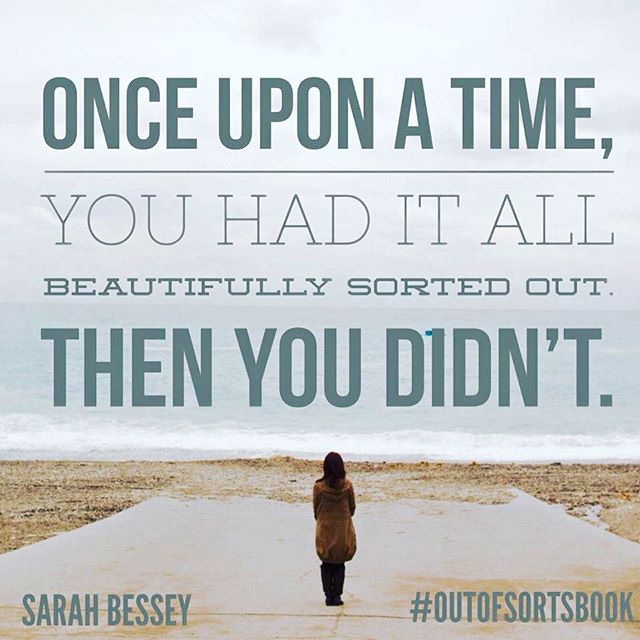
outofsortsbookSarah Bessey’s wonderful book, Out of Sorts: Making Peace with an Evolving Faith released this week. Do you have your copy yet? To go along with the book launch, Sarah is running a good old-fashioned synchro-blog, with the prompt, “I used to think___, but now I think___.” It was a project for her launch team, but Sarah just opened it up to everyone, so if you have something you’d like to write about, check it out!

I have been thinking about what I wanted to write about for weeks. I have things I want to say about spoken and unspoken gender roles in Christian community, and about spoken and unspoken roles for singles vs married people. I haven’t much changed my mind on those things — I’ve been a feminist and egalitarian since before I knew what those words meant — but I’ve been willing to work with complimentarians in the past, and even put myself in positions where they had authority over me, and I didn’t realize until much later how damaging those experiences had been. But I don’t think I’m quite ready to write about that yet.

Then of course there’s the obvious issue of LGBTQ inclusion. That is probably the shiniest thing that I’ve changed my perspective on. But I don’t think that’s what I want to share for the synchroblog. (If you’re interested, you can read this post about how I changed my mind.)

Here, though, I think I’d like to share a little about how my perspective on sin has shifted. So I’ve adapted an essay I wrote this summer:

Savasana: On finding the uncluttered space

The first time I went to a yoga class I struggled through, watching the clock the whole time. I knew the class was an hour and fifteen minutes, so it was with a sense of surprised blessing that I realized, with twenty minutes still to go, that we were winding down. The poses became slower and easier, and then the teacher told us to lie on our backs and make ourselves comfortable. She suggested putting our socks back on and pulling blankets over ourselves. She dimmed the lights, put on soft, meditative music, and I suddenly realized that it was nap time! Just like in kindergarten, we all lay together on our mats and rested. It felt funny lying in such an intimate, vulnerable pose in a roomful of people, eyes closed as the teacher led us through a relaxation exercise. But I soon forgot about the others and reveled in the peace and quiet as my sore muscles came to rest and my mind settled, my body becoming chilly as the sweat cooled.

Savasana is the word both for the pose — on your back with your arms out at a slight angle — and the process of lying in that pose and going through the relaxation exercise. It happens at the end of every yoga class, and is a way of allowing the poses you have just done to settle into your mind and muscles. It is also a body meditation, similar to centering prayer and bio-feedback, two things I stumbled upon a few years ago in my quest for spiritual and physical health. Like centering prayer and bio-feedback, you are encouraged to take a passive attitude to your thoughts, to allow them without trying to change them, but without latching on to them, or identifying with them.

One analogy used in centering prayer is to see your thoughts as clouds going overhead: You notice them but they don’t affect you down where you are, and they blow past with the wind. For someone who has struggled with anxiety, this is incredibly powerful: I don’t have to try to STOP thinking the anxious thoughts, or to change them or replace them with positive thoughts — exercises which left me exhausted and twice as stressed out — but I don’t have to define myself by them, either. I can nod at them, even greet them with friendly acknowledgement, but then not concern myself with them. I sometimes picture them as clouds, and sometimes as an object beside me: there, but not a part of me. Observe your thoughts, my teacher says, acknowledge them without trying to change them. So I notice: I am angry at my housemate for something stupid, I am worried about money, my back hurts. It’s okay. I don’t have to try to stop being angry right now, or stop worrying, or get my back to stop hurting. That’s just how I feel. It’s not me. My true self is deeper than those thoughts and feelings, is at peace.

I think that growing up and coming of age as a Christian, there were a lot of things I thought were sins that were just feelings, just me struggling to figure myself out, and figure others out, and find my place in the world. Repenting and trying to change those thoughts and feelings was a difficult, and unproductive process. I believe in sin, and in repentance, the Hebrew word shuv that means turning away from bad choices and back towards good, turning away from the wrong path and back to the right one, turning back to God. But I wish that I had known about savasana, too. I wish I could have given myself that space and gentleness, to not immediately identify my feelings as sins, and identify myself with them. Repenting of anger never helped me let go of that anger so much as gently acknowledging it, setting it next to me, and quieting my body and my mind. I can let it go. It isn’t me. I think if I had known how to do that it would have helped me to understand what the real sins were, what things were really pointing me away from God, which direction I needed to turn to go back towards God.

I remember as a child going to church and coming to the confession, week after week, the moment in the service where we read the prayer confessing that we had sinned, “In what I have done, and in what I have left undone.” I thought the second part was so profound — It’s not just our bad actions that are sins, but also our failure to act when we could have done something good. But I remember wondering, and asking my parents: Why do we have to pray that every week? If we’re asking God to help us not to sin next week, shouldn’t he help us? But we pray it automatically — no one stops to ask, “Did anyone succeed in not sinning this week? Great!” Everyone just assumes that we all messed up again. And if failure is built into the system, what’s the point of trying so hard every week?

My poor parents. Those were the kind of questions they had to field on a Sunday morning. But even as a kid the logic confused me.

Then I remember in college, struggling with the same things week after week. I wanted to be patient and kind, to love other people without judging them, and to care about others and take care of them. Those are still my goals, now that I think about it. But every week I found myself frustrated and impatient, judging others and thinking mean thoughts towards them, and frankly caring more about myself than them. That was mixed in with a lot of genuine caring and loving and even good works. But it was so frustrating to me that those thoughts were there. And the harder I tried, the more I repented and asked God for help, the more it seemed the bad thoughts loomed in and took control. And then there were the things that I now think weren’t even sins at all: Anxiety, depression, insecurity, jealousy, loneliness. Some of it was probably clinical and I could’ve used more help than I was getting. But some of it, I think, was just a normal part of being human, of being 19 and trying to figure out who I was, of being someone who thought deeply and took everything in and tried to figure everything out. I tried so hard, and I was so hard on myself for not figuring it out faster and better.

I sometimes think of that strange passage in Matthew 12:45-47, where Jesus speaks of an impure spirit that is driven out of a person, and then comes back to find the place swept clean, and takes up residence again, this time with “seven other spirits more wicked than itself.” And it reminds me of a lyric from a Ray LaMontagne song, Empty, which is about his struggle with depression:

Well I looked my demons in the eye
Bared my chest said do your best to try to destroy me
You know I’ve been through hell and back so many times
I must admit you kind of bore me

I heard that song during a very dark time in my life and I could so relate to the weariness of driving out demons only to have them return and return. Maybe I could just let them be, let them float overhead like clouds while I met with God down below. Maybe if I stopped casting them out they’d grow bored, too, and not want to play anymore.

One evening this August, after a long day at work, I came home and made my way to my yoga mat. During the savasana I opened my eyes and looked up at the ceiling. And I noticed something I never had before. Above, the white textured ceiling was bordered by dark wood paneling that matched the wood on the walls, and it created a framed rectangle the exact size of my living room. My living room is the place I spend more time than any other room (if you don’t count time asleep); it’s where I work on my computer, play on my computer, read, entertain guests, and do yoga. I sit on the front porch sometimes, and hang out in my bed at night, but the living room is the space most full of me, my activities and my presence. And tonight I noticed that there is a space the exact same size and shape above it, with soft, white, textured paint and a dark wood border. It is my living room, but it is emptied of furniture, rugs, house plants, computers, tissues, candles — all the things that clutter the floor below. It is a framed, empty canvas, in the shape of my life, my living, my room.

I realized that this space perfectly represents the place I go to when I do centering prayer, or savasana. In this case the clutter is down below, and that beautiful, white, uncluttered space is above — exactly the shape of me, but empty of all of the thoughts and anxieties, habits and coping mechanisms, that make up my daily life. It is a blank canvas, where I can meet God and we can create something together. God is the paint, and I am the brush, or I am the brush and God is the artist, or I am the canvas only and God is all the rest: the blended colors of the full spectrum, the rocky pigment sparkling in the paint, the sharp edge of the palette knife, the rough horse-hair of the brush, and the Artist Himself, waiting for his materials to settle down, to move all that clutter off of the canvas so He can finally begin.