Two writers on writing, for Arwen and Laura

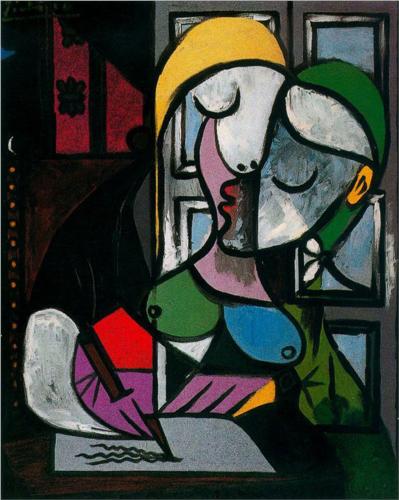
Woman Writing, by Pablo Picasso

Woman Writing, by Pablo Picasso

“It is Red Smith who is reported to have said that it’s really very easy to be a writer — all you have to do is sit down at the type-writer and open a vein. Typewriters are few and far between these days, and vein-openers have never grown on trees. Good writers, serious writers — by which I mean the writers we remember, the ones who have opened our eyes, maybe even our hearts, to things we might never have known without them — all put much of themselves into their books the way Charles Dickens put his horror at the Poor Law of 1834 into Oliver Twist, for instance, or Virginia Woolf her complex feelings about her parents into To the Lighthouse, or, less overtly, Flannery O’Connor her religious faith into virtually everything she ever wrote. But opening a vein, I think, points to something beyond that.

“Vein opening writers are putting not just themselves into their books, but themselves at their nakedest and most vulnerable. They are putting their pain and their passion into their books the way Jonathan Swift did in Gulliver’s Travels and Dostoyevsky in The Brothers Karamazov, the way Arthur Miller did in Death of a Salesman, and William Maxwell in They Came Like Swallows. Not all writers do it all the time — even the blood bank recognizes we have only so much blood to give — and many good writers never do it at all either because for one reason or another they don’t chose to or they don’t quite know how to; it takes a certain kind of unguardedness, for one thing, a willingness to run risks, including the risk of making a fool of yourself.”

~Frederick Buechner, from the introduction to “Speak What We Feel (Not What We Ought to Say)

“You ask whether your verses are good. You ask me. You have asked others before. You send them to magazines. You compare them with other poems, and you are disturbed when certain editors reject your efforts. Now (since you have allowed me to advise you) I beg you to give up all that. You are looking outward, and that above all you should not do now. Nobody can counsel and help you, nobody. There is only one single way. Go into yourself. Search for the reason that bids you write; find out whether it is spreading out its roots in the deepest places of you heart, acknowledge to yourself whether you would have to die if it were denied you to write. This above all — ask yourself in the stillest hour of your night: must I write? Delve into yourself for a deep answer. And if this should be affirmative, if you may meet this earnest question with a strong and simple “I must,” then build your life according to this necessity; your life even into its most indifferent and slightest hour must be a sign of this urge and a testimony to it.”

~Rainer Marie Rilke, Letters to a Young Poet
{this moment}

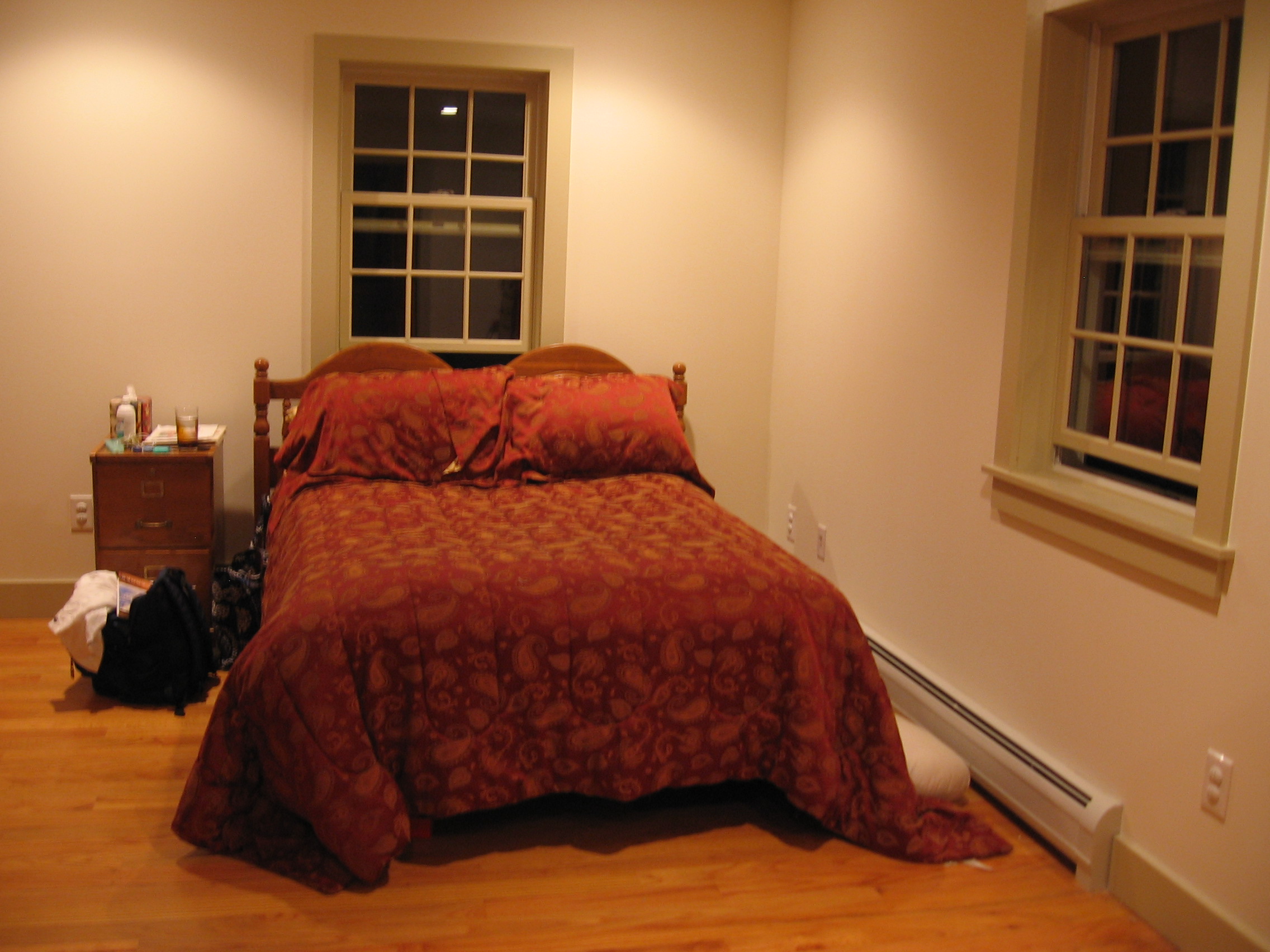
Keith & Chrissie's guest bedroom in Canaan, NY

Keith & Chrissie’s guest bedroom in Canaan, NY

A single photo – no words – capturing a moment from the week. A simple, special, extraordinary moment. A moment I want to pause, savor and remember. Inspired by Daniela and SouleMama. If you’re inspired to do the same, leave a link to your ‘moment’ in the comments for all to find and see.

{this moment}

IMG_0884[1]


A single photo – no words – capturing a moment from the week. A simple, special, extraordinary moment. A moment I want to pause, savor and remember. Inspired by Daniela and SouleMama. If you’re inspired to do the same, leave a link to your ‘moment’ in the comments for all to find and see.

Kayaking


Great blue heron

Discovering the Water’s Edge by Mark Slawson

I went kayaking today on the Charles river out in Newton. I love kayaking on a river — it’s different than sea kayaking. With no waves it’s more peaceful, and you feel more in control. The kayak becomes an extension of your torso; the paddle an extension of your arms. You just sit on top of the water and your arms move you in whatever direction you want to go. It’s so easy and seamless, as if you finally have all of your limbs and are remembering what to do with them. Your arms pump in a figure eight, dipping one end of the paddle down through the water while the other arcs up and forward, then bends to dip again.

I slid out of the dock and quickly passed the hapless summer campers in their canoes. A canoe full of girls headed towards me and their eyes widened in panic: “Sorry!” they shouted, “Sorry, we don’t know how to turn!” “You’re okay, don’t worry,” I smiled and moved effortlessly aside, wise, gentle, and accomplished in a way that I rarely am on land. Then I left the groups behind, headed up the river past the fields of lily pads which were possessed by one great blue heron each. Swallows zipped back and forth, close to the water, catching the little water bugs. A hawk soared overhead in a circle, and I wondered if he was looking for fish.

My shoulders had stiffened after a few minutes, but they actually loosened as I paddled on. I peered over the blue puff of my life jacket at my bare arms, and watched the muscles move in them as they turned the paddle, the skin beginning to freckle from the sun. They looked so strong and purposeful, and felt so natural, taking a rare turn at all the action while my legs rested, crossed, in the kayak. This! I thought: This is what arms are for! To be strong, to carry you across the water, to pull and push, hold and carry, reach and touch. How often have I judged my poor arms for being too fat, having loose skin and stretch marks, thought them inadequate and imperfect. But look what they can do! Look how confident and beautiful they are, moving over the green-grey water.

Later in the day I babysat for a two year old girl, fed her dinner, bathed her, and read her stories before laying her down in her bed for sleep. In the bath I marveled at her dark skin and hair, her lean arms and legs and round belly. As we toweled her off she rubbed her belly and cried joyfully, “Belly! Belly!” “Yes!” I said, “I love your belly! It takes in your food and makes you strong and healthy. And it gives you big belly laughs!” We brushed her hair and she said, “Hair!” “Yes!” I said, “I love your hair! It keeps your head warm in the winter, and protects you from the sun and from bugs.” She is truly one of the loveliest creatures I have ever known, and I want her to know that she’s beautiful. But I also want her to know that her body is strong and capable and there for a purpose. Her body was not given to her to be cute, to keep slim and perfect so it will attract admiration. It was given to her to use, to run and jump, to laugh and touch and hold and carry. And, some day soon, to sit cross-legged in a kayak and slip smoothly through a river filled with flowering lily pads.

Season of Solitude

IMG_0877[1]Oh, how I love being alone.

I have always been an introvert, but I’ve been going through an especially introverted season the past year. Part of it is just limited energy, and needing to listen to my body and my mind when they say, “Rest.” But part of it is also the energizing, filling, settling, rejoicing, worshiping, processing, being that can only happen when no one else is around. Extroverts get their energy from being with people. Introverts can love people, be very social, be even more people-oriented than extroverts, but whether gradually or quickly our energy is being drained by the interaction.

I live with two housemates, one of whom, Mark, is a close friend of eight years. The other one Mark and I found on Craigslist — he’s very nice but not home very much, and we haven’t gotten to know him very well. Mark works from home, so is almost always here. But he, also, is an introvert, so it works out really well. In the evenings, when I get home from work, we chat for a minute or two and then go to our separate corners. Maybe once an hour or so we will chat, when he needs a break from work or I have something funny I want to share. This is almost idyllic to me, to have a friend a couple of rooms away — companionship, but space.

Mark was going away for two or three weeks, and I was a little nervous that I would feel too alone without him here. I wondered if I should try to schedule more time with friends, or a visit with my parents. But I am working a lot these days, and don’t have a lot of social energy. And as it turned out, I needn’t have worried. I have so appreciated these days of solitude. Eloise style, this is what I do:

  • Yoga
  • Read
  • Clean the house
  • Water the plants
  • Walk around the house observing the slow growth of the plants
  • Breathe
  • Pray (i.e. breathe while directing my attention toward God)
  • Drink big glasses of ice water
  • Make smoothies
  • Sit on the porch
  • Write
  • Email friends
  • Watch episodes of The Good Wife
  • Read my Facebook feed and comment on friends’ posts
  • Pay bills and run errands
  • Go for walks and bike rides in the Arboretum
  • Take pictures of things
  • Think
  • Be

Things I want to do but don’t even have time for because I am doing so many other things I enjoy:

  • Draw
  • Write more
  • Water the plants in the garden (I think I might not have enough energy and focus to take care of a garden)
  • Read German grammar books (for fun, really!)
  • Play the guitar and flute
  • Go to the farmer’s market Saturday mornings
  • Use the grill the previous tenants left behind

I can’t express how much these things fill me up, and I can’t explain why they are so much more filling when I am doing them completely alone. I know part of it is recovery from seven years in a large community. Our community was made up of four adjoining houses, and we generally had around 18 adults and a couple of handfuls of children. For many reasons, I don’t know how I made it so long in such an environment. That’s a subject for another post — for a book, probably. But re: my season of intense solitude, yes, part of it is detox from several years of intense community. I wonder how long it will take me to recover. For now I am so happy not having meetings and gatherings, not having to talk about vision or goals, or deal with crises, or discuss how and whether church discipline applies, or really to discuss and interpret the Bible at all anymore. In theory I would like to be part of a faith community again. But right now I just can’t imagine it.

Mark emailed yesterday to say he would be coming back today. So I’ll have my two-rooms-away friend again. I’ll miss the absolute solitude, but it’ll be good to have him around again.

Do any of you have stories of a season of solitude in your life? One you went through or are still in? I’d love to hear them.